Locations:





Organs from overdose-death donors are as good as any others
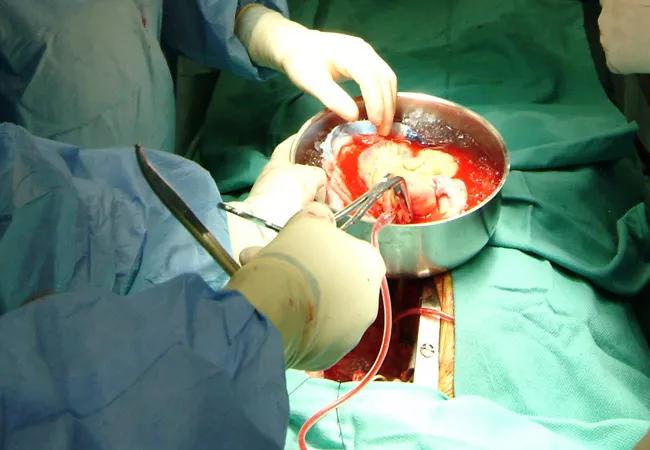
Image content: This image is available to view online.
View image online (https://assets.clevelandclinic.org/transform/55d0409a-fbfc-47fd-9c14-576031fa8970/Heart-transplant_650x450-003_jpg)
Heart-transplant_650x450 (003)
As the number of donor hearts from drug overdose victims surges, transplant centers — including Cleveland Clinic — are finding a silver lining by working to maximize utilization rates of these hearts once deemed too risky to transplant.
Advertisement
Cleveland Clinic is a non-profit academic medical center. Advertising on our site helps support our mission. We do not endorse non-Cleveland Clinic products or services. Policy
“Since people who die from drug overdose are typically young and healthy, the prospect of wasting their donated hearts is particularly regrettable,” says Eileen Hsich, MD, Cleveland Clinic’s Associate Director of Cardiac Transplantation. She is working hand in hand with K.V. Narayanan Menon, MD, Medical Director of Liver Transplantation, under a new protocol to help Cleveland Clinic avoid wasting such hearts and thereby shorten waiting-list times for heart transplant candidates.
Their efforts recently got an evidence-based boost from an NIH-funded study published in the Annals of Internal Medicine (2018;168:702-711) comparing outcomes among U.S. transplant patients who received organs from overdose-death donors (ODDs) versus other donor types over a 17-year period. The study noted that ODD organs accounted for a dramatically larger share of U.S. donor organs in 2017 (13.4 percent) than in 2000 (1.1 percent), with the opioid crisis being the primary factor in this rise.
Despite concerns that ODD organs might be associated with worse outcomes due to increased infectious risk, the researchers found that five-year patient survival for recipients of ODD organs was similar to survival rates for recipients of organs from donors who died of medical causes or from traumatic injuries. This demonstrated noninferiority of ODD organs applied to heart transplantation as well as to each of the other transplant types studied (kidney, liver and lung).
The researchers concluded that concerns about increased infectious risk and hepatitis C in ODD organs “lead to excess [organ] discard that should be minimized given the current organ shortage.”
Advertisement
The point about hepatitis C is especially germane, given that prevalence of hepatitis C virus (HCV) infection was on a sharp upward curve among overdose-death donors over the study period (from 7.8 percent in 2000 to 30 percent in 2017) while remaining nearly flat among donors who died of medical causes or traumatic injuries. This could bring continued outcomes equivalency into question, especially since HCV can remain dormant for years before liver damage occurs — potentially beyond the study’s five-year survival window.
Those concerns are mitigated, however, by the prospect of a nearly assured cure of HCV infection (provided no other infectious diseases are detected) thanks to the emergence of highly effective direct-acting antivirals for HCV over the past few years. These new treatments are 98 to 99 percent effective in eradicating the virus and take less than half the time to work compared with previous HCV therapies.
As a result, Cleveland Clinic has developed algorithms to accept organs from donors with HCV, programs to educate organ recipients about the risks involved and treatment plans to address HCV infection after transplantation. The education also includes relaying new evidence that the risk of an overdose-death donor having an undetectable communicable disease at the time of death is about 1 percent. “For many patients in urgent need of a heart transplant, we believe that’s a risk worth taking,” says Dr. Hsich.
The risk of contracting HCV from a donor organ is where Dr. Menon’s expertise comes in. “In liver transplant, we’ve been working with HCV for a very long time,” he explains. “Of course, for many liver recipients, HCV is the reason for their cirrhosis and transplant need, so the presence or absence of HCV in the donor liver is immaterial.”
Advertisement
The story is different for other organs, he notes: Recipients of HCV-infected organs will develop the disease. “Previous drugs used to cure HCV had about a 70 percent chance of working, and the treatment could take six months to a year. Now we can transplant a heart from an infected donor, perform HCV genotyping and, within a few months’ time, cure the patient of HCV.”
Since the first heart transplant recipient received an HCV-infected heart under Cleveland Clinic’s new protocol in February 2018, the team has performed eight such transplantations.
Central to the protocol is its “inform and consent” procedure. Not only does Dr. Menon inform transplant candidates of a potential donor’s HCV status, but he also of tells them of any history of incarceration, past drug use, prostitution and promiscuity, which are known to place people at higher risk for communicable disease. Despite explanations that these represent low risks to the recipient, some patients on the waiting list still turn down organs from such donors.
“There’s a stigma associated with these conditions that keeps some people from saying yes,” Dr. Menon observes.
Among transplant centers, news about the viability of ODD hearts is spreading fast through conferences and informal collaboration, says Dr. Hsich. “When this started, we grouped together, had discussions at national meetings, gave lectures and formed small task groups to decide on best strategies,” she notes. “We all wanted to cooperate because too many of these organs were being thrown away.”
Advertisement
For those who want to explore offering similar protocols for transplanting HCV-infected organs, Dr. Hsich suggests emailing the program directors of centers that are doing these transplants. “They are incredibly receptive and willing to share. When we decided to do this, we reached out to centers across the U.S. and asked for opinions, advice, caveats, things that went wrong. We tried to create a system that used the expertise of all the transplant physicians at our institution.”
Meanwhile, she and the transplant team continue to campaign for less organ waste. “Sadly,” she says, “around 60,000 Americans die of drug overdose each year, but the flip side is that obtaining hearts from just a fraction of them would meet the needs of the 3,900-plus people on the waitlist each year.”
Advertisement
Advertisement
A sampling of outcome and volume data from our Heart & Vascular Institute
Concomitant AF ablation and LAA occlusion strongly endorsed during elective heart surgery
Large retrospective study supports its addition to BAV repair toolbox at expert centers
Young age, solid tumor, high uptake on PET and KRAS mutation signal risk, suggest need for lobectomy
Surprise findings argue for caution about testosterone use in men at risk for fracture
Residual AR related to severe preoperative AR increases risk of progression, need for reoperation
Findings support emphasis on markers of frailty related to, but not dependent on, age
Provides option for patients previously deemed anatomically unsuitable
 Search