Locations:





SUDEP prevention is one more reason zero should always be the goal
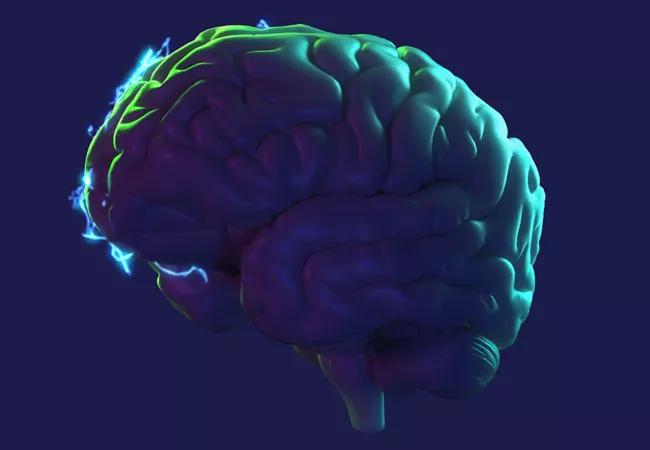
Image content: This image is available to view online.
View image online (https://assets.clevelandclinic.org/transform/ed53bad8-b1db-4c95-ac9f-295ec1f3567d/19-NEU-6526_epilepsy-brain_CQD_650x450__jpg)
19-NEU-6526_epilepsy-brain_CQD_650x450_
The best defense against sudden unexpected death in epilepsy (SUDEP) — or, more precisely, sudden, unexpected, nontraumatic, nondrowning death in a patient with epilepsy — is good seizure control.
Advertisement
Cleveland Clinic is a non-profit academic medical center. Advertising on our site helps support our mission. We do not endorse non-Cleveland Clinic products or services. Policy
Consult QD spoke with Imad Najm, MD, Director of Cleveland Clinic’s Epilepsy Center, about his definition of good seizure control, how he communicates SUDEP risk to his patients and how to counter the risk of nonadherence to medication regimens.
Dr. Najm: The annual incidence of SUDEP is 1.16 cases per 1,000 persons with epilepsy.1 While we aren’t entirely sure of the cause, we know that risk factors include poorly controlled generalized tonic-clonic seizures, occurrence during sleep and long-standing epilepsy duration.2
But seizure is really the major risk. If patients don’t have seizures, they cannot experience a seizure-related death. This seems straightforward, but it bears repeating: If patients have good seizure control, their SUDEP risk disappears.
Dr. Najm: This is an easy answer. The goal is — and should always be — zero. Even one seizure per year increases the risk of SUDEP tenfold. A person who has three or more seizures in a year will have a fifteenfold increased risk of SUDEP. Patients who experience grand mal seizures also have significantly increased risk compared with other types of seizures.1
SUDEP isn’t the only reason to pursue zero seizure events for our patients. I often see patients who have trouble with medication adherence and end up with greatly declined memory and cognition over the years. Patients with uncontrolled seizures have 3.2 times greater risk for bodily injury, bruises and brain bleeds than patients with epilepsy whose seizures are controlled.3
Advertisement
We have over two dozen medications available in the United States for seizure control in patients with epilepsy. For refractory cases, surgery is a safe option. Over half our surgical patients at Cleveland Clinic experience complete seizure control.
In my opinion, pursuing zero is of the utmost importance. As epileptologists, we cannot accept anything less for our patients.
Dr. Najm: Some clinicians avoid the topic entirely, because they fear it will create further anxiety in an already worried patient or family member. However, research shows that patients and families want to know about the risk, and that telling them can alleviate, instead of increase, their worries.4
I tell patients that our goal is to help them form a plan to completely control their seizures, because if we do not, their risk of injury or even death is higher than for a person whose epilepsy is well controlled.
Our job as physicians is to educate patients about the very real risks, while empowering them with ways to counter those risks, like medication adherence or surgical options.
Dr. Najm: Epileptologists operate on the assumption that patients, adults or children, will miss at least one dose per month. This is usually when seizures happen. And when seizures are uncontrolled, the risk for sudden death increases.
Some patients stop taking their medications because of side effects, instead of communicating those side effects to their care team so that the dosage or medication choice can be adjusted. If patients understand the risks of nonadherence and feel comfortable telling their physicians about side effects, adherence should increase. Our job is to educate patients about these risks and ensure that patients feel comfortable sharing openly with us. This is one of the most important measures we can take in working toward zero seizures for our patients.
Advertisement
Image at top created for Cleveland Clinic by WP BrandStudio.
Advertisement
Advertisement

New study advances understanding of patient-defined goals

Testing options and therapies are expanding for this poorly understood sleep disorder
Real-world claims data and tissue culture studies set the stage for randomized clinical testing
Digital subtraction angiography remains central to assessment of ‘benign’ PMSAH

Cleveland Clinic neuromuscular specialist shares insights on AI in his field and beyond

Findings challenge dogma that microglia are exclusively destructive regardless of location in brain

Neurology is especially well positioned for opportunities to enhance clinical care and medical training
New review distills insights from studies over the past decade
 Search