Locations:





Literature review shows complex neuropsychiatric processes shape brain-body dichotomy
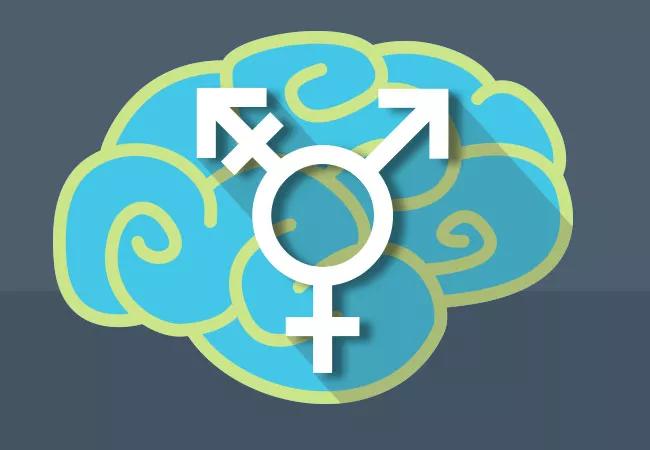
Image content: This image is available to view online.
View image online (https://assets.clevelandclinic.org/transform/1182abb4-d79e-4e33-af98-a7b364f07a1c/18-NEU-5728-transgender-brain_650x450_jpg)
18-NEU-5728-transgender-brain_650x450
Gender dysphoria has a neurobiological basis but is closely associated with an individual’s interaction with the external world, according to a poster presented by Cleveland Clinic psychiatrist Murat Altinay, MD, at the 2018 annual meeting of the American Psychiatric Association (APA).
Advertisement
Cleveland Clinic is a non-profit academic medical center. Advertising on our site helps support our mission. We do not endorse non-Cleveland Clinic products or services. Policy
These findings have the potential to change societal perceptions of what gender is and where it resides, according to Dr. Altinay. “Current belief has been that gender is what your genital organs are,” he explains. “But as shown in the literature, gender is a far more complex concept and the brain seems to play the main role in determining gender identity.”
He and colleagues performed a PubMed search looking for neuroimaging studies of people with gender dysphoria, including cross-sectional, prospective, retrospective, case-control and randomized controlled studies as well as meta-analyses. They found that previous research shows there is a functional representation of the body in the brain. “There are structural and functional similarities between the transgender brain and its identified gender,” says Dr. Altinay.
These similarities are present prior to initiation of hormone therapies, but such therapies produce further changes. For instance, the hypothalamus, thalamus, orbitofrontal cortex and insula are more active in transgender females (individuals with male genitalia who identify as female) than in cisgender males (individuals with male genitalia who identify as male). In addition, transgender females have greater cortical thickness in the brain’s right and left hemispheres, parietotemporal complex, insula and medial occipital cortices relative to the brains of cisgender individuals.
The literature review also revealed that functional neuroimaging studies show changed resting-state functional connectivity in two notable contexts:
Advertisement
Increased centrality in the body representation network has also been noted, which suggests that this network could be the neurological biomarker for gender dysphoria, Dr. Altinay says.
“In light of previous research, we introduce the term brain gender, suggesting that the brain and the body (the external genitalia and genetics) can have different maturation patterns when it comes to gender — and that it is brain maturation (brain gender) that determines how an individual identifies,” he explains. “Transgender people frequently find themselves in situations where they have to act or express themselves as opposite gender (the gender they don’t identify with), which creates an ongoing dissonance condition.”
He and his colleagues therefore propose a novel model of gender dysphoria in which its development takes into account the presence of both cognitive dissonance and prediction error. “It appears that gender dysphoria has a neurobiological basis but is also closely associated with the interactions these individuals have with the world, their prediction of those interactions and the feedback they receive in return,” he notes.
If it can be shown that distinct functional processes are occurring in the brains of individuals with gender dysphoria, Dr. Altinay believes it will lead to better comprehension of brain function in transgender people who are dysphoric and allow clinicians to differentiate gender dysphoria from other mood conditions, such as major depressive disorder (MDD).
Advertisement
“Currently, most transgender people are labeled ‘depressed’ or ‘anxious’ when some of these symptoms actually stem from gender dysphoria,” he observes. “When we can accurately distinguish MDD and gender dysphoria, we’ll be able to guide patients to the right treatment — for example, hormone therapy and gender affirmation therapies rather than treatment of MDD.” Appropriate treatment may also prevent depression, he adds.
Dr. Altinay is in the midst of submitting the research from his APA poster for publication, as well as launching a neuroimaging study using 7-tesla functional MRI to test the hypothesis presented in the poster.
Meanwhile, his research observations are influencing how Cleveland Clinic manages gender dysphoria. He has been actively educating medical students, residents, surgeons and psychiatrists about the new psychobiological model, as well as interfacing with Cleveland Clinic’s Lakewood Family Health Center, where providers manage hormone therapy and medical care for transgender individuals, and with Cleveland Clinic’s Section of Urogynecology, where gynecology care is provided for trans males and vaginoplasty for trans females.
“As a society, we have a tendency to pathologize certain conditions rather than understanding them,” he reflects. “This new model attempts to separate gender dysphoria and mood disorders as distinct diagnoses, with the goal of easing the pain and confusion these patients are feeling. Sometimes simply explaining the brain-body dichotomy helps transgender individuals stop thinking there’s something wrong with them and understand that they are not alone in experiencing these issues.”
Advertisement
Advertisement
Advertisement

New study advances understanding of patient-defined goals

Testing options and therapies are expanding for this poorly understood sleep disorder
Real-world claims data and tissue culture studies set the stage for randomized clinical testing
Digital subtraction angiography remains central to assessment of ‘benign’ PMSAH

Cleveland Clinic neuromuscular specialist shares insights on AI in his field and beyond

Findings challenge dogma that microglia are exclusively destructive regardless of location in brain
Neurology is especially well positioned for opportunities to enhance clinical care and medical training
New review distills insights from studies over the past decade
 Search