Locations:





Finding cures faster with team science and big data
“It’s an extraordinary time for research,” says Serpil Erzurum, MD, Chair of Cleveland Clinic’s Lerner Research Institute. “How we do it, the tools we use to make it happen, are very different now than they were five or certainly 10 years ago.”
Advertisement
Cleveland Clinic is a non-profit academic medical center. Advertising on our site helps support our mission. We do not endorse non-Cleveland Clinic products or services. Policy
Living longer, healthier lives is within reach, she says, thanks to:
Team science. Turning scientific discoveries into better patient care can happen faster when scientists, clinicians, engineers, mathematicians and others work together. Cleveland Clinic is combining their top doctors and brightest minds into winning teams that advance understanding of diseases and find better ways to treat — and possibly cure — them.
Called “research centers of excellence,” Cleveland Clinic experts form their own teams and apply for resources to move their proposed projects forward. Teams typically have two to three years to accomplish their tasks. Successes are already evident. For example, one team working on aggressive prostate cancer took a laboratory discovery to an early phase trial in patients in just under three years.
“Team science is the future,” Dr. Erzurum says. “This is where all research is heading. And here at Cleveland Clinic, we’ve already started.”
Big data. Thanks to technological advances of the past 10 years, we’ve accumulated more data than ever before. Scientists can understand every molecule of the human body, everything that drives human life and makes bodies resilient (or susceptible) to disease. We can catalog it completely, and do it pretty quickly. We can sequence the entire human genome in less than a day.
With big data, physicians are learning how to treat each person uniquely — not like everybody else. That’s precision medicine.
“Team science and big data, or precision medicine, are accelerating discoveries so we can tailor treatments to each patient at the molecular level,” Dr. Erzurum says.
Advertisement
Her ultimate goal for Cleveland Clinic research? Find cures faster.
“Let’s cure something,” she says. “Research is transforming healthcare and the future for our patients.”
In this video, glimpse the future of research happening now at Cleveland Clinic.
Video content: This video is available to watch online.
View video online (https://www.youtube.com/embed/lvNZfMbdILQ?feature=oembed)
©Russell Lee
Advertisement
Advertisement
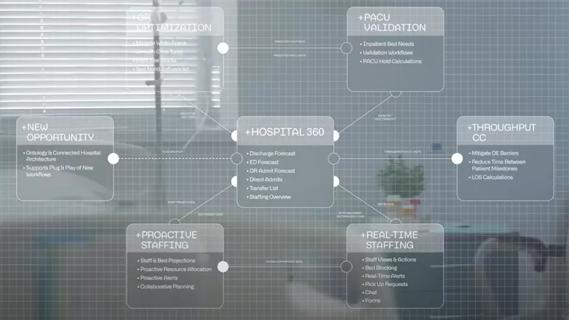
Cleveland Clinic partners with Palantir to create logistical command center

A Q&A with organizational development researcher Gina Thoebes

Cleveland Clinic transformation leader led development of benchmarking tool with NAHQ
Raed Dweik, MD, on change management and the importance of communication

Small business owners expand their networks and gain new insights
Leadership pearls from Margaret McKenzie, MD, hospital vice president

Advice from four CNOs on how to embrace innovation and collaboration

Cleveland Clinic will offer rapid, pinpoint airborne transport of medications and other medical items
 Search