Locations:





Investigator speaks to potential applications beyond stroke
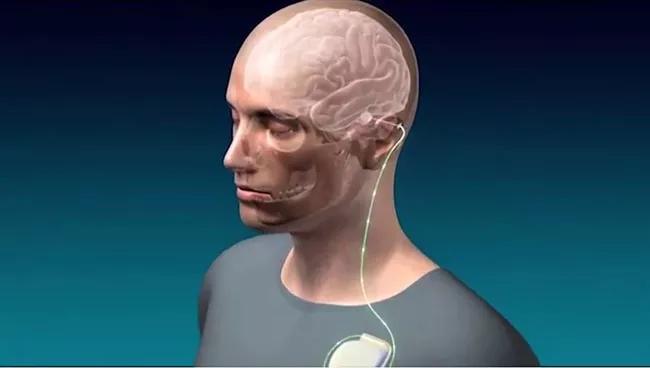
Image content: This image is available to view online.
View image online (https://assets.clevelandclinic.org/transform/e11571a7-42cd-4c85-8e32-646e631e3eaf/DBSCaptur2e_jpg)
dbscaptur2e
As previously reported on this blog, Cleveland Clinic researchers have launched the first clinical trial to examine the use of deep brain stimulation (DBS) to promote motor function recovery in disabled stroke survivors. The trial, launched in 2016 (a DBS device was implanted in the first patient in December), was awarded nearly $5 million in funding from the NIH’s Brain Research through Advancing Innovative Neurotechnologies (BRAIN) initiative.
Advertisement
Cleveland Clinic is a non-profit academic medical center. Advertising on our site helps support our mission. We do not endorse non-Cleveland Clinic products or services. Policy
The trial’s lead investigator, neurosurgeon Andre Machado, MD, PhD, recently shared some insights on the trial’s clinical implications in this video post. Dr. Machado explains the essentials of the trial, which patients are candidates, and how DBS for stroke recovery differs from neuromodulation for movement disorders.
“Our primary hypothesis is that by applying DBS to the connections between the cerebellum and cerebral cortex, we can facilitate the plasticity that occurs in the cortex around the stroke and thereby promote recovery of function beyond what physical therapy alone can do,” Dr. Machado notes. “We need more and better options to help the many patients who remain chronically disabled after a stroke.”
Now co-investigator Kenneth Baker, PhD, assistant staff in Cleveland Clinic’s Department of Neurosciences, speaks to some of the scientific implications of the study’s attempt to stimulate the brain’s dentatothalamocortical pathway to restore lost motor function. He also explains how Cleveland Clinic’s recent NIH BRAIN grant award is supporting the team’s work.
“We know that deep cerebellar stimulation promotes motor recovery in a preclinical model of cortical stroke,” says Dr. Baker. “Our goal is to advance this therapy to promote recovery of motor function in humans. This has the potential to be a significant advancement for the field.”
Check out his insights in the video below.
Video content: This video is available to watch online.
View video online (https://www.youtube.com/embed/EbJDJSQhxV8?feature=oembed)
Advertisement
Advertisement

New study advances understanding of patient-defined goals
Testing options and therapies are expanding for this poorly understood sleep disorder
Real-world claims data and tissue culture studies set the stage for randomized clinical testing
Digital subtraction angiography remains central to assessment of ‘benign’ PMSAH

Cleveland Clinic neuromuscular specialist shares insights on AI in his field and beyond
Findings challenge dogma that microglia are exclusively destructive regardless of location in brain
Neurology is especially well positioned for opportunities to enhance clinical care and medical training
New review distills insights from studies over the past decade
 Search