Locations:





 Search
Register now for this CME event, November 14-15
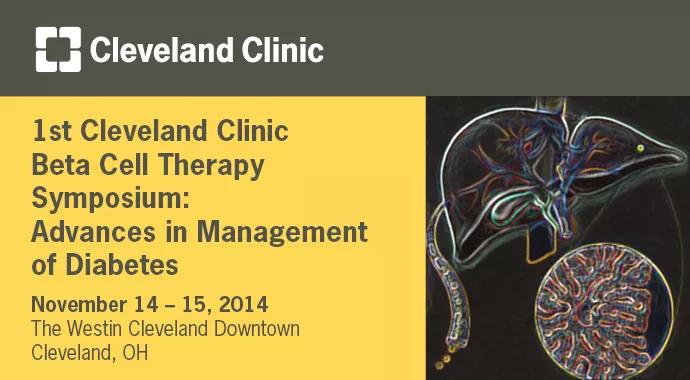
Image content: This image is available to view online.
View image online (https://assets.clevelandclinic.org/transform/847eeb81-df09-418b-93eb-f608c4f4370c/BetaCell_CQD-690x380_jpg)
BetaCell_CQD-690×380
Cleveland Clinic is pleased to present the first symposium on Beta Cell Therapy for the Management of Diabetes. The symposium is designed to improve the management of patient care and promote collaboration between multidisciplinary providers with enhancement of outcome metrics at the community, national and international level.
Advertisement
Cleveland Clinic is a non-profit academic medical center. Advertising on our site helps support our mission. We do not endorse non-Cleveland Clinic products or services. Policy
This unique day and a half symposium, led by Cleveland Clinic Transplant Center director, Kareem Abu-Elmagd, MD, will focus on in-depth pathophysiology of diabetes and biology of beta cells. It also features significant advances in the field of basic and clinical science related to treatment of diabetes with beta cell and solid pancreas transplant. It will review prevention, as well newest technologies available for type 1 diabetes including technological advancements from both the biologic and device technology fields, discussing challenges, opportunities and future directions.
By providing relevant discussions of the most current evidence, this educational offering strives to help practitioners acquire knowledge and skills regarding new data and technology which, in turn, can be translated directly to their clinical practice. Our goal is to improve the quality of patient care and enhance the level of information available to the physicians and other providers involved in diagnosis and treatment.
Cleveland Clinic faculty and visiting experts from general surgery, endocrinology, biology, and transplantation will be present to share their expert opinions.
Advertisement
Surgeons, Endocrinologists, Biologists, Nurses, Allied Health Professionals in the specialty area, and other healthcare professionals.
For more information or to register, visit www.ccfcme.org/AttendBetaCell
Advertisement
Advertisement

Strong patient communication can help clinicians choose the best treatment option
ctDNA should be incorporated into care to help stratify risk pre-operatively and for post-operative surveillance

The importance of raising awareness and taking steps to mitigate these occurrences
New research indicates feasibility and helps identify which patients could benefit

Treating a patient after a complicated hernia repair led to surgical complications and chronic pain
Standardized and collaborative care improves liver transplantations
Fewer incisions and more control for surgeons

Caregiver collaboration and patient education remain critical