Locations:





Novel retreat for affiliated providers promotes best practices
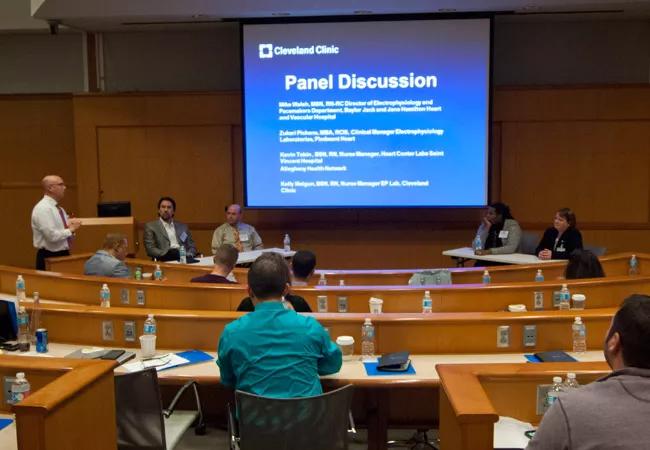
Image content: This image is available to view online.
View image online (https://assets.clevelandclinic.org/transform/d6dc957f-d236-4e3b-9eb3-cc94ca801e3f/16-HRT-2132-CSIC-CQD-650x450_jpg)
16-hrt-2132-csic-cqd-650×450
One of the most interesting aspects of leading a network of allied and affiliated provider organizations like the Cleveland Clinic Cardiovascular Specialty Network is the window it provides into which issues are repeatedly cited as challenges by hospitals and health systems around the country.
Advertisement
Cleveland Clinic is a non-profit academic medical center. Advertising on our site helps support our mission. We do not endorse non-Cleveland Clinic products or services. Policy
It was that type of insight that led to Cleveland Clinic’s first Electrophysiology and Pacing Lab Management Retreat, held April 5, 2016, on Cleveland Clinic’s main campus. The event drew representatives of hospitals from around the country with whom Cleveland Clinic’s Miller Family Heart & Vascular Institute has forged affiliations or alliances or entered into arrangements to provide consulting services.
The idea stemmed from information gathered at more than 25 consulting site assessments performed by the Cleveland Clinic team that manages these collaborations (the “affiliate team”), made up of both clinical and operational experts. Although the assessments were done all over the country, the team members noticed that a handful of themes and challenges related to electrophysiology (EP) surfaced again and again. They figured the best way to help these organizations identify opportunities to improve management of their EP departments might be to bring them together to share best practices and learn from one another at a retreat led by Cleveland Clinic EP content experts.
Clinical leaders and administrators from over 20 hospitals across 13 states came to the one-day retreat. The event provided an opportunity for participants to network with EP leaders from like-sized hospitals as well as learn successful strategies implemented at organizations of various sizes.
The agenda covered common themes identified from the site assessments:
Advertisement
Panel discussions (one of which is pictured in the photo above) provided a chance for participants to share their struggles and discuss potential solutions with EP experts and colleagues from both larger and smaller organizations.
One topic that spurred significant discussion was process improvement and the use of homegrown dashboards in the EP lab. Participants noted that as more and more healthcare metrics are being publicly reported, it’s more important than ever to routinely track key metrics.
Attendees shared how using dashboards to assess a department’s quality and efficiency can be an effective, transparent way to stimulate engagement and participation in improving key metrics. One organization discussed how its implementation of dashboards has improved room turnover times, reduced staff overtime, improved start times and more. Many participants expressed interest in learning more about how using business analytics can improve productivity, efficiency and overall quality of care.
Participants consistently described the retreat as informative and valuable. “The EP retreat was extremely beneficial and informative,” says attendee Kim Coubal, MBA, BSN, RN, System Director of Heart & Vascular Service Line Clinical Operations, Froedtert Hospital, Milwaukee, Wisconsin. “The sharing of best-practice methodologies relating to EP work processes, EP metrics and EP operational dashboards was very helpful. Our leadership team and frontline staff who attended were all impressed and feel they gained better insight into the various practice methodologies being used in today’s ever-changing EP labs.”
Advertisement
The event’s success has already prompted more retreats focused on recurring themes in other specialty areas noted from site visits to date — an Echo Quality Assurance Boot Camp was held in September 2016, and a Cardiovascular Medicine Retreat is being considered for spring 2017. These and others will retain the focus on sharing best-practice methodologies to promote efficiency, reduce healthcare costs and enhance care quality nationwide.
“The best get better by collaborating and learning from each other,” says Joseph Cacchione, MD, Chair of Operations and Strategy for Cleveland Clinic’s Miller Family Heart & Vascular Institute. “Our retreats allow us to focus on various specialty care areas to combine our strengths to ultimately improve patient care across the country.”
For more on advisory services and affiliation opportunities with Cleveland Clinic’s Miller Family Heart & Vascular Institute, see affiliatenetwork.clevelandclinic.org.
Advertisement
Advertisement

A sampling of outcome and volume data from our Heart & Vascular Institute
Concomitant AF ablation and LAA occlusion strongly endorsed during elective heart surgery

Large retrospective study supports its addition to BAV repair toolbox at expert centers
Young age, solid tumor, high uptake on PET and KRAS mutation signal risk, suggest need for lobectomy
Surprise findings argue for caution about testosterone use in men at risk for fracture
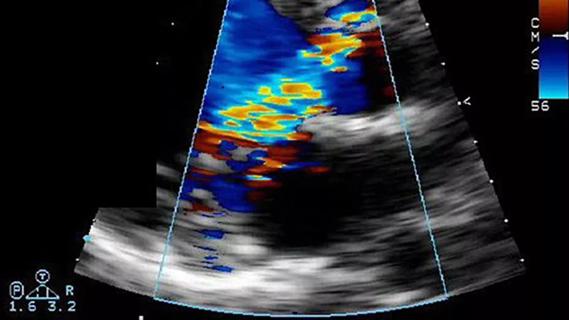
Residual AR related to severe preoperative AR increases risk of progression, need for reoperation

Findings support emphasis on markers of frailty related to, but not dependent on, age
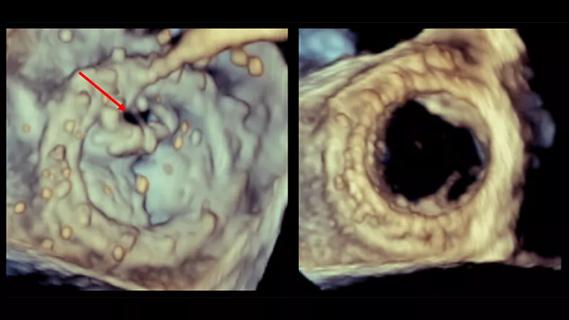
Provides option for patients previously deemed anatomically unsuitable
 Search