Locations:





Cleveland Clinic study suggests it does not improve outcomes
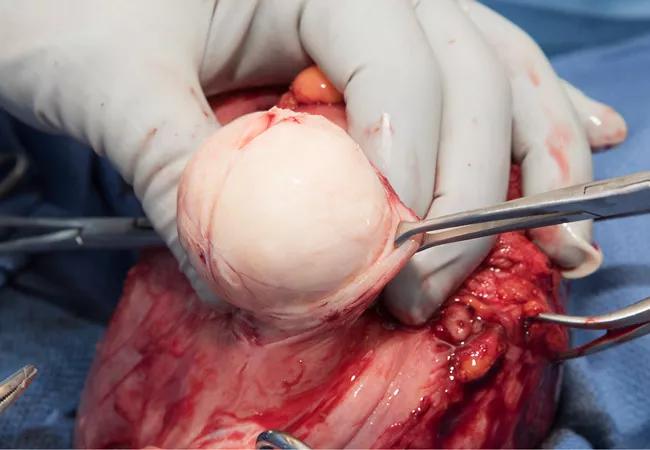
Image content: This image is available to view online.
View image online (https://assets.clevelandclinic.org/transform/fcc9a3c9-b5a4-47b1-9008-c3da8ee7f786/fibroid_650x450_jpg)
fibroid_650x450
The benefits of fibroid removal on alleviating discomfort and excessive bleeding are well known. However, the impact of myomectomy on fertility is less well understood.
Advertisement
Cleveland Clinic is a non-profit academic medical center. Advertising on our site helps support our mission. We do not endorse non-Cleveland Clinic products or services. Policy
“When a woman is infertile, we often remove small fibroids with the expectation it may potentially impact her fertility,” says Cleveland Clinic ob/gyn resident Chelsea Fortin, MD. “But the big question is whether or not myomectomy improves pregnancy outcomes.”
The topic has long interested Tommaso Falcone, MD, chairman of the Ob/Gyn & Women’s Health Institute at Cleveland Clinic. As author of infertility treatment guidelines issued by the American Society of Reproductive Medicine (ASRM), Dr. Falcone looked for evidence on whether fibroid removal improves outcomes for patients undergoing assisted reproductive techniques and found evidence was lacking.
“After a thorough literature review, I found existing studies to be outdated or of such poor quality as to be inconclusive. I felt we needed to pursue this issue in a more scientific manner,” he says.
To address the topic, Dr. Falcone and two Cleveland Clinic residents conducted a retrospective study of infertility patients who had undergone myomectomy prior to in vitro fertilization or intrauterine insemination at Cleveland Clinic, noting the effect of fibroids and their removal on clinical pregnancy and live birth rates.
The researchers identified a cohort of women ≤age 45, who underwent assisted reproduction and were followed for a minimum of 18 months. A matched group of women whose fibroids were left in situ were used as controls, for a total of 73 participants.
Dr. Fortin presented the results of the study at the 2017 American Society of Reproductive Medicine (ASRM) Scientific Congress & Expo.
Advertisement
”When we removed the fibroids, we found that pregnancy and live birth rates did not significantly differ. Outcomes were no better with or without fibroids,” says Dr. Fortin. “This tells us that the potential benefits of fibroid removal do not directly translate into clinical practice.”
“Fibroid surgery is effective for treating symptomatic women. However, if the sole reason for the surgery is for infertility, we must exclude other causes of infertility before proceeding,” adds Dr. Falcone.
Advertisement
Advertisement
Counseling and careful surgical considerations are key

Deprivation is linked to impaired glucose intolerance and racial disparities

Perioperative prophylaxis and class III obesity

Artesunate ointment is safe well and tolerated patients with vulvar intraepithelial neoplasia
Endoscopic balloon dilation during pregnancy helps optimize outcomes
Researchers examine waste and implore colleagues to take action

Mode of delivery does not affect patient satisfaction
 Search