Locations:





Learn why FMT is gaining momentum
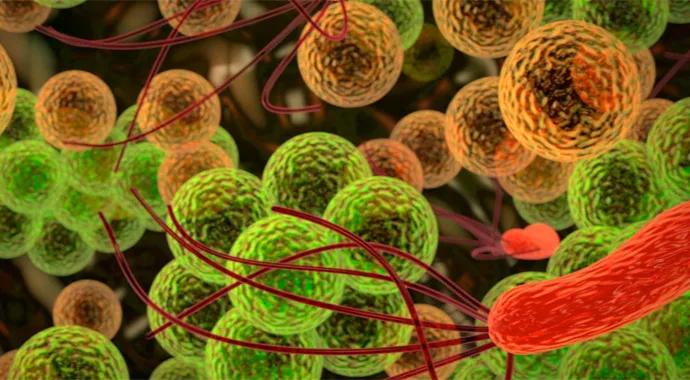
Image content: This image is available to view online.
View image online (https://assets.clevelandclinic.org/transform/bd6c928a-6220-4d24-b0c7-47fe9b6fa625/690-Screen-shot-2014-05-13-at-9_22_jpg)
690-Screen-shot-2014-05-13-at-9.22
It’s not unusual for Bret Lashner, MD, Director of the Center for Inflammatory Bowel Disease in Cleveland Clinic’s Department of Gastroenterology, to receive all types of questions from specialists and generalists from across the country — and he happily answers them. Lately, though, the No. 1 topic of conversation has been very predictable: fecal microbiota transplantation (FMT) for recurrent or treatment-resistant Clostridium difficile.
Advertisement
Cleveland Clinic is a non-profit academic medical center. Advertising on our site helps support our mission. We do not endorse non-Cleveland Clinic products or services. Policy
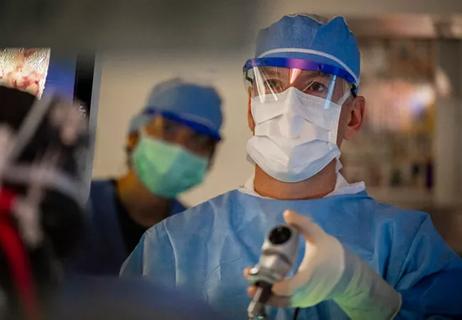
FMT — which is performed by a limited number of centers across the country — involves the transfer via colonoscopy of healthy gut flora, through a processed mixture of stool from a donor, into the right colon of the patient. The novel therapy earned a prestigious spot on Cleveland Clinic’s listing of the Top 10 Medical Innovations for 2014.
“Other physicians want to know our method,” says Dr. Lashner, who heads Cleveland Clinic’s newest FMT Clinic, opened in Cleveland in November 2013. “We’re happy to accept referrals and also to share information about our model.” The FMT Clinic run by Dr. Lashner expands on a similar program initiated earlier last year at Cleveland Clinic Florida and another operating within the Ileal Pouch Center in Cleveland.
So far, the FDA allows FMT for refractory C. difficile, defined as a minimum of two occurrences, with at least one resistant to medical therapy. Eventually, once additional efficacy and safety outcomes are demonstrated, indications for the procedure could be expanded. “FMT has potential applications in the treatment of Crohn’s disease, ulcerative colitis, and any number of diseases that may be tied to bacteria in the GI tract — some of which are still being reported and discussed in the evolving medical literature, such as metabolic syndrome and heart disease,” Dr. Lashner says.
“This treatment modality is gaining momentum, and it’s just a matter of time until it explodes,” he says. “When it does, we’ll be at the forefront.”
Since the opening of the FMT Clinic in Cleveland late last year, Dr. Lashner has performed about half a dozen of the procedures, which generally have about a 90 percent efficacy rate. “Every patient has benefitted,” he says. “Some have gone into complete remission and feel perfectly well, while others feel much better but not perfect. It’s very gratifying to have another option to offer these patients who had been unresponsive to other treatments, and I look forward to helping even more patients in the future.”
Advertisement
The number of patients who could benefit from the therapy is potentially quite large, given that approximately 25 percent of patients with C. difficile infections experience recurrent infection, despite aggressive treatment with antibiotics. “It is an excellent therapy to be able to offer to eligible patients, because it works so well with virtually no negative effects,” Dr. Lashner says. FMT also can be cost-effective compared with multiple courses of antibiotic treatments for recurrent and refractory infections, he says.
The protocol at Cleveland Clinic includes strict patient and donor screening, testing to rule out infectious diseases, and an informed consent process that has been approved by the Internal Review Board. “We have streamlined the pre-transplant process to make it as convenient as possible for both the recipient and the donor,” Dr. Lashner says. He adds that an increasing number of health plans are covering the procedure.
Dr. Lashner worked closely with Alison Schneider, MD, gastroenterologist at Cleveland Clinic Florida in Weston, and Bo Shen, MD, Director of Cleveland Clinic’s Ileal Pouch Center in Cleveland, to develop the FMT protocol. While each of the programs operates independently, the clinicians share information and discuss unusual or challenging cases.
Last year, more than a dozen patients with treatment-resistant C. difficile infections were treated at Cleveland Clinic Florida, which was the first FMT program that Cleveland Clinic launched. “The satisfaction you see in patients after they have suffered so long is really a wonderful thing,” Dr. Schneider says. “We are happy to be able to offer them this innovative treatment option. Clearing the C. difficile really turns their lives around.”
Advertisement
For more information or to refer a patient, please call 216.444.2277 or contact Dr. Lashner at lashneb@ccf.org.
Advertisement
Advertisement

Strong patient communication can help clinicians choose the best treatment option
ctDNA should be incorporated into care to help stratify risk pre-operatively and for post-operative surveillance

The importance of raising awareness and taking steps to mitigate these occurrences
New research indicates feasibility and helps identify which patients could benefit

Treating a patient after a complicated hernia repair led to surgical complications and chronic pain
Standardized and collaborative care improves liver transplantations
Fewer incisions and more control for surgeons

Caregiver collaboration and patient education remain critical
 Search