Locations:





Large cohort study also finds familial chlyomicronemia syndrome less rare than thought
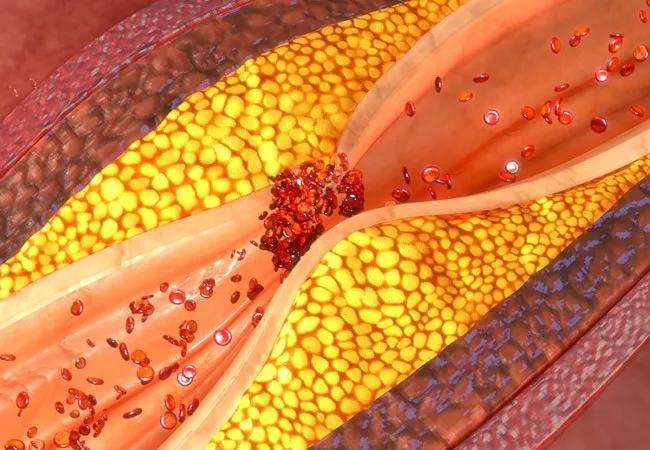
Image content: This image is available to view online.
View image online (https://assets.clevelandclinic.org/transform/0daa07bf-4ed3-44b0-9947-91786e23b59d/18-HRT-5813-Ahmed-hypertriglyceridemia-650x450_jpg)
18-HRT-5813 Ahmed-hypertriglyceridemia-650×450
The rare lipid disorder known as familial chlyomicronemia syndrome (FCS), characterized by extreme and treatment-refractory hypertriglyceridemia, is not as rare as traditionally thought. So suggests a new study of the largest FCS cohort reported to date.
Advertisement
Cleveland Clinic is a non-profit academic medical center. Advertising on our site helps support our mission. We do not endorse non-Cleveland Clinic products or services. Policy
The study — a retrospective review of all patients seen at Cleveland Clinic’s Lipid Center over a recent 11-year period — found FCS prevalence to be 20 to 200 times higher than indicated by prior reports. It also showed that extreme hypertriglyceridemia (i.e., > 750 mg/dL) confers high cardiovascular risk irrespective of the cause of triglyceride elevation.
“This large study suggests that extreme hypertriglyceridemia may represent a significant cardiovascular risk independent of genetic predisposition,” says Cleveland Clinic preventive cardiologist Haitham Ahmed, MD, MPH, corresponding author of the study, published as a research letter in the Journal of the American College of Cardiology (2018;72:1177-1179).
Dr. Ahmed and Cleveland Clinic colleagues set out to better define the clinical characteristics and long-term cardiovascular outcomes in FCS, for which data to date have been severely limited.
The worldwide prevalence of FCS has been believed to be 5,000 cases or less, and the pathophysiology is genetic, with 80 percent of cases attributable to lipoprotein lipase mutations. The disorder — which can manifest with xanthoma eruptions, pancreatitis and lipemia retinalis — is potentially life-threatening.
The following criteria have been used to identify FCS clinically:
Advertisement
Diagnosis is based on clinical, laboratory and genetic analysis.
For their study, Dr. Ahmed and colleagues reviewed records of all 70,201 patients seen at Cleveland Clinic’s Lipid Center from 2006 through 2016. Patients with FCS (based on the criteria above) were compared with control subjects, who were defined as having a triglyceride level > 750 mg/dL and prior pancreatitis but did not otherwise meet the FCS criteria.
Among the 70,201 patients, 369 had triglycerides > 750 mg/dL and prior pancreatitis, but 333 of these cases were attributable to nonlipid causes (such as alcoholism or gallstones) or had incomplete data. Of the remaining 36 patients, 14 patients met the criteria for FCS (.02 percent of the overall sample).
“This represents a 20- to 200-fold increase over the prevalence from prior reports of FCS,” Dr. Ahmed notes.
Comparison of the FCS patients with the 22 non-FCS controls revealed the following:
Notably, the rate of cardiovascular events (acute coronary syndrome, cerebrovascular accident, coronary revascularization or death) was comparably high between the groups, at 50 percent by age 60 in both the patients with FCS and the non-FCS controls. For context, the event rate was just 21 percent by age 60 in patients with pancreatitis and a normal triglyceride level (i.e., < 150 mg/dL).
Advertisement
“This very high rate of cardiovascular events by age 60 with extreme hypertriglyceridemia is striking, especially since all these patients had excellent LDL cholesterol control — below 70 mg/dL in most patients,” says Dr. Ahmed. “Moreover, it didn’t matter whether they had elevated triglycerides for a genetic reason like FCS or from secondary causes.”
“This suggests that hypertriglyceridemia alone may contribute to earlier cardiovascular events irrespective of genetic predisposition,” adds study co-author Leslie Cho, MD, Section Head of Preventive Cardiology and Rehabilitation at Cleveland Clinic. “If confirmed, this holds important implications for future research and treatment strategies, especially since no targeted therapies currently exist for patients with extreme hypertriglyceridemia.”
Advertisement
Advertisement
A sampling of outcome and volume data from our Heart & Vascular Institute
Concomitant AF ablation and LAA occlusion strongly endorsed during elective heart surgery
Large retrospective study supports its addition to BAV repair toolbox at expert centers
Young age, solid tumor, high uptake on PET and KRAS mutation signal risk, suggest need for lobectomy
Surprise findings argue for caution about testosterone use in men at risk for fracture
Residual AR related to severe preoperative AR increases risk of progression, need for reoperation

Findings support emphasis on markers of frailty related to, but not dependent on, age
Provides option for patients previously deemed anatomically unsuitable
 Search