Locations:





Door-to-needle time improved by 26 percent from 2014 to 2017
Mobile stroke unit teams become more efficient and effective over time. That’s the implication of an analysis of Cleveland Clinic’s experience with its mobile stroke unit (MSU) over the three and a half years since its launch in July 2014 as one of the nation’s first such specialized ambulances for patients with suspected acute stroke.
Advertisement
Cleveland Clinic is a non-profit academic medical center. Advertising on our site helps support our mission. We do not endorse non-Cleveland Clinic products or services. Policy
The analysis, presented at the 2018 International Stroke Conference in Los Angeles, compares care process measures between the first 100 patients evaluated on the MSU in 2014 and 100 consecutive patients evaluated on the MSU in mid-2017. The groups were comparable in age and initial median NIH Stroke Scale score, and thrombolysis was used in 16 percent of patients in both cohorts.
Despite these similarities, care was consistently delivered more swiftly in the 2017 cohort, with statistically significant reductions from 2014 in median door-to-needle time, door-to-CT completion/read times, alarm-to-thrombolysis time and other measures. For example, median door-to-needle time dropped from 31 minutes in 2014 to 23 minutes in 2017 — a 26 percent improvement.
Coinvestigator Andrew Russman, DO, puts the study in context in the short video below, with some insights for others considering or launching MSUs of their own.
Video content: This video is available to watch online.
View video online (https://www.youtube.com/embed/cF1wDFrVHm8?feature=oembed)
Advertisement
Advertisement

New study advances understanding of patient-defined goals
Testing options and therapies are expanding for this poorly understood sleep disorder
Real-world claims data and tissue culture studies set the stage for randomized clinical testing
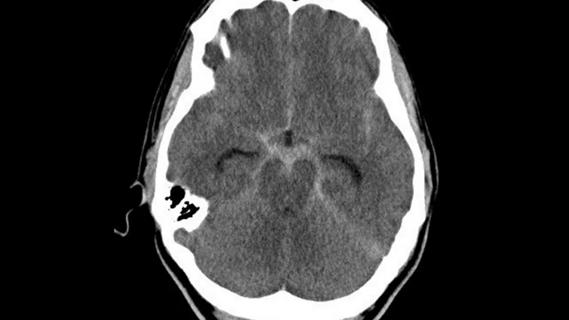
Digital subtraction angiography remains central to assessment of ‘benign’ PMSAH

Cleveland Clinic neuromuscular specialist shares insights on AI in his field and beyond
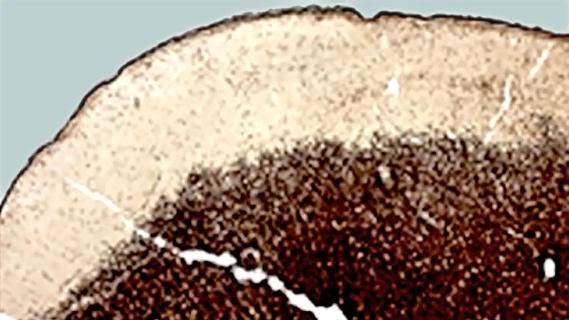
Findings challenge dogma that microglia are exclusively destructive regardless of location in brain
Neurology is especially well positioned for opportunities to enhance clinical care and medical training
New review distills insights from studies over the past decade
 Search