Locations:





Cleveland Clinic now one of 12 pediatric centers tapped by National MS Society
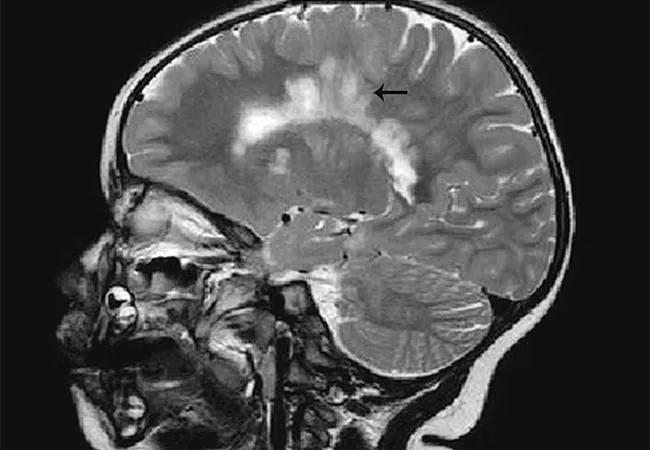
Image content: This image is available to view online.
View image online (https://assets.clevelandclinic.org/transform/bcfa403d-3aa8-4962-91a5-7392d33a4b56/15-NEU-2756-PedsMS-650x450_jpg)
15-NEU-2756-PedsMS-650×450
The National Multiple Sclerosis Society recently named Cleveland Clinic’s Pediatric Multiple Sclerosis (MS) Center to its 12-member Network of Pediatric MS Centers (NPMSC), providing opportunities for participation in national and international multi-institution research into MS and other demyelinating disorders of the CNS in patients under age 18.
Advertisement
Cleveland Clinic is a non-profit academic medical center. Advertising on our site helps support our mission. We do not endorse non-Cleveland Clinic products or services. Policy
“Being part of NPMSC allows us to build on our existing collaborative research and connect with other specialists across the country and around the world,” says Mary R. Rensel, MD, a neurologist and neuroimmunologist in Cleveland Clinic’s Mellen Center for Multiple Sclerosis Treatment and Research who has served on the National MS Society’s Pediatric MS Advisory Board.
Dr. Rensel co-directs Cleveland Clinic’s Pediatric MS Center with Manikum Moodley, MBChB, a pediatric neurologist with Cleveland Clinic Children’s. Both are members of the International Pediatric MS Study Group.
“NPMSC membership will enhance current knowledge about pediatric MS and provide additional research opportunities for this rare diagnosis,” Dr. Moodley notes.
Such research opportunities are acutely needed, as pediatric MS carries a generally poorer prognosis than adult forms of the disease, warranting more investigation to improve diagnosis, treatment and outcomes. While clinical onset of MS typically occurs between ages 20 and 40, it is recognized with increasing frequency in children and adolescents. Recently improved awareness of and subspecialty training in pediatric MS have increased diagnostic accuracy and access to appropriate care.
“We have evidence that children with MS tolerate and may benefit from disease-modifying therapies,” Dr. Moodley observes, “so it’s important to diagnose pediatric MS early and accurately.” He notes that this can reduce patients’ risk of developing major motor disability and cognitive impairment early in life, as detailed in his recent Consult QD article, “MS in the Very Young.”
Advertisement
“Pediatric MS appears to have a narrower window of onset, with more rapid and pervasive cognitive symptoms” relative to adult MS, Dr. Rensel adds. “Pediatric MS patients experience more relapses compared with adults and have cumulative disability at a younger age. We need to improve our understanding of the underlying causes and characteristics of the disease in children and teens so we can develop better treatments.”
Cleveland Clinic has been evaluating and managing children with MS since 2006, the same year the National MS Society established the NPMSC, whose focus is to measure clinical, environmental and cognitive manifestations of early-onset MS and develop the world’s largest collection of well-characterized pediatric MS cases. The addition of Cleveland Clinic to the network is part of a recent expansion of NPMSC membership and research funding.
“The NPMSC initiative laid the groundwork 10 years ago for studies that are now measuring clinical and cognitive manifestations of early-onset MS and tracking environmental and genetic triggers,” Dr. Rensel notes.
“The NPMSC is a strong fit with Cleveland Clinic’s emphasis on patient-focused care and research,” Dr. Moodley says, noting that this extends to the fact that the Pediatric MS Center also specializes in treating children with demyelinating diseases beyond MS, including:
“Membership in the NPMSC allows us to enter patients into pediatric demyelination research trials that have a wide range of goals,” he notes. “These include finding the reason why kids get these diseases, how to improve their outcomes and how to find medications that may help them feel better.”
Advertisement
As a collaboration between Cleveland Clinic’s Pediatric Neurosciences Program and its Mellen Center, one of the longest-running and most comprehensive MS programs in the world, the Pediatric MS Center is positioned to ensure well-integrated continuity of care as young patients transition from pediatric to adult care.
In addition to pediatric and adult-care neurologists like Drs. Moodley and Rensel, the center’s team includes pediatric and adult-care specialists in neuroradiology, genetics, clinical and cognitive psychology, physical and occupational therapy, and social work. Services range from initial consultation and diagnosis to treatment and rehabilitation.
In addition to its core missions of clinical care and advancing research, education is a focus of the Pediatric MS Center’s work. The team educates patients and their families about childhood-onset MS and other demyelinating disorders, along with providing seminars and presentations to caregivers throughout Cleveland Clinic Children’s to raise awareness of these diseases in children.
Through the NPMSC, center physicians can now participate in monthly webinars from the National MS Society that bring together expert clinicians, investigators and others across the country to confer on especially complex cases of pediatric MS or other suspected demyelinating diseases.
Giving voice to patients and families is another goal. “We want to provide a louder voice for patients and families facing these rare disorders,” Dr. Rensel says, “to help identify common patterns and links between these diseases.”
Advertisement
Advertisement

New study advances understanding of patient-defined goals
Testing options and therapies are expanding for this poorly understood sleep disorder
Real-world claims data and tissue culture studies set the stage for randomized clinical testing
Digital subtraction angiography remains central to assessment of ‘benign’ PMSAH

Cleveland Clinic neuromuscular specialist shares insights on AI in his field and beyond

Findings challenge dogma that microglia are exclusively destructive regardless of location in brain
Neurology is especially well positioned for opportunities to enhance clinical care and medical training
New review distills insights from studies over the past decade
 Search