Locations:





An experienced center is key
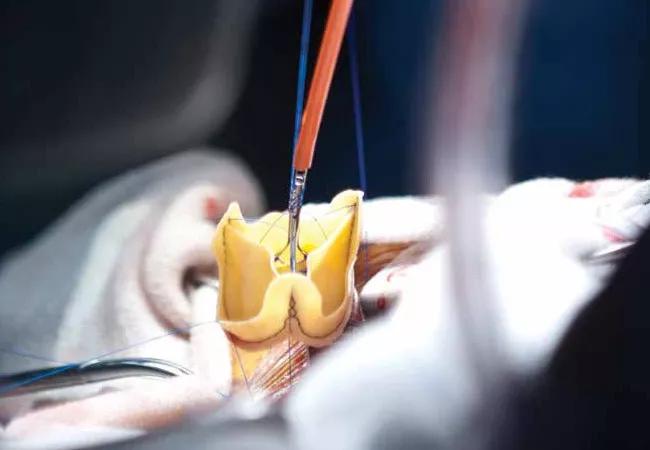
Image content: This image is available to view online.
View image online (https://assets.clevelandclinic.org/transform/2bc6b8f7-55e2-4480-800b-f2b539a8d7c2/16-HRT-018-Reop-PAS-CQD-650x450-2_jpg)
16-HRT-018-Reop-PAS-CQD-650×450-2
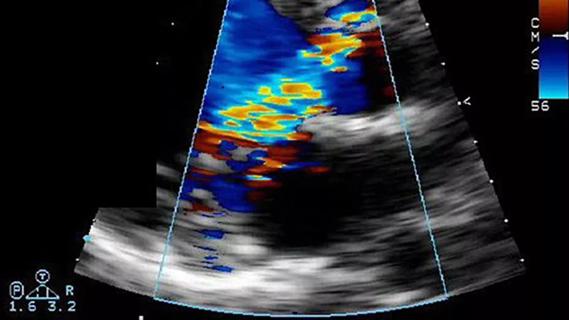
Patients who develop severe bioprosthetic aortic valve stenosis can expect excellent short- and longer-term outcomes with redo surgical aortic valve replacement when the surgery is performed at an experienced center.
Advertisement
Cleveland Clinic is a non-profit academic medical center. Advertising on our site helps support our mission. We do not endorse non-Cleveland Clinic products or services. Policy
So concludes a recent observational cohort study of 276 consecutive patients with severe prosthetic aortic stenosis (PAS) who underwent redo aortic valve replacement (AVR) at Cleveland Clinic between 2000 and 2012. The study, published in Circulation and one of the largest investigations of its kind, found that 86 percent of patients were alive five years after the reoperative procedure.
“Reoperative valve surgery has traditionally been associated with higher mortality than the index surgery,” says the study’s corresponding author, Milind Desai, MD, a cardiovascular imaging specialist at Cleveland Clinic. “However, mortality has steadily declined with improvements in surgical technique.”
He notes that the study’s observed 30-day mortality rate of 2.5 percent was much lower than the 8 percent expected rate based on the cohort’s average Society of Thoracic Surgeons (STS) score.
Dr. Desai and colleagues undertook the study to define characteristics of patients with severe PAS who undergo redo AVR as well as to assess short- and long-term outcomes and identify factors associated with adverse outcomes.
They defined severe PAS based on the presence of one of the following guideline-based criteria: aortic valve (AV) area < 0.8 cm2, mean AV gradient ≥ 40 mmHg, or a dimensionless index < 0.25. Patients undergoing transcatheter AVR or reoperation for mechanical PAS were excluded.
At baseline, the study’s 276 patients had a mean STS score of 8 ± 8 and a mean AV gradient of 53 ± 17 mmHg. More than 80 percent had dyspnea and were deemed NYHA class II or higher; 89 percent had one previous open-heart surgery and 11 percent had two or more. Twenty-eight percent had aortic regurgitation > II+.
Advertisement
At 4.2 ± 3 years of follow-up, the composite outcome of death or congestive heart failure admission occurred in 23 percent of patients.
Multivariate analysis showed three factors to be associated with significantly worse long-term outcomes:
Safety of redo surgical AVR in this complex cohort was good, with only seven deaths (2.5 percent) and two strokes (0.7 percent) at 30 days post-AVR. As expected, the STS score in all patients who died within 30 days was significantly higher than in the overall cohort.
“STS score, while traditionally used to predict short-term perioperative outcomes, can potentially provide incremental utility in predicting longer-term outcomes and may be useful in selecting the appropriate therapy for these patients,” observes Dr. Desai.
During follow-up, 74 percent of patients remained in NYHA class I, with 20 percent in class II. Four patients (1.4 percent) required another AVR due to endocarditis.
With a high STS score portending worse outcomes, the study clearly suggests that patients with severe PAS should be closely monitored for occurrence of symptoms or changes in functional class level.
“Once patients reach severe stenosis, early elective reoperation at the onset of symptoms should be considered to achieve optimal long-term outcomes,” says Dr. Desai. “This is especially true if the patient has aortic regurgitation greater than grade II+, as this was associated with poorer long-term outcomes in our study.
Advertisement
“Early intervention is also supported by the fact that higher right ventricular systolic pressure — likely reflecting advanced disease — was associated with worse outcomes,” he adds.
Transcatheter AVR (TAVR) is feasible in PAS when surgical treatment of comorbid conditions is not required. This situation appears to be fairly uncommon, however.
In the current analysis, only 39 percent of patients were undergoing isolated AVR for their redo procedure. Of the remainder, 33 percent required AVR plus coronary artery bypass grafting (CABG) (with 70 percent of these patients needing multivessel revascularization) and 28 percent required CABG plus aorta surgery in addition to AVR.
“The patients who might benefit most from redo valve-in-valve TAVR include significantly older individuals with multiple previous operations who do not need concomitant aortic surgery or multivessel revascularization,” says Dr. Desai. “But we observed that the majority of patients undergoing redo AVR for PAS required concomitant CABG or surgery on the aorta, which would preclude a catheter-based approach.”
Advertisement
Advertisement

A sampling of outcome and volume data from our Heart & Vascular Institute
Concomitant AF ablation and LAA occlusion strongly endorsed during elective heart surgery

Large retrospective study supports its addition to BAV repair toolbox at expert centers
Young age, solid tumor, high uptake on PET and KRAS mutation signal risk, suggest need for lobectomy
Surprise findings argue for caution about testosterone use in men at risk for fracture
Residual AR related to severe preoperative AR increases risk of progression, need for reoperation

Findings support emphasis on markers of frailty related to, but not dependent on, age
Provides option for patients previously deemed anatomically unsuitable
 Search