Locations:





Funding will advance tool for individualized outcome prediction
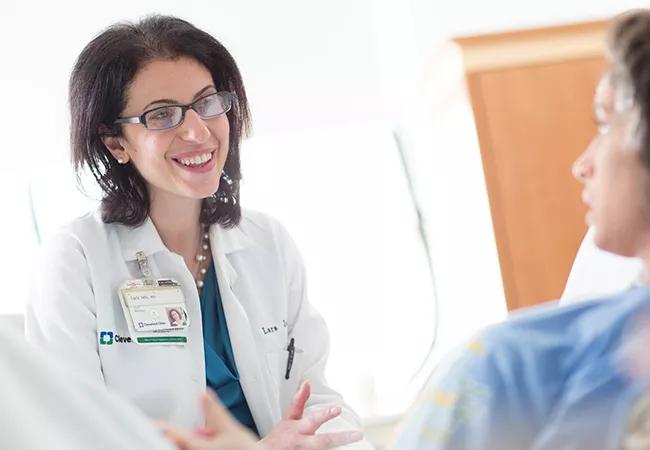
Image content: This image is available to view online.
View image online (https://assets.clevelandclinic.org/transform/3c988e68-c337-4406-b042-f77d7c8e261e/650x450-Jehi009_jpg)
650×450-Jehi009
The National Institutes of Health (NIH) has awarded a $3.4 million grant to Cleveland Clinic to develop a tool to predict individual outcomes in epilepsy surgery. The five-year grant, led by Lara Jehi, MD (pictured above), supports development of a comprehensive epilepsy surgery nomogram using diagnostic technology and predictive modeling.
Advertisement
Cleveland Clinic is a non-profit academic medical center. Advertising on our site helps support our mission. We do not endorse non-Cleveland Clinic products or services. Policy
The project is a collaboration among the Epilepsy Center in Cleveland Clinic’s Neurological Institute, the Cleveland Clinic Lerner Research Institute’s Quantitative Health Sciences team, Mayo Clinic and the University of Campinas in Brazil. The initiative will incorporate robust patient data into the nomogram, or risk calculator, to better determine which patients will most benefit from epilepsy surgery.
“The typical current path to epilepsy surgery reveals an unquestionable need for process improvements that could be fostered by a tool like the epilepsy surgery nomogram,” says Dr. Jehi, Research Director of the Epilepsy Center.
“Patients now hear what the ‘average’ chance of success is with a brain surgery procedure, but they do not know what their individual chance of success is,” she explains. “The nomogram will enable us to bring patient counseling into the 21st century and expand it beyond our best ‘educated opinion’ to actual science. It will arm physicians with an advanced statistical tool to better select optimal surgical candidates and estimate the likelihood of seizure freedom after epilepsy surgery.”
She adds that use of the tool may help reverse underutilization of epilepsy surgery for drug-resistant epilepsy — underutilization that’s partially attributable to limitations in the ability to predict surgical outcomes in an individualized way.
The multicenter research team will build upon on its first epilepsy surgery nomogram, which used basic patient characteristics, including age, gender and seizure frequency, to provide an objective, individualized prediction of postoperative seizure outcomes at two and five years after epilepsy surgery. That nomogram and its initial retrospective validation were published in Lancet Neurology in 2015, as detailed in this Consult QD post.
Advertisement
Through this new grant, the researchers will create an enhanced risk calculator by adding additional clinical, imaging, genetic, electrophysiological and histopathology data. The comprehensive nomogram will be developed from a retrospective cohort of 450 patients from Cleveland Clinic, Mayo Clinic and the University of Campinas, and then be prospectively validated in 250 patients from the same centers.
“When completed, this project will generate the first objective, validated, user-friendly epilepsy surgery prediction tool,” says Dr. Jehi. “Instead of each physician working on an island, we can synthesize data and pull it all together to make more strategic predictions using a much more scientific decision-making process. Achieving this goal will improve patient counseling and benefit public health.”
The nomogram concept was pioneered at Cleveland Clinic by Michael Kattan, PhD, Chair of Quantitative Health Sciences, to help better predict outcomes for patients. His risk calculators, designed to help physicians make informed decisions about patient care, have been applied to many diseases, including coronary artery disease, an array of cancers, type 2 diabetes and total joint replacements.
“The development of risk prediction calculators like the epilepsy surgery nomogram is vital for improving medical decision-making,” notes Dr. Kattan. “Tools like this represent another step toward personalized medicine that will ultimately improve efficiency, outcomes and patient care.”
Advertisement
Advertisement

New study advances understanding of patient-defined goals
Testing options and therapies are expanding for this poorly understood sleep disorder
Real-world claims data and tissue culture studies set the stage for randomized clinical testing
Digital subtraction angiography remains central to assessment of ‘benign’ PMSAH

Cleveland Clinic neuromuscular specialist shares insights on AI in his field and beyond
Findings challenge dogma that microglia are exclusively destructive regardless of location in brain
Neurology is especially well positioned for opportunities to enhance clinical care and medical training
New review distills insights from studies over the past decade
 Search