Locations:





 Search
Cleveland Clinic maintains post-transplant hospital stay and readmission rates below national average
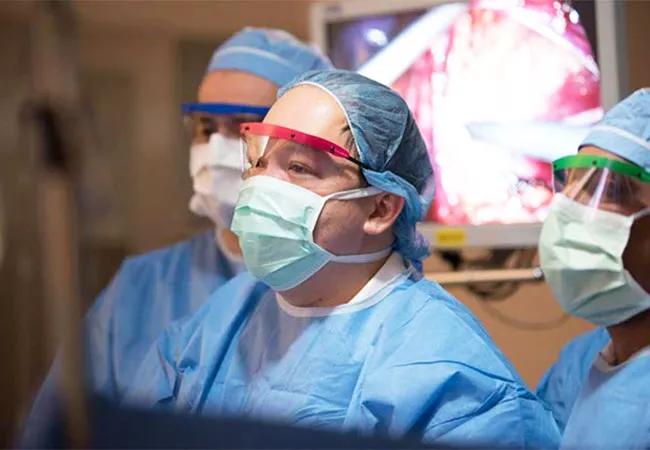
Image content: This image is available to view online.
View image online (https://assets.clevelandclinic.org/transform/7a05f2b3-9074-4087-827f-8840f40d8aa5/650x450-Wee_jpg)
650×450-Wee
A 38-year-old patient presented to Cleveland Clinic Glickman Urological & Kidney Institute’s Kidney Transplant Program having previously undergone a living donor kidney transplant at a different medical center. The transplanted kidney failed five years after the initial procedure and she was denied a second procedure at that institution.
Advertisement
Cleveland Clinic is a non-profit academic medical center. Advertising on our site helps support our mission. We do not endorse non-Cleveland Clinic products or services. Policy
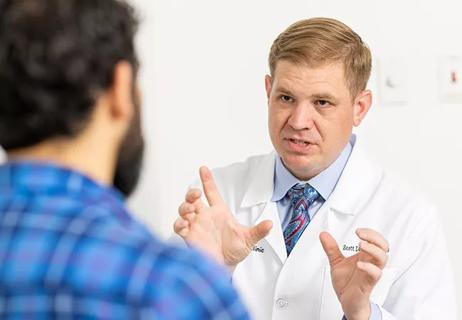
“Since she already experienced one rejection, we knew that the case was immunologically challenging,” says Alvin Wee, MD, Surgical Director for the program. “But we still believed we could help her.”
In the conversation below, Dr. Wee explains how the intense level of care provided by his team contributes to transplant success, despite medical challenges transplant patients face.
Dr. Wee: Patients are first educated about the entire procedure, so that they can clearly understand our expectations ― regarding compliance, such as follow-up after surgery, medications and support ― and what they can expect. This is very important since no matter how good the surgical and medical teams are, if the patient does not cooperate, the procedure can fail. The patient needs to understand early on that transplantation is a joint effort and joint responsibility.
Dr. Wee: First, we treat the patient as a whole and take into consideration his or her individual situation and all medical issues. Second, we get to know patients before their transplant. And after transplantation, we see them twice a week for the first month. Contrary to the general perception, patients really appreciate this enhanced level of care and do not find it inconvenient.
Dr. Wee: When a patient is on dialysis for a prolonged period and then is transplanted, the body needs to abruptly adapt to shifting of volumes and electrolyte changes. Most of these changes occur within the first 30 days. Intense communication and interaction are very important. In the post-transplant period, patients typically have many questions and frequent visits provide an opportunity to get them answered, and problems or concerns are identified very early. Regular follow-up during the first year ensures continuity of care.
Advertisement
Dr. Wee: Yes, both our length of hospital stay and readmission rates are below the national average. For living donor transplantations, the national average hospital stay is five days while at Cleveland Clinic it is three days. For deceased donor transplantations, the national average hospital stay is seven days, and at Cleveland Clinic it is four days. In terms of readmission rates, the national average is approximately 30 percent and at Cleveland Clinic it is 14 percent. These low numbers reflect the enhanced level of care provided to our patients before and after transplantation.
Dr. Wee: We took the time to explain the process of receiving a kidney transplantation from a deceased donor to both her and her family, emphasizing that her cooperation was critical for success of the entire procedure. She was discharged after spending only three days in the hospital. Her post-operative journey was uneventful. Patient is very happy and satisfied with the care she received and with her outcome.
Advertisement
Advertisement

Clinicians should individualize dosing practices based on patient risk factors and preferences
Pioneering and refining the approach in pyeloplasty, nephrectomy and more
Fully-automated process uses preop CT, baseline GFR to estimate post-nephrectomy renal function
Could mean earlier treatment, but also could have negative effects

Unlike earlier pills, new drugs do not cause liver toxicity
Male factors play a role in about half of all infertility cases, yet men often are not evaluated
Surgeons choreograph nearly simultaneous procedures, sharing one robot between two patients

Identifying barriers in the renal genetic assessment of Black patients