Locations:





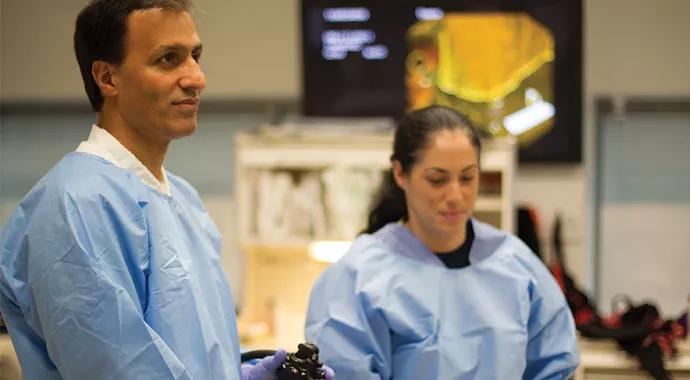
Image content: This image is available to view online.
View image online (https://assets.clevelandclinic.org/transform/9a83fb42-16f5-485b-94b1-624779a8598b/Endoscopic-690x380_jpg)
Endoscopic-690×380
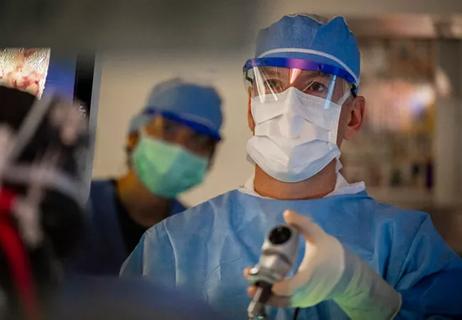
Physicians in the Digestive Disease Institute’s Endoscopy Section are optimizing patient care through use of several new technologies.
Advertisement
Cleveland Clinic is a non-profit academic medical center. Advertising on our site helps support our mission. We do not endorse non-Cleveland Clinic products or services. Policy
First, they are evaluating Hemospray powder (Cook Medical, Winston-Salem, N.C.) to control diffuse gastrointestinal bleeding. Spurred by initial promise in compassionate-use patients, Cleveland Clinic gastroenterologist and advanced endoscopist Mansour Parsi, MD, and colleagues are expanding use to other patients.
“As gastroenterologists, up until recently, in most cases of diffuse bleeding from a large surface area, we had to ‘throw in the towel’ and turn to other modalities such as embolization of various vessels to control the bleeding,” Dr. Parsi says.
Endoscopic application of Hemospray in a variety of anatomic locations is relatively easy, Dr. Parsi reports. However, he adds, a temporary decrease in endoscopic visualization can occur during application, and proper technique is essential to avoid the risk of tissue injury.
The product is a highly adsorptive mineral blend powder that becomes cohesive when it contacts blood to form a stable plug over a bleeding site. “Although our experience with Hemospray is limited, it seems to have a huge potential.”
Dr. Parsi’s team also is utilizing direct peroral cholangioscopy for shockwave treatment of difficult-to-remove biliary stones. Direct visualization minimizes risk for damage to bile duct walls, including perforation, and can help patients avoid complicated surgeries. “Many patients with difficult-to-remove stones are elderly with comorbidities that make them not a surgical candidate or make the surgery very risky,” he notes.
Meanwhile, Cleveland Clinic is also optimizing evaluation of biliary disorders using high-definition video cholangioscopes with narrow band imaging capability. It is among a handful of centers in the world with experience using this technology for various biliary disorders.
Advertisement
High-definition endoscopes are now thin enough for insertion into the bile duct, Dr. Parsi says. “These new cholangioscopes allow detection of smaller and more obscure lesions.” Patients with biliary strictures will benefit from this new technology because it allows earlier detection of neovascularization and fosters correct identification of benign vs. malignant presentations.
Advertisement
Advertisement

Strong patient communication can help clinicians choose the best treatment option
ctDNA should be incorporated into care to help stratify risk pre-operatively and for post-operative surveillance

The importance of raising awareness and taking steps to mitigate these occurrences
New research indicates feasibility and helps identify which patients could benefit

Treating a patient after a complicated hernia repair led to surgical complications and chronic pain
Standardized and collaborative care improves liver transplantations
Fewer incisions and more control for surgeons

Caregiver collaboration and patient education remain critical
 Search