Locations:





Engagement is pivotal from bedside to boardroom
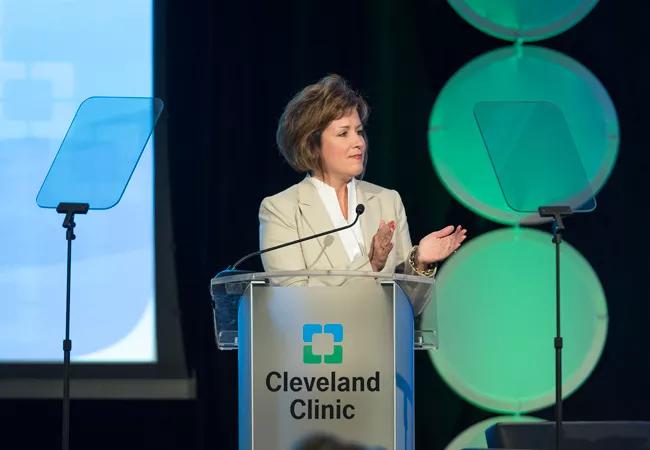
Image content: This image is available to view online.
View image online (https://assets.clevelandclinic.org/transform/73a48a01-497d-442d-8858-4cc907f99467/Kelly-Hancock_650x450_jpg)
Kelly-Hancock_650x450
By Kelly Hancock, DNP, RN, NE-BC
Advertisement
Cleveland Clinic is a non-profit academic medical center. Advertising on our site helps support our mission. We do not endorse non-Cleveland Clinic products or services. Policy
For the past decade, Cleveland Clinic health system has been placing great emphasis on consistently improving employee engagement to create an environment that all employees can appreciate and enjoy while enhancing patient care.
Many other healthcare organizations have done the same, with the many changes our industry has undergone in the past 15 driving the need for improved and ongoing engagement. And recently, with the introduction of the Affordable Care Act (ACA), we have seen the most unprecedented changes to date, and many organizations have been presented with new challenges in attaining and sustaining engaged workforces.
In nursing, for example, frontline nurses have more responsibilities than they ever have, leading to workloads that can be overwhelming. If not addressed, engagement is certain to lower, which can negatively impact both organizational success and patient care. For healthcare organizations to successfully attain ACA requirements, like improving HCAHPS scores and patient safety or lowering readmissions, nurse engagement has to remain a top priority.
Since the dawn of our profession, nurses have been the most consistent face for a patient and his or her family. Research has found that the more time nurses spend at the bedside, the less likely patients are to experience falls, infections and medication errors – and, the more likely they are to be satisfied with their care.
However, today, within every hour of every shift, nurses are faced with a growing list of routine tasks, charting, locating supplies, administering medications and more. The job itself is becoming more stressful, and when nurses are stressed, they, their caregiver teams and their patients suffer.
Advertisement
At Cleveland Clinic, we’ve been working diligently to implement systemwide best practices that each bedside nursing unit can adopt. As a result, the following are a selection of some of the more straightforward solutions our organization has found to positively impact bedside nurse engagement and satisfaction.
With simple initiatives such as these, bedside nurses are not only able to spend more time caring for patients and educating them and their families on follow-up care, they also have a higher chance of remaining engaged in their work and within their organizations.
Advertisement
In an effort to maintain high nurse and caregiver engagement, Cleveland Clinic works with Press Ganey to cultivate a patient-centered culture. Our definition of engagement is centered on personal, emotional commitment to each other and the organization, including Cleveland Clinic’s mission, vision and goals.
We feel those caregivers who truly care about both the organization and their work have a willingness to take action and do what is needed of them, whatever it takes. With the close of the 2015 calendar year behind us, our health system’s leaders recently received the results of Press Ganey’s 2015 Cleveland Clinic employee engagement survey.
Our Nursing Institute Council, which comprises associate chief nursing officers, chief nursing officers and other key nurse executive staff, has been thoroughly reviewing the nurse engagement information – as are our hundreds of individual Nursing Institute teams. Renewed action planning per needs and is on the horizon and will continually be assessed and re-visited throughout 2016.
Within our nursing organization, we conduct unit, hospital and institute-based engagement action planning. For example, from the institute level, our last survey results indicated that our nursing organization needed to focus action planning on four key areas: staffing, pay, stress and communication.
In 2015, we launched an engagement campaign called “We Heard You” in which we asked our nursing caregivers to speak up and give our leadership team their opinions on areas they felt our institute performed well and those needing improvement. Caregiver teams then developed customized action plans designed to drive change within the four key engagement areas.
Advertisement
As a nurse leader, it’s imperative to have a focused understanding of how to adapt to change, but also where to drive change. If an organization is to achieve sustainable improvements in the safety, cost and quality of care, nurse leaders must build high-performance nursing teams, attract and retain top talent, align nursing caregivers with patient experience goals and business strategies, and ensure that nurses are engaged – from bedside to boardroom.
Kelly Hancock is the Executive Chief Nursing Officer of the Cleveland Clinic Health System, and Chief Nursing Officer of Cleveland Clinic Main Campus.
Advertisement
Advertisement

Nurses play key role in comprehensive lifetime treatment program

Customized bots improve speed, efficiency by streamlining daily clinical, clerical tasks

Nurses play pivotal role in patients’ ability to recover in the comfort of their own homes

New protocol reduces costs, increases patient and caregiver satisfaction

Advocating for patient safety is imperative in fast-paced surgical settings

M-Power program improves the perinatal experience for people who have survived abuse

Advice for those pursuing a WOC nursing career

Veteran nurse shares his experience as a caregiver and community volunteer
 Search