Locations:





Training is having an impact on outcomes
Here we take a closer look at an innovative education initiative that led Cleveland Clinic Medina hospital to earn the ENA Lantern Award – training EMS personnel on recognizing the signs of sepsis early.
Advertisement
Cleveland Clinic is a non-profit academic medical center. Advertising on our site helps support our mission. We do not endorse non-Cleveland Clinic products or services. Policy
With sepsis accounting for 250,000 deaths annually – more than AIDS, breast cancer and prostate cancer combined – ED nurses at Medina Hospital decided to take action to try to lower these numbers by engaging pre-hospital providers.
Over the last two years, Medina Hospital emergency department nurses have developed a didactic sepsis training module to present as an annual continuing education program for all local paramedics. The nursing-developed curriculum focuses on the identification of sepsis and collaboration and communication in the transition of care from pre-hospital care to the emergency department.
“Everyone is a piece to the puzzle in providing care for patients — the caregivers, the organization and the community,” says Rosa Kovach, BSN, RN, an ED nurse who helped develop the training. “By coordinating with pre-hospital providers, we are ensuring early intervention when systemic inflammatory response syndrome (SIRS) is identified, showing that a patient is at risk for sepsis.”
The pre-hospital sepsis algorithm now includes three trended vital signs, intravenous fluid bolus, and activation of sepsis alert in the field to receiving facility when identified. The nurses were able to create the curriculum through an interdisplinary collaboration with Christopher Myers, MD, Regional EMS Medical Director, and Kovach notes that this early intervention is leading to better patient outcomes.
Now, EMS obtains venous blood gas, blood cultures, fluids and antibiotics and Emergency Department nurses coordinate rapid care of a septic patient by meeting the squad at the bedside with a licensed provider. Continued care of the patient includes a three-hour sepsis care path protocol on the regular nursing unit.
Advertisement
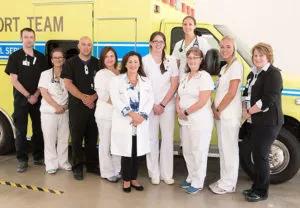
Image content: This image is available to view online.
View image online (https://assets.clevelandclinic.org/transform/c99ab4ec-d2e9-4651-9d01-e08aab5a71fa/650x450-Nursing-002-300x208_jpg)
Pictured in the photo are Medina ED staff and local EMS workers (dressed in black). Left to right are: Sean Kelly, Mary Erickson, Andy Siegfried, Rosa Kovach, Lauren Rogers, Ashley Hawkins, Erin Kaminski (standing on step), Carolyn Luke, Felicia Killinger and Mary Rice.
The ED nurses have also identified future opportunities for improved practice to include:
Since testing the protocols with local paramedics, this education has been expanded to 10 fire departments and one private ambulance service for a total of 419 emergency providers. And the team does frequent re-evaluation and action planning for rapid cycle continuous improvement.
“This is a great example of nursing driving interdisciplinary collaboration and innovation to improve patient care over the continuum,” says Lauren Rogers, MSN, RN, NE-BC, Nurse Manager of the Medina Hospital Emergency Department.
Advertisement
Advertisement
Nurses play key role in comprehensive lifetime treatment program
Customized bots improve speed, efficiency by streamlining daily clinical, clerical tasks
Nurses play pivotal role in patients’ ability to recover in the comfort of their own homes
New protocol reduces costs, increases patient and caregiver satisfaction

Advocating for patient safety is imperative in fast-paced surgical settings

M-Power program improves the perinatal experience for people who have survived abuse

Advice for those pursuing a WOC nursing career

Veteran nurse shares his experience as a caregiver and community volunteer
 Search