Locations:





An old drug learns a new trick
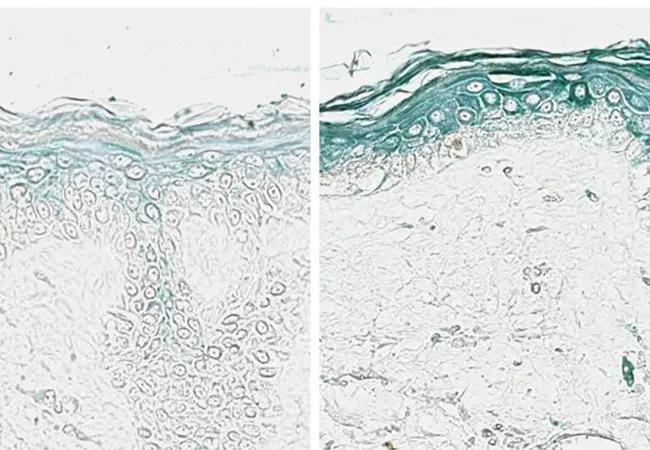
Image content: This image is available to view online.
View image online (https://assets.clevelandclinic.org/transform/81e7183d-0cfd-46d5-95d4-8b0648df3865/18-CCC-4748-McDonald-Hero-Image-650x450pxl_jpg)
18-CCC-4748-McDonald-Hero-Image-650x450pxl
Cleveland Clinic researchers have found for the first time that a pyrimidine synthesis inhibitor, PALA (N-phosphonacetyl-L-aspartate), promotes the clearance of methicillin-resistant Staphylococcus aureus (MRSA), Pseudomonas aeruginosa and Acinetobacter baumannii strains in skin wounds, without the use of antibiotics. Applied as a topical lotion, the compound enhanced natural immune responses and improved the clearance of resistant bacteria in human skin.
Advertisement
Cleveland Clinic is a non-profit academic medical center. Advertising on our site helps support our mission. We do not endorse non-Cleveland Clinic products or services. Policy
The research team, led by Christine McDonald, PhD, previously discovered that nucleotide-binding oligomerization domain 2 (NOD2) activates antimicrobial peptides. They hypothesized that activating NOD2 might facilitate pathogen defense, particularly in the skin.
While NOD2 is an attractive target, it acts mainly as a facilitator of immune responses, rather than having a distinct physiological activity of its own. This has made it difficult for researchers to modify its actions in the laboratory. In the new study, published in Scientific Reports, Dr. McDonald and her team discovered for the first time that NOD2 activity in the skin is controlled by an enzyme that does in fact have a targetable activity — carbamoyl phosphatase synthase II/aspartate transcarbamylase/dihydroorotase (CAD).
The researchers found that CAD negatively regulates NOD2 and therefore set out to block CAD to turn up NOD2. To show that blocking CAD could enhance NOD2’s antimicrobial activity, they used an existing drug called PALA, which is known to turn off CAD. PALA is an early chemotherapy drug that is no longer in use.
Using PALA suspended in a lotion, the team introduced wounds in human skin tissue samples and infected them with three bacterial species: MRSA, P. aeruginosa, and A. baumannii. They then applied the medicated lotion to the skin for various lengths of time. They found that the skin samples that received PALA not only had higher levels of two naturally occurring antimicrobial peptides, but also had fewer surviving bacteria from all three species. Furthermore, they showed that PALA was only toxic to the bacteria, not to the healthy human cells.
Advertisement
The three bacterial species tested are considered opportunistic pathogens that are extremely difficult to kill and are especially dangerous to immunocompromised patients and patients undergoing surgery or long hospital stays. With the current public health crisis surrounding superbugs and antibiotic resistance, there is a crucial need for alternatives to antibiotics for these pathogens.
“This is an exciting discovery from a scientific standpoint because we have found a way to turn up the activity of NOD2, which is notoriously difficult to manipulate,” Dr. McDonald says. “In addition, the bacterial species we studied are also major healthcare problems, so we are excited about the prospect of having an alternative or adjunct treatment not too far in the future.”
Further studies are needed to better understand how PALA could be safely used in humans, but the study shows great promise for developing an alternative infection prevention strategy that does not contribute to antibiotic resistance. In addition to the traditional hospital setting, a cost-effective topical lotion to prevent infection could be beneficial for military personnel, veterinary clinics and even schools where sports injuries and superbug infections are becoming increasingly common.
The study was funded by the Department of Defense through the Peer Reviewed Medical Research Program (PR150299), pilot funding from the STERIS Corporation and the generosity of Guy & Mary Jo McDonald.
Dr. McDonald is associate staff in Cleveland Clinic’s Lerner Research Institute Department of Inflammation and Immunity.
Advertisement
Photo: Human skin samples stained for human beta defensin 2 (HBD2; in green). Left image: Human skin samples treated without PALA. Right image: Human skin samples treated with 2 percent PALA.
Advertisement
Advertisement


International collaboration is most genetically diverse study of the disease to date

Preclinical work promises large-scale data with minimal bias to inform development of clinical tests

Matching SNOMED Term with Curated Post. Please do not touch this post or any of its categories/snomed terms, thank you!

Matching Primary -> Secondary SNOMED Term with Curated Post. Please do not touch this post or any of its categories/snomed terms, thank you!
Cleveland Clinic researchers pursue answers on basic science and clinical fronts

Study suggests sex-specific pathways show potential for sex-specific therapeutic approaches

Cleveland Clinic launches Quantum Innovation Catalyzer Program to help start-up companies access advanced research technology
 Search