Locations:





Lymphocenter investigates therapeutic resistance and more
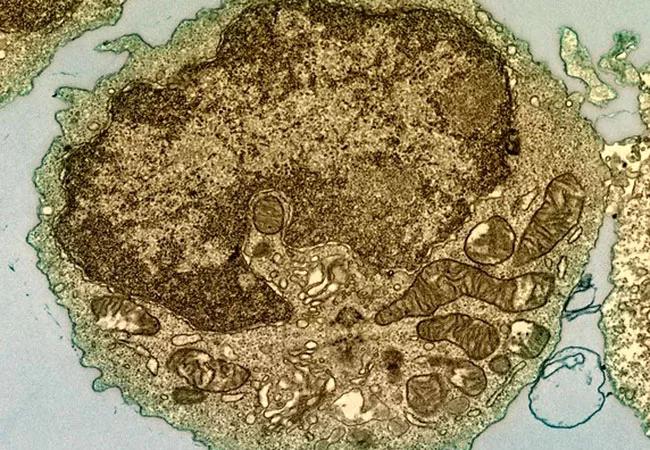
Image content: This image is available to view online.
View image online (https://assets.clevelandclinic.org/transform/e83d2adb-5402-4aef-968e-c5391d2bbcec/19-CNR-735-hill-lymphocenter_jpg)
19-CNR-735-hill-lymphocenter
Lerner Research Institute recently announced funding for two new Centers of Excellence (COE)—the Center for Research Excellence in Gynecologic Cancer (CREGC) and the Center of Excellence in Lymphoid Malignancies Research (Lymphocenter). With the creation of these two new centers, the COE program — designed to speed the translation of lab discoveries into real benefits for patients — grows larger than ever before, now boasting 12 cross-institute centers.
Advertisement
Cleveland Clinic is a non-profit academic medical center. Advertising on our site helps support our mission. We do not endorse non-Cleveland Clinic products or services. Policy
The Lymphocenter seeks to uncover the mechanisms that drive resistance to treatments for lymphocyte cancers like lymphoma and certain types of leukemia.
The Lymphocenter will support three projects that aim to investigate the molecular mechanisms underlying therapeutic resistance and disease relapse, develop novel cellular immunotherapies and analyze physiological outcomes of novel therapies using patient samples. These projects will also explore how and why malignant lymphocytes develop resistance to currently prescribed drugs, including those that inhibit B-cell receptor and Bcl-2 pathways. Understanding these mechanisms is critical for the development of novel therapies to effectively treat the many types of lymphoid malignancies, which the center also seeks to do. Further, the Lymphocenter team will develop a variety of cellular and preclinical models for exploration of novel single agent and rational combination therapies.
Shared resources and services, including biorepositories of blood and tumor tissue samples and a lentiviral core, will be created and are expected to expedite scientific discovery and drug development.
Neetu Gupta, PhD, Department of Inflammation & Immunity, Lerner Research Institute, and Brian Hill, MD, PhD, Department of Hematology and Medical Oncology, Cleveland Clinic Cancer Center, are leading the new COE.
“The Lymphocenter is actively engaged in understanding the basis of resistance and relapse in B cell lymphoma and developing novel small molecule and cellular immunotherapies for treatment of lymphoma patients,” says Dr. Gupta. “We utilize primary patient specimens to investigate causes of treatment success/failure in order to translate our finding to improve and customize patient care.”
Advertisement
Dr. Gupta’s lab investigates molecular mechanisms of B cell activation that regulate humoral immunity and pathogenesis of B cell-mediated diseases. Dr. Hill directs Cleveland Clinic Cancer Center’s Lymphoid Malignancies Program and is principal investigator of several ongoing clinical trials.
Feature image: Transmission electron micrograph of a B cell from a human donor. Credit: National Institutes of Allergy and Infectious Diseases, National Institutes of Health.
Advertisement
Advertisement


International collaboration is most genetically diverse study of the disease to date

Preclinical work promises large-scale data with minimal bias to inform development of clinical tests

Matching SNOMED Term with Curated Post. Please do not touch this post or any of its categories/snomed terms, thank you!

Matching Primary -> Secondary SNOMED Term with Curated Post. Please do not touch this post or any of its categories/snomed terms, thank you!

Cleveland Clinic researchers pursue answers on basic science and clinical fronts

Study suggests sex-specific pathways show potential for sex-specific therapeutic approaches

Cleveland Clinic launches Quantum Innovation Catalyzer Program to help start-up companies access advanced research technology
 Search