Locations:





Honor recognizes imaging and therapeutic insights behind slowing of brain atrophy
Treatments abound for the relapsing form of multiple sclerosis (MS), but virtually no therapies have been shown to slow the progressive form that the disease takes in its later stages.
Advertisement
Cleveland Clinic is a non-profit academic medical center. Advertising on our site helps support our mission. We do not endorse non-Cleveland Clinic products or services. Policy
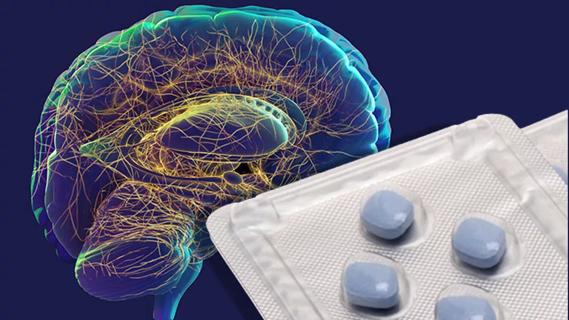
At least that was the case before Cleveland Clinic neurologist Robert J. Fox, MD, identified an asthma medication, ibudilast, as a potential treatment for progressive MS after it had failed in an earlier study for relapsing MS. His idea to apply the agent to progressive MS resulted in the multicenter SPRINT-MS study (N Engl J Med. 2018;379:846-855), which demonstrated an unprecedented 48 percent slowing in progression of whole brain atrophy with ibudilast therapy.
“The stroke of genius was Dr. Fox’s ability to find a possible success in a prior failure and to redirect towards a new clinical trial that has the potential to benefit countless patients with multiple sclerosis,” says Andre Machado, MD, PhD, Chair of Cleveland Clinic’s Neurological Institute.
That resourceful inventiveness is a key reason Dr. Fox, who serves as Vice Chair for Research in the Neurological Institute, has been named the recipient of Cleveland Clinic’s 2018 Sones Innovation Award. The selection committee also cited Dr. Fox’s leadership of a team of Cleveland Clinic imaging physicists and engineers to develop a collection of innovative, complex imaging techniques to provide imaging biomarkers for measuring response to therapy in the SPRINT-MS trial.
“These techniques are the most advanced imaging modalities ever deployed in a multicenter neurological clinical trial,” Dr. Machado observes, “and they have potential to accelerate development of therapies for other neurodegenerative diseases as well.”
The award won by Dr. Fox recognizes achievements that continue the tradition of pioneering Cleveland Clinic cardiologist F. Mason Sones, MD, to advance innovation in the service of improved patient care.
Advertisement
The three-and-a-half-minute video below shares more of the story behind Dr. Fox’s innovative work.
Video content: This video is available to watch online.
View video online (https://www.youtube.com/embed/8vs2fr2RmOk?feature=oembed)
Advertisement
Advertisement

New study advances understanding of patient-defined goals

Testing options and therapies are expanding for this poorly understood sleep disorder
Real-world claims data and tissue culture studies set the stage for randomized clinical testing
Digital subtraction angiography remains central to assessment of ‘benign’ PMSAH

Cleveland Clinic neuromuscular specialist shares insights on AI in his field and beyond
Findings challenge dogma that microglia are exclusively destructive regardless of location in brain

Neurology is especially well positioned for opportunities to enhance clinical care and medical training
New review distills insights from studies over the past decade
 Search