Locations:





Pioneer of angioplasty never stopped innovating and teaching
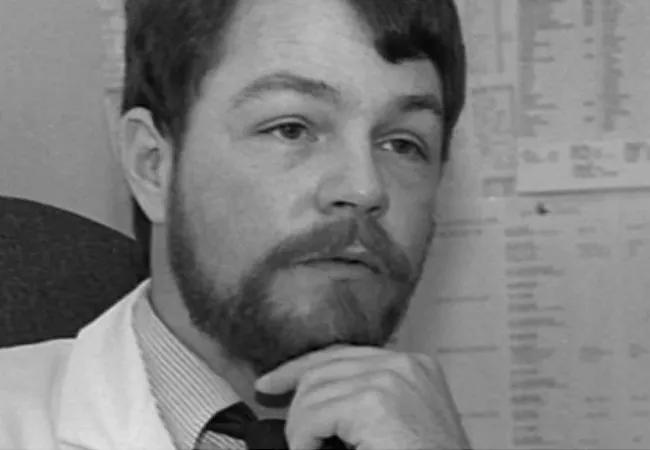
Image content: This image is available to view online.
View image online (https://assets.clevelandclinic.org/transform/6c8a06d1-b818-43cd-bd47-f4f99f065c19/16-HRT-2327-Whitlow-Award-CQD-650x450_jpg)
Patrick L. Whitlow, MD
The late Cleveland Clinic interventional cardiologist Patrick L. Whitlow, MD, was honored with the Geoffrey O. Hartzler Master Clinical Operator Award on Oct. 31 at the 28th Transcatheter Cardiovascular Therapeutics (TCT) conference, convened by the Cardiovascular Research Foundation (CRF) in Washington, D.C.
Advertisement
Cleveland Clinic is a non-profit academic medical center. Advertising on our site helps support our mission. We do not endorse non-Cleveland Clinic products or services. Policy
Dr. Whitlow, the long-time director of interventional cardiology at Cleveland Clinic, died in March 2016.
The Master Clinical Operator Award, granted annually by the CRF, recognizes a physician who has advanced interventional cardiovascular medicine through technical excellence and innovation.
“We are honored to pay tribute to Dr. Patrick Whitlow,” said TCT Co-Director Gregg W. Stone, MD, who co-presented the award to Dr. Whitlow’s widow, Lara, and his children. “He was among the first group of early innovators who were instrumental in shaping the subspecialty of interventional cardiology.”
The award recognizes diverse aspects of Dr. Whitlow’s 30-year career at Cleveland Clinic and prior service at the University of Alabama at Birmingham. The many remembrances of Dr. Whitlow during and leading up to the award presentation consistently returned to a few core characteristics that distinguished him in his field:
Advertisement
The most apt tributes come from colleagues who knew Dr. Whitlow best. Here’s a sampling of reflections from those at Cleveland Clinic and beyond:
“Pat was a remarkable physician and an early pioneer of angioplasty strategies. He drove the field forward by playing a pivotal role in developing and testing new devices for angioplasty in the 1990s — initially coronary atherectomy devices, and later stents and devices for chronic total occlusions.”
— Gregg W. Stone, MD, Columbia University Medical Center, TCT Co-Director
“Pat was an extraordinary man and richly deserves the award. Having experienced personally his commitment to patients, his acute mind and his innovative ideas, I attest that we have lost a great humanitarian and gifted physician.”
— Lars Svensson, MD, PhD, Chairman, Sydell and Arnold Miller Family Heart & Vascular Institute, Cleveland Clinic
“He had this adventuresome, inquisitive mind. He was always looking for new devices or treatments to help him take care of his really sick patients, whether it was the Rotablator™ or Frontrunner® or MitraClip or CrossBoss™. He was always interested in furthering the field and being at the cutting edge. And as a patient advocate, if it took till 11 o’clock or midnight to finish a case in the cath lab, he’d be there.”
— Stephen Ellis, MD, Chief Academic Officer, Department of Cardiovascular Medicine, Cleveland Clinic
“He was truly a premier technical and clinical operator with an extraordinary ability to take new technologies and find creative ways to advance and perfect interventional procedures. More importantly, he was a warm, compassionate and caring person who always put his patients first.”
— Martin B. Leon, MD, Columbia University Medical Center, TCT Co-Director
Advertisement
“People like Dr. Whitlow, who were there almost on day one, took a field that didn’t even exist previously and turned it into one of the most important academic and clinical disciplines in all of medicine.”
— Steven Nissen, MD, Chairman, Department of Cardiovascular Medicine, Cleveland Clinic
“He’s a great example of what we honor at Cleveland Clinic: an innovator, a teacher, an educator and a great clinician.”
— Toby Cosgrove, MD, CEO and President, Cleveland Clinic
“Everybody loved to work with him. And we learned so much from him. All of us former fellows say that when we’re in trouble, we always think, ‘What would Pat do if he were standing next to us?’”
— Samir Kapadia, MD, Section Head of Invasive and Interventional Cardiology, Cleveland Clinic
For a video with these and more remembrances of Dr. Whitlow, click here.
Advertisement
Advertisement
A sampling of outcome and volume data from our Heart & Vascular Institute
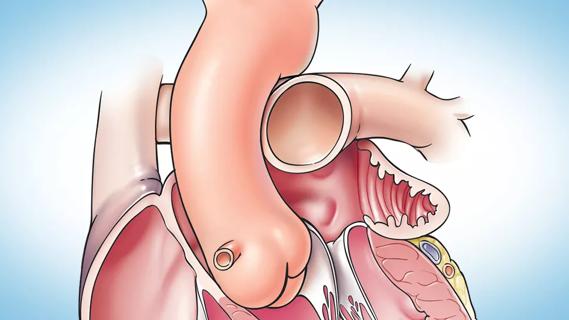
Concomitant AF ablation and LAA occlusion strongly endorsed during elective heart surgery
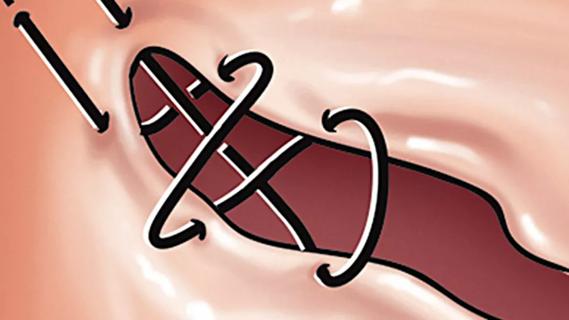
Large retrospective study supports its addition to BAV repair toolbox at expert centers
Young age, solid tumor, high uptake on PET and KRAS mutation signal risk, suggest need for lobectomy
Surprise findings argue for caution about testosterone use in men at risk for fracture
Residual AR related to severe preoperative AR increases risk of progression, need for reoperation

Findings support emphasis on markers of frailty related to, but not dependent on, age
Provides option for patients previously deemed anatomically unsuitable
 Search