Locations:





A pioneer of CIED lead extraction shares wisdom in HRS Founders Lecture
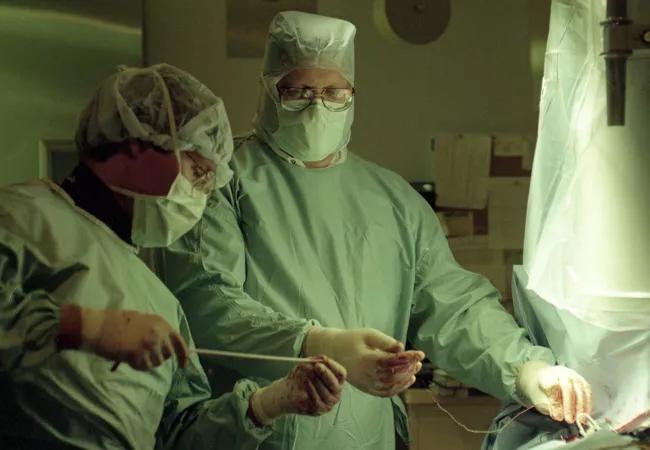
Image content: This image is available to view online.
View image online (https://assets.clevelandclinic.org/transform/04c59e32-ef4c-4222-887f-7112956fe35c/18-HRT-483-Wilkoff-CQD-Hero-1_jpg)
Dr. Wilkoff doing a lead extraction in 1995
For a number of years after electrophysiologist Bruce Wilkoff, MD, joined the staff of Cleveland Clinic in 1986, abandoned leads from cardiac implantable electronic devices (CIEDs) were seriously underestimated.
Advertisement
Cleveland Clinic is a non-profit academic medical center. Advertising on our site helps support our mission. We do not endorse non-Cleveland Clinic products or services. Policy
“No one viewed abandoned leads as a problem,” says Dr. Wilkoff, who is now Cleveland Clinic’s Director of Cardiac Pacing and Tachyarrhythmia Devices. “We thought leads lasted longer than they did, and that we could easily take them out if needed. But these were false beliefs. Our perceptions of infection, venous occlusion and the fragility of leads were so different from reality that we didn’t even understand there was a problem.”
It took the recall of a particular pacemaker lead to motivate the electrophysiology community to take on the issue of lead management, Dr. Wilkoff notes. “Finally an understanding of the morbidity associated with devices and leads helped prioritize lead extraction as a very important issue,” he says. “And even as we continue to work on this issue, we discover how much of what we believe to be true is false.”
The underlying lesson — the need to recognize that a serious problem exists before it can be addressed — explains in large part why interest in the extraction of infected CIED leads has lagged even as excitement about CIEDs has swelled.
That lesson was also at the heart of Dr. Wilkoff’s Founders Lecture at the Heart Rhythm Society’s 39th Annual Scientific Sessions on May 9, “What I Learned About Lead Management Over the Last 20+ Years.” He was honored with the society’s 2018 Founders Lectureship Award in recognition of his “significant and unique contributions to the field of cardiac pacing and electrophysiology” over the past three decades.
With more than 10,000 pacemaker and defibrillator procedures and over 3,000 transvenous lead extractions under his belt, Dr. Wilkoff focused his lecture on the challenges of lead extraction and keys to success. He also touched on how the problems of fibrosis and fragile leads have been overcome, and where complications are known to occur. Consult QD interviewed Dr. Wilkoff (shown above during a lead extraction in 1995) ahead of his lecture to capture his thoughts on a few subtopics he planned to address.
Advertisement
Q: What motivated your interest in lead extraction?
A: Thirty years ago, in 1988, my father developed a pacemaker infection. There was then only one physician in the world who was trying to do anything about this problem. I spent some time with him. He successfully removed my dad’s lead using primitive tools. We started thinking through what types of tools were needed, and began working with manufacturers to develop better tools. We started collecting and publishing data, and as time went on, we became more and more aware of what the issues were.
Q: What are the most important changes in lead management you’ve witnessed in the past two decades?
A: Certainly the development of locking stylets, telescoping sheaths based on the concepts of counterpressure and countertraction, and powered sheaths have made an enormous difference. We’ve also seen how the impact of lead extraction has prompted development of better leads. Finally, we are working on reducing infections and morbidities associated with lead extraction itself and are just beginning to prevent procedure-related complications.
Q: What primary challenges remain?
A: Probably the most serious is the perception that lead extraction is more dangerous than it really is. People don’t understand how serious lead infection is, and how low the risk of extraction is in comparison.
Q: What excites you most about what’s on the horizon?
A: We were small group of people interested in lead extraction, but it has finally become an accepted concept among electrophysiologists, as well as among our referring population of infectious disease physicians, cardiac imaging specialists and surgeons. I expect that the number of people doing lead extraction will grow significantly worldwide, and that the development and implementation of tools and techniques will expand accordingly.
Advertisement
Q: So it’s taken about 30 years for the concept of lead management to really catch on. What advice do you have for others struggling to address a clinical problem they’ve identified?
A: There are five principles I think are important to clinical success.
First is the power of problem solving. Much of your success in medical school is determined by how many facts you can remember. In practice, however, the ability to take on a problem and come up with a solution is paramount.
Second is the power of collaboration. Working with others who have different areas of expertise can improve your perception of a problem.
Third is the power of collecting data. When you collaborate to create solutions, you have to see how well proposed solutions work.
Fourth is power of thinking both specifically and strategically. How can an individual solution be applied more broadly?
Fifth is the power of understanding the difference between developing a technique and transferring the expertise to others. If it works, you must share it.
Advertisement
Advertisement

A sampling of outcome and volume data from our Heart & Vascular Institute
Concomitant AF ablation and LAA occlusion strongly endorsed during elective heart surgery
Large retrospective study supports its addition to BAV repair toolbox at expert centers
Young age, solid tumor, high uptake on PET and KRAS mutation signal risk, suggest need for lobectomy
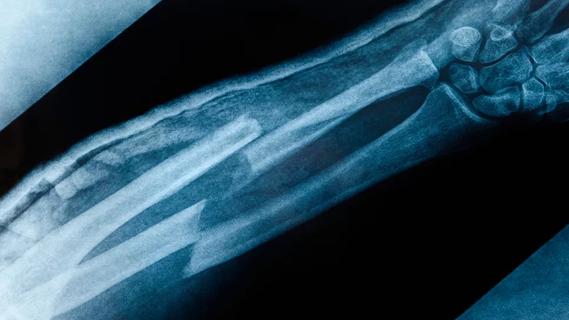
Surprise findings argue for caution about testosterone use in men at risk for fracture
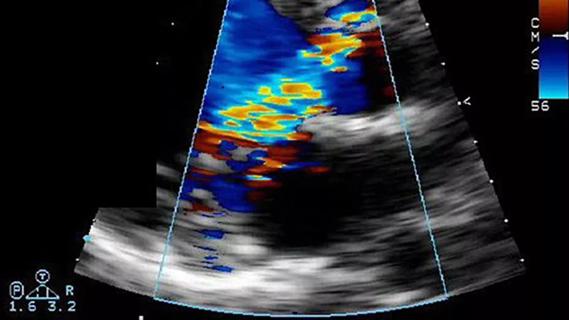
Residual AR related to severe preoperative AR increases risk of progression, need for reoperation

Findings support emphasis on markers of frailty related to, but not dependent on, age
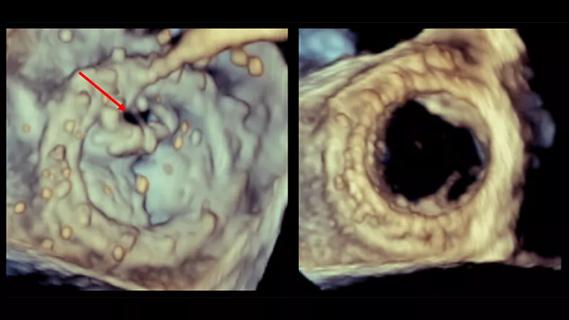
Provides option for patients previously deemed anatomically unsuitable
 Search