Locations:





New research explores the role of immune cell and blood-brain barrier changes
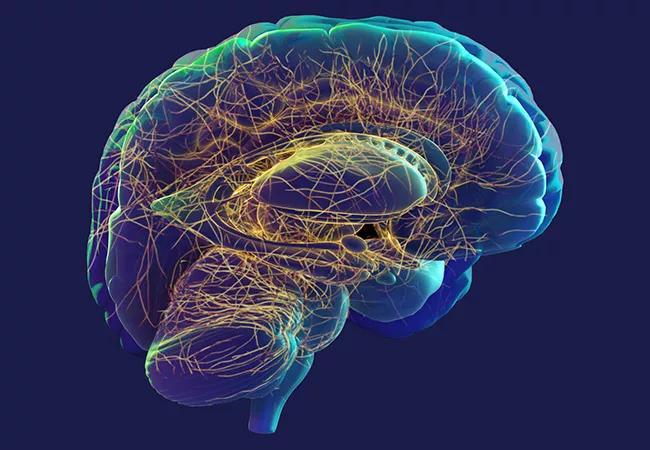
Image content: This image is available to view online.
View image online (https://assets.clevelandclinic.org/transform/c03e69a2-de39-4cf8-b954-30d48d472fce/22-NEU-3482371-Alzheimers-brain-650x450-1_jpg)
22-NEU-3482371 Alzheimers-brain-650×450
While amyloid deposition and pathologic tau have long been the primary focus of Alzheimer’s disease (AD) research, it is becoming increasingly clear that unidentified factors are likely also important for successful therapy. An area of research that is generating considerable interest is the possible role of changes in peripheral immunity in regulating AD progression. Investigations in this area, led by Jagan Pillai, MD, PhD, a neurologist in Cleveland Clinic’s Lou Ruvo Center for Brain Health, were recently funded with a National Institutes of Health R01 award of approximately $3.89 million.
Advertisement
Cleveland Clinic is a non-profit academic medical center. Advertising on our site helps support our mission. We do not endorse non-Cleveland Clinic products or services. Policy
“The field of AD research is at an interesting crossroads,” says Dr. Pillai. “Therapies directed at reducing amyloid and tau are coming to fruition, but the degree of success is modest. This begs the question: What are we missing?”
The role of peripheral immunity in the progression of AD has often been dismissed, as prevailing thinking has been that the blood-brain barrier (BBB) prevents entry of immune cells to the brain. However, a growing body of evidence – some of it generated by Dr. Pillai and his team – is helping the concept gain momentum. In the past few years, their research has demonstrated that analytes of key inflammatory pathways correlating with symptomatic AD and cognitive decline can be found in peripheral blood and cerebrospinal fluid (CSF) simultaneously, as well as in brain tissue of autopsy patients. (See Annals of Clinical and Translational Neurology 2019;6[7]:1248-1262 and 2020;7[7]:1225-1239, and Frontiers in Aging Neuroscience 2021;13:676744.)
“Dynamic immune activation changes suggest that immunity plays a role in AD development and progression, encouraging us to further pursue this tack,” Dr. Pillai explains. “The NIH grant is allowing us to take important new steps in this direction using advanced technologies.”
Dr. Pillai’s team uses time-of-flight mass cytometry to comprehensively profile immune cells from peripheral blood and CSF. They will investigate a total of 168 participants from four distinct groups: (1) cognitively normal individuals, (2) those with preclinical AD, (3) those with AD with mild cognitive impairment and (4) those with AD with dementia. Participants are being followed for a year.
Advertisement
In addition, activation status of single cells is being assessed through measuring phosphorylated signaling proteins. Isolated cells are also stimulated ex vivo to assess cytokine and chemokine production using validated multiplexed proteomic arrays.
“These investigations give us single-cell resolution, making possible a much better understanding of disease activity,” Dr. Pillai says.
Using the same cohort, the investigators are evaluating BBB changes using dynamic contrast-enhanced MRI. Microhemorrhages and burden on susceptibility-weighted imaging are also being assessed. Severity of BBB permeability changes will be correlated with measures of cognitive change.
Dr. Pillai notes that his team’s investigations are unique in combining analysis of BBB changes with detailed characterization of immunity changes associated with AD. “I expect that integrating these two areas across the different stages of AD will improve understanding of the progression of this disease and be key to new avenues of therapy,” he says.
The National Institute on Aging has adopted the AT(N) construct for characterizing AD, with the goal of standardizing research. The framework defines different phases of AD according to CSF biomarkers identifying beta-amyloid (A) and tau (T), and CSF and imaging indicators of neurodegeneration or neuronal injury (N). Dr. Pillai’s team is using the stages of AD defined by this system in their investigations. He notes, however, that this framework does not completely characterize AD and its phenotypic heterogeneity.
Advertisement
“The AT(N) system is flexible, as new biomarkers can be added to existing AT(N)-defined groups,” he says. “We expect our research to help determine whether new immune-related biomarkers would strengthen the AT(N) framework.”
Ultimately, Dr. Pillai hopes his research will determine how peripheral immune and BBB changes correlate with clinical AD progression. He notes that many of his team’s investigations are adapted from the cancer field, which has been increasingly successful in developing specific therapies targeting the immune system.
“Characterizing immune changes during the different disease stages over time is critical to the eventual goal of targeted therapeutics,” he explains. “In these investigations, we hope to correlate specific immune changes with clinical outcomes, paving the way for novel interventions.”
Advertisement
Advertisement

New study advances understanding of patient-defined goals

Testing options and therapies are expanding for this poorly understood sleep disorder
Real-world claims data and tissue culture studies set the stage for randomized clinical testing
Digital subtraction angiography remains central to assessment of ‘benign’ PMSAH

Cleveland Clinic neuromuscular specialist shares insights on AI in his field and beyond
Findings challenge dogma that microglia are exclusively destructive regardless of location in brain

Neurology is especially well positioned for opportunities to enhance clinical care and medical training
New review distills insights from studies over the past decade
 Search