Locations:





For the first time, research from a pregnancy registry looks beyond infancy
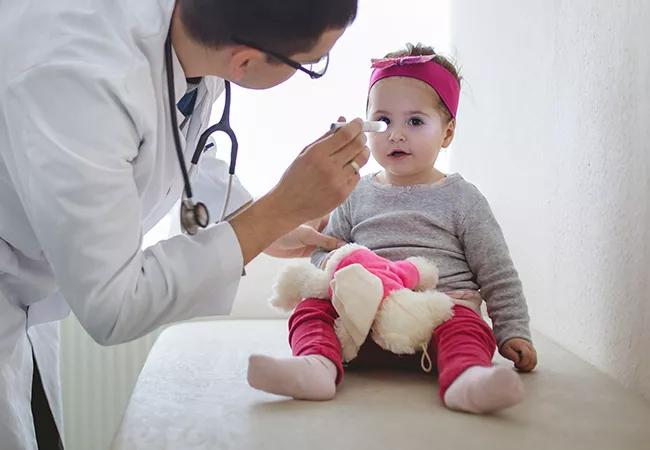
Image content: This image is available to view online.
View image online (https://assets.clevelandclinic.org/transform/ceb235ac-c1dc-4c19-9565-86c8476f23f3/17-NEU-4446-Swetlik-Neurodevelopment-650x450_jpg)
17-NEU-4446-Swetlik-Neurodevelopment-650×450
Research underway at Cleveland Clinic Lerner College of Medicine is investigating whether prenatal exposure to second-generation (“atypical”) antipsychotics increases the risk of neurodevelopmental impairment in early childhood. The study will analyze responses to questionnaires sent to hundreds of women who took these medications during pregnancy, with a focus on a range of behavioral and developmental issues in their children.
Advertisement
Cleveland Clinic is a non-profit academic medical center. Advertising on our site helps support our mission. We do not endorse non-Cleveland Clinic products or services. Policy
Second-generation antipsychotics tend to cause fewer side effects than first-generation medications for schizophrenia and bipolar disorder, and they are now commonly prescribed for conditions other than psychosis, including depression, anxiety and insomnia.
“This is the first longitudinal study to go beyond the first year of life in children exposed in utero to second-generation antipsychotic medications,” says Carol Swetlik, a fourth-year medical student at Cleveland Clinic Lerner College of Medicine who is conducting the study. “With the growing use of these drugs in pregnancy, it’s of paramount importance that potential risks are identified.”
The study will draw on enrollees in the Massachusetts General Hospital-based National Pregnancy Registry for Atypical Antipsychotics (NPRAA), which was established in 2008 to assess the risk of major congenital malformations associated with first-trimester exposure to second-generation antipsychotics. Since then, the registry has been the basis of a number of studies related to pregnancy and infant outcomes. A recent study found no increased risk of gestational diabetes in pregnant women taking atypical antipsychotics, as reported in this previous post.
Although no elevated risk of malformation has been detected in prior studies, there has been evidence of reduced neuromotor performance and cognitive measures in early infancy in babies exposed to atypical antipsychotics in utero compared with unexposed infants. Differences, however, were no longer detectable at 12 months of age.
Advertisement
“The neurodevelopmental outcomes research is an important new offshoot of the NPRAA registry,” says Adele Viguera, MD, a staff psychiatrist with Cleveland Clinic’s Department of Psychiatry and Psychology and co-founder of the NPRAA, who is overseeing Ms. Swetlik’s study. “It’s a perfect opportunity to study outcomes from the database’s earliest enrollees, as they now have school-aged children.”
The study will assess responses to Ages and Stages Questionnaires (ASQ-3™ and ASQ:SE-2™) sent electronically to hundreds of parents or primary caretakers of children whose mothers enrolled in the pregnancy registry. Developed as screening instruments for children up to 5½ years of age, the questionnaires focus on the child’s social, intellectual and motor developmental milestones, as well as mental health issues such as anxiety and depression. They are designed to be completed by a regular caretaker of the child without professional assistance. The questionnaires include “closed-ended” questions (answered with “yes,” “no” or “sometimes”) as well as open-ended ones that allow the respondent to provide more detailed information.
“In an ideal world, we would evaluate the children directly,” says Ms. Swetlik, who explains that doing so would make the study prohibitively expensive and logistically challenging, since the registry enrolls mothers nationwide. She adds that the enormous cost involved in large neurobehavioral studies that require professional assessment is an important reason they are so rarely done in psychiatry.
Advertisement
“Fortunately, parent-provided information has been validated in other studies,” she adds. “Our study could become a model for examining other exposures affecting early development, such as lead exposure in early childhood or illicit drug exposure during pregnancy.”
This research is being conducted by Ms. Swetlik as her thesis project as part of the Lerner College of Medicine’s five-year medical program, which enables her to graduate with both a medical degree and a master’s degree. She expects the study results to be available in spring 2018. Dr. Viguera serves as her mentor and thesis advisor.
“Any mother who has to take a medication in pregnancy wonders if it will affect her child,” observes Dr. Viguera. “Research like this is important because it enables obstetricians and psychiatrists to provide evidence-based guidance to pregnant women as they face such situations.”
Advertisement
Advertisement

New study advances understanding of patient-defined goals

Testing options and therapies are expanding for this poorly understood sleep disorder

Real-world claims data and tissue culture studies set the stage for randomized clinical testing
Digital subtraction angiography remains central to assessment of ‘benign’ PMSAH

Cleveland Clinic neuromuscular specialist shares insights on AI in his field and beyond

Findings challenge dogma that microglia are exclusively destructive regardless of location in brain

Neurology is especially well positioned for opportunities to enhance clinical care and medical training

New review distills insights from studies over the past decade
 Search