Locations:





Novel monoclonal antibody takes aim at alpha-synuclein clusters
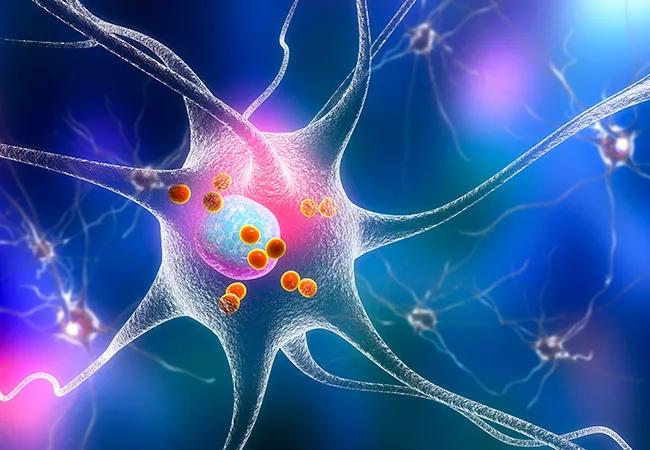
Image content: This image is available to view online.
View image online (https://assets.clevelandclinic.org/transform/fe8fdb53-bd41-48eb-a5a5-ad17a3bbcbe5/18-NEU-505-Fernandez-Parkinson-Spark_jpg)
18-NEU-505-Fernandez-Parkinson-Spark
Of the multiple therapies available for Parkinson disease, all come up short: They often entail unpleasant side effects and only temporarily mask symptoms without slowing the disease course. SPARK, a phase 2 clinical trial, is currently testing what may prove to be a novel disease-modifying treatment.
Advertisement
Cleveland Clinic is a non-profit academic medical center. Advertising on our site helps support our mission. We do not endorse non-Cleveland Clinic products or services. Policy
“SPARK is evaluating the most promising compound yet developed to fight early-stage Parkinson disease,” says Hubert H. Fernandez, MD, Director of Cleveland Clinic’s Center for Neurological Restoration and co-principal investigator of the trial’s North American Steering Committee. “Unlike existing therapies, evidence shows that this compound targets the underlying cause and may slow disease progression. This is one of the first passive immunization therapies to be studied globally.”
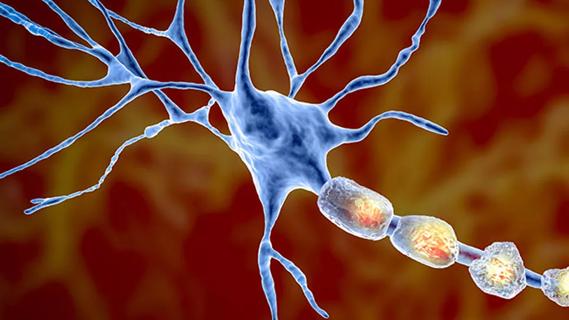
Alpha-synuclein protein is abundant in the brain, but only in its mutated, misfolded form does it form aggregates. These alpha-synuclein aggregates are the primary component of Lewy bodies, which are found in Parkinson disease and other neurodegenerative syndromes. They spread from neuron to neuron to other parts of the brain, contributing to disease progression.
Evidence from animal models indicates that alpha-synuclein aggregates are likely to be central to the pathology of Parkinson disease and not just “innocent bystanders,” as Dr. Fernandez puts it.
SPARK is evaluating BIIB054, a recombinant human monoclonal antibody under development by Biogen that binds to aggregated alpha-synuclein and prevents it from spreading. In animal models, the BIIB054/alpha-synuclein aggregate compounds were flushed out with normal cerebrospinal fluid circulation. At the same time, motor impairments typical of Parkinson disease symptoms improved. “Fortunately, BIIB054 does not bind to normal non-aggregate-forming alpha-synuclein,” Dr. Fernandez notes.
Advertisement
Results of the phase 1 trial of BIIB054, which began in 2015, are anticipated to be published soon. The trial tested ascending doses of BIIB054 in 48 healthy U.S. adults between ages 40 and 65. The compound was generally safe and well-tolerated except that one participant developed asymptomatic ischemia in the right parietal lobe at the highest dosage; this dosage is no longer used. Some participants reported infusion-related headache, dizziness or pain, and one developed a rash at the infusion site.
SPARK is expected to recruit more than 300 patients with early Parkinson disease at 50 sites in the U.S., Canada and Europe, including Cleveland Clinic. Participants must be 40 to 80 years old, have had a diagnosis of Parkinson disease for no more than three years and score no higher than 2.5 on the Modified Hoehn and Yahr Scale, indicating that the disease has not progressed beyond the mild bilateral stage. Restrictions exist on the amount of Parkinson disease therapy the patient has undergone before trial entry.
Patients are randomized to receive an intravenous infusion of either 250, 1,250 or 3,500 mg of BIIB054 once a month for 18 months. The control arm receives placebo monthly for the first year and then will be randomized to one of the therapy arms for a second year.
The safety, pharmacokinetics and pharmacodynamics of BIIB054 will be evaluated.
The study is estimated to be completed by June 2022. Dr. Fernandez notes that detecting improvement from a new drug for Parkinson disease requires many subjects and a long study period because of the disease’s slow progression and heterogeneous nature.
Advertisement
“We hope to see indications of clinical improvement and further evidence of the drug’s safety during this trial,” he adds. “If signs from this trial are favorable, we will certainly be promptly planning for a large phase 3 investigation.”
Candidates for the SPARK trial are being recruited at multiple centers. More information can be found here and here.
Advertisement
Advertisement

New study advances understanding of patient-defined goals

Testing options and therapies are expanding for this poorly understood sleep disorder
Real-world claims data and tissue culture studies set the stage for randomized clinical testing
Digital subtraction angiography remains central to assessment of ‘benign’ PMSAH

Cleveland Clinic neuromuscular specialist shares insights on AI in his field and beyond
Findings challenge dogma that microglia are exclusively destructive regardless of location in brain

Neurology is especially well positioned for opportunities to enhance clinical care and medical training
New review distills insights from studies over the past decade
 Search