Locations:
Search IconSearch

Digital Health in Electrophysiology and Beyond: The Potential and the Challenges

Review offers comprehensive assessment of the landscape for wearables and more
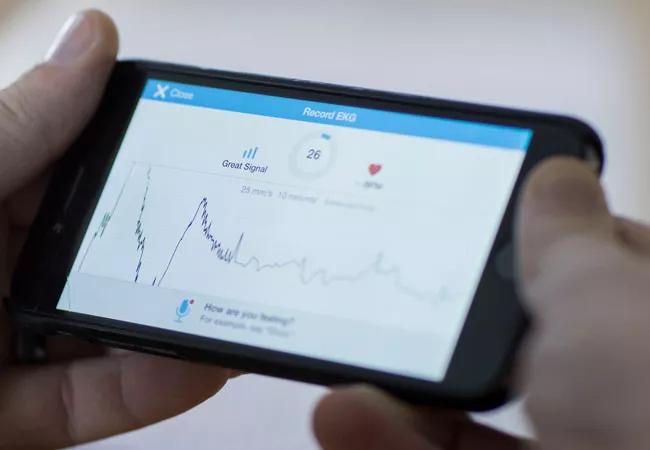
20-HVI-2013168-digital-electrophysiology-650×450

“With great power and far-reaching capabilities come great responsibilities.” So concludes a new review paper, “Digital Health and the Care of the Arrhythmia Patient: What Every Electrophysiologist Needs to Know,” published in Circulation: Arrhythmia and Electrophysiology by a multi-institutional team of authors led by Khaldoun Tarakji, MD, MPH, Associate Section Head of Cardiac Electrophysiology at Cleveland Clinic and Director of the Center for Digital Health and Telemedicine in its Heart, Vascular & Thoracic Institute.

Advertisement

Cleveland Clinic is a non-profit academic medical center. Advertising on our site helps support our mission. We do not endorse non-Cleveland Clinic products or services. Policy

Dr. Tarakji assembled the diverse group of specialists to develop the review, which includes national leaders in digital health, electrophysiology, patient experience and other disciplines. The authors present a briskly paced survey of leading issues around digital health in electrophysiology and cardiovascular care overall, specifically:

  • The landscape for wearable devices in cardiovascular care
  • The regulatory process for wearable tech
  • Challenges and opportunities in closing gaps between digital health technology and clinical practice
  • Virtual clinical trials made possible by digital health technology
  • The role of artificial intelligence and machine learning in making the most of digital technology in electrophysiology
  • How wearables and other digital technologies may help fill gaps in medical knowledge
  • Patient and physician experience with digital health technology
  • The tech industry’s future in healthcare
  • Training new physicians in digital health technology

While the review addresses the transformation of care for arrhythmia patients with the advent of digital technologies, it notes that the challenges and opportunities explored apply to all medical specialties. As a result, the document represents a resource for describing the digital health landscape to clinicians of all disciplines as well as to patients, researchers and members of industry.

Here is a sampling of observations made in the article:

  • “The application of [digital health] technologies, whether hardware or software as a medical device, for disease management will likely require additional FDA clearance,” the authors write. One reason, they note, is that the accuracy or performance of diagnostic technologies will need to be validated in specific populations, as positive predictive value will differ according to background disease prevalence. Additionally, it may be important to characterize other measures of diagnostic performance beyond positive predictive value, including sensitivity, specificity and negative predictive value. “This information will be critical if the data from these devices are actionable or lead to changes in therapy, which can raise the risk classification of the device,” the authors write.
  • The lack of a proper workflow to triage the flood of data from personal devices without setting clear expectations on the part of patients can turn consumer health wearables into exotic gadgets supporting concierge medicine instead of efficient tools to transform care of the population.
  • Employing digital technologies for certain aspects of clinical trials — such as enrollment, clinical data capture, study visits and measurement of outcomes — creates opportunities to substantially reduce the per-participant cost of studies and to broaden patient recruitment by reducing travel requirements. At the same time, digitizing portions of trial operations may raise concerns about the accuracy of patient-supplied data, and large volumes of data from virtual trials involving continuous data collection from wearable devices create unprecedented challenges for data storage and analysis.
  • Incoming information from remote monitoring devices can present two possibilities: a burdensome stream of endless data to be reviewed and kept up with, or an unprecedented source of clinical insight if the data “can be intelligently sorted and presented in a prioritized, cohesive fashion.” Toward the latter goal, the authors suggest there may be much to learn from efforts to create a single digital platform for integrating fragmented data inputs, ideally with a data integrator into electronic health record systems.

Advertisement

These and other observations give rise to the authors’ conclusion that these technologies’ formidable capabilities come with matching demands and responsibilities. “As the supply of patient-generated data and genomic data swells,” says Dr. Tarakji, “clinicians have an opportunity to develop more-personalized risk assessments to better manage common and high-burden diseases. This review helps guide the cardiovascular community on the issues to be considered as we work to make the growing abundance of data an asset rather than a burden.”

“Once fully employed and integrated, digital health — whether through wearables or delivery of care — will truly transform healthcare as we know it,” observes Oussama Wazni, MD, Section Head of Cardiac Electrophysiology at Cleveland Clinic. “This comprehensive review will help clinicians navigate the future of digital healthcare.”

The review is available here.

Advertisement

Related Articles

19-HRT-6507 Vitals-650×450
Rani duplicate post Check Out These Outcomes

A sampling of outcome and volume data from our Heart & Vascular Institute
illustration of the human heart focused on the left atrial appendage
Takeaways From Updated STS Guidelines for Surgical Treatment of Atrial Fibrillation

Concomitant AF ablation and LAA occlusion strongly endorsed during elective heart surgery
illustration of a figure-of-8 stitch for aortic valve repair
Figure-of-8, Hitch-Up Stitch Is Safe and Durable in Bicuspid Aortic Valve Repair

Large retrospective study supports its addition to BAV repair toolbox at expert centers
histology image of lung tissue showing spread through air spaces (STAS)
Lung Cancer Study Links Preoperative Factors With Spread Through Air Spaces

Young age, solid tumor, high uptake on PET and KRAS mutation signal risk, suggest need for lobectomy
x-ray of bone fracture in a forearm
TRAVERSE Substudy Links Testosterone Therapy to Increased Fracture Risk in Older Men With Hypogonadism

Surprise findings argue for caution about testosterone use in men at risk for fracture
echocardiogram showing severe aortic regurgitation
Early Referral for Enlarged Roots Critical to Prevent Residual AR After Aortic Root Replacement With Valve Reimplantation

Residual AR related to severe preoperative AR increases risk of progression, need for reoperation

photo of intubated elderly woman in hospital bed
Proteomic Study Characterizes Markers of Frailty in Cardiovascular Disease and Their Links to Outcomes

Findings support emphasis on markers of frailty related to, but not dependent on, age
3D transesophageal echocardiographic images
New Leaflet Modification Technique Curbs LVOT Obstruction Risk in Valve-in-Valve TMVR

Provides option for patients previously deemed anatomically unsuitable

Ad