Locations:





IN.PACT DEEP analysis yields a call to revise diagnostic guidelines
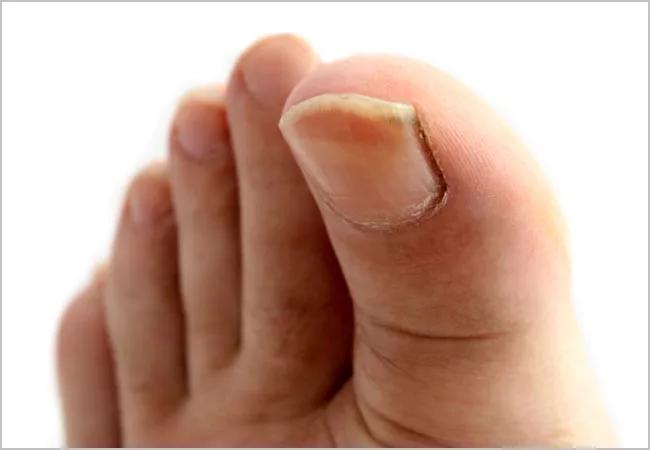
Image content: This image is available to view online.
View image online (https://assets.clevelandclinic.org/transform/4ef20001-6710-4a52-b4db-83a434614bc8/16-HRT-286-CLI-diagnostic-CQD-650x450_jpg)
To Diagnose Critical Limb Ischemia, Look to the Toe as Well as the Ankle
Currently recommended hemodynamic measurements for diagnosing critical limb ischemia (CLI) fall short too often and should be supplemented by the more sensitive measure of toe pressure.
Advertisement
Cleveland Clinic is a non-profit academic medical center. Advertising on our site helps support our mission. We do not endorse non-Cleveland Clinic products or services. Policy
So concludes a substudy of the multinational randomized IN.PACT DEEP trial by a team of researchers from Cleveland Clinic and several European centers. The study was published online in February by the Journal of Vascular Surgery.
“Our findings have led us to call for a change in how practice guidelines recommend that we diagnose CLI,” says the study’s primary author, Mehdi Shishehbor, DO, MPH, PhD, Director of Endovascular Services at Cleveland Clinic. “We are saying you should no longer rely only on the ankle-brachial index (ABI) to diagnose CLI in patients with lower extremity ulcers but instead go beyond the ABI and at least obtain a toe pressure.”
The IN.PACT DEEP substudy was prompted by a recent single-center study at Cleveland Clinic led by Dr. Shishehbor suggesting that approximately 30 percent of patients with CLI present with a normal or near-normal ABI. Furthermore, the hemodynamic parameter recommended by multiple professional societies for diagnosing CLI — namely, an ABI <0.4 — may not adequately identify patients with isolated infrapopliteal disease and severe ischemia. The societies whose guidelines recommend this ABI threshold include the American Heart Association, American College of Cardiology, European Society of Cardiology and others.
To assess the accuracy of this parameter in a more robust patient sample, Dr. Shishehbor and colleagues worked from the database of the IN.PACT DEEP trial, which was designed to compare drug-eluting balloon angioplasty with standard balloon angioplasty for infrapopliteal disease. That study was chosen because it used core laboratory-adjudicated angiographic data to confirm patients’ CLI diagnoses.
Advertisement
Of the 358 patients enrolled in IN.PACT DEEP, 237 were identified who had isolated infrapopliteal disease and available ABI measures. Of those 237 patients, 40 had available toe pressure measurements. Within these samples, the researchers discovered the following:
“These findings indicate that current recommendations on diagnostic testing for CLI are flawed,” Dr. Shishehbor observes. “Only 6 percent of patients with confirmed CLI met the current diagnostic criteria.”
He adds that although abnormal toe pressure was far more sensitive — identifying CLI in 60 percent of the patients — current guidelines recommend measuring toe pressure only in patients with incompressible arteries, in whom accurate ABI assessment is not possible.
“What we’re saying now is that any patient with a lower extremity ulcer needs to have at least a toe pressure taken, regardless of whether their arteries are compressible or noncompressible,” he explains. “Yet despite better sensitivity, even toe pressure is accurate only 60 percent of the time. So we desperately need more accurate measurements for perfusion assessment in patients with CLI.”
Advertisement
Cleveland Clinic has been using toe pressure assessment for CLI diagnosis in all patients for at least the past four or five years, Dr. Shishehbor notes. “It takes a little more time, but it’s certainly not much more labor-intensive than ABI alone.”
Nevertheless, he suspects few institutions are currently measuring toe pressure consistently for CLI assessment, which is why he and his European colleagues are calling for guidelines on CLI assessment to be revised in light of their findings.
“Getting the guidelines changed shouldn’t be too difficult,” he says. “This is the first time these findings have been shown in a large multicenter study, but now that we have the data, change should follow.”
Dr. Shishehbor can be reached at shishem@ccf.org or 216.636.6918.
Advertisement
Advertisement

A sampling of outcome and volume data from our Heart & Vascular Institute
Concomitant AF ablation and LAA occlusion strongly endorsed during elective heart surgery
Large retrospective study supports its addition to BAV repair toolbox at expert centers
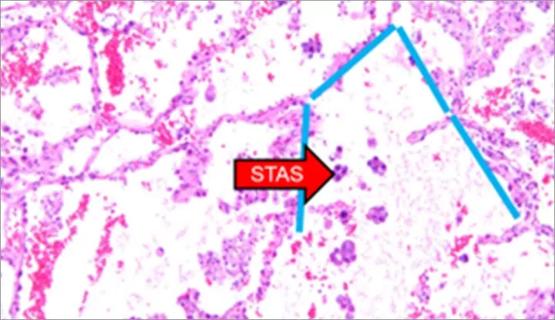
Young age, solid tumor, high uptake on PET and KRAS mutation signal risk, suggest need for lobectomy
Surprise findings argue for caution about testosterone use in men at risk for fracture
Residual AR related to severe preoperative AR increases risk of progression, need for reoperation

Findings support emphasis on markers of frailty related to, but not dependent on, age
Provides option for patients previously deemed anatomically unsuitable
 Search