Locations:





These 5 techniques can repair 95 percent of degenerative valves
“Mitral valve repair has been turned into this magical operation that only people with magical, Harry Potter-like skills can achieve,” says Cleveland Clinic Cardiothoracic Surgery Chair A. Marc Gillinov, MD. “But it’s neither mysterious nor magical. It’s accessible to all surgeons.”
Advertisement
Cleveland Clinic is a non-profit academic medical center. Advertising on our site helps support our mission. We do not endorse non-Cleveland Clinic products or services. Policy
In this five-minute captioned video, Dr. Gillinov makes his case by reviewing and explaining the five surgical techniques that can be used to repair 95 percent of degenerative mitral valves.
Video content: This video is available to watch online.
View video online (https://www.youtube.com/embed/h9TXBAVcLUo?feature=oembed)
Demystifying Mitral Valve Repair
“For posterior leaflet prolapse, [we use] triangular resection or sliding repair. For antileaflet prolapse, the creation of artificial chords. For prolapse at a commissure, [we] close the commissure. The fifth technique is an annuloplasty, which should be incorporated into every single repair.
Let’s break this down. Posterior leaflet prolapse is the most common lesion in degenerative disease, and fortunately it’s the easiest to treat successfully. For segmental posterior leaflet prolapse… [we use] segmental prolapse to a triangular resection and put an annuloplasty. That’s it. A simple, reproducible operation.
If you have extensive posterior leaflet prolapse and a tall leaflet, resection plus a sliding repair will treat the prolapse and prevent postoperative SAM [systolic anterior motion]. That’s all you need for posterior prolapse: Triangular resection, or resection plus sliding repair.
Anterior prolapse is judged, in general, to be more complex, but it’s actually simpler to treat anterior leaflet prolapse. Make artificial chords… How do you measure the artificial chords? That’s always the tricky part… Make new chords, but don’t tie them. Put your ring in, then measure the chords and tie them.
Prolapse at the commissure. This makes a really complex jet easy to repair, simple. Close the commissure. Just sew it shut. You can sew about 20 percent of the valve shut, and as long as you don’t undersize the annuloplasty, you will not have mitral stenosis…
Advertisement
Mitral valve repair is neither mysterious nor magical. It is accessible to all of us.”
Advertisement
Advertisement

A sampling of outcome and volume data from our Heart & Vascular Institute
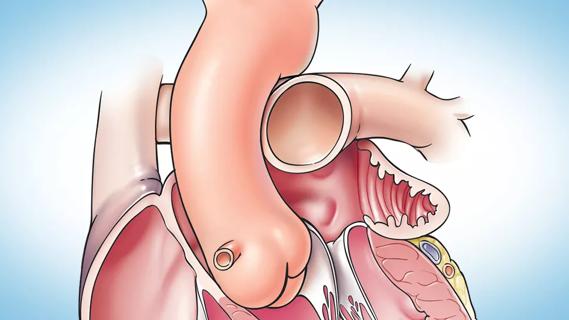
Concomitant AF ablation and LAA occlusion strongly endorsed during elective heart surgery
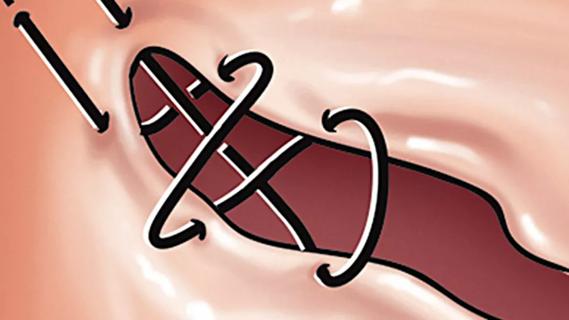
Large retrospective study supports its addition to BAV repair toolbox at expert centers
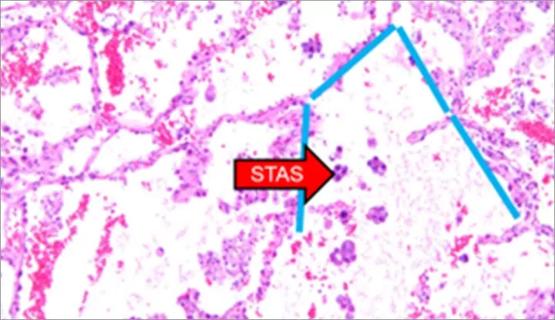
Young age, solid tumor, high uptake on PET and KRAS mutation signal risk, suggest need for lobectomy
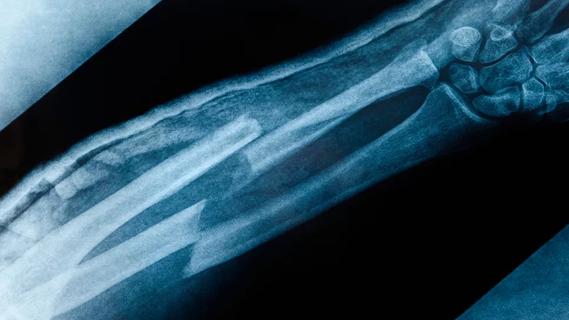
Surprise findings argue for caution about testosterone use in men at risk for fracture
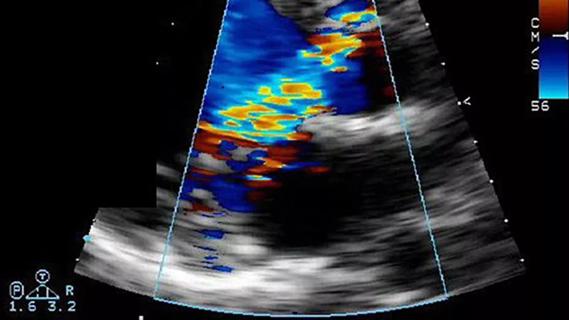
Residual AR related to severe preoperative AR increases risk of progression, need for reoperation

Findings support emphasis on markers of frailty related to, but not dependent on, age
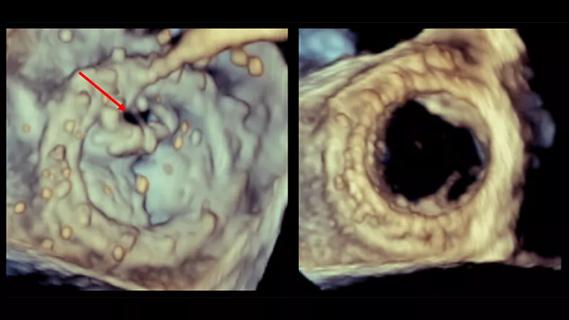
Provides option for patients previously deemed anatomically unsuitable
 Search