Locations:





Improving patient safety indicators can maximize declining reimbursement

Image content: This image is available to view online.
View image online (https://assets.clevelandclinic.org/transform/12a126da-66fb-42d8-9f12-d7080972d841/healthcare_changes_690x380_jpg)
healthcare_changes_690x380
Many financial challenges lie ahead for our country’s healthcare system. Within the next 10 years, three-fourths of patients will be covered by the government through Medicare, Medicaid or the Affordable Care Act (ACA). These programs reimburse less than private insurance providers.
Advertisement
Cleveland Clinic is a non-profit academic medical center. Advertising on our site helps support our mission. We do not endorse non-Cleveland Clinic products or services. Policy
Additionally, patient safety indicators (PSI) and quality metrics programs initiated by ACA and the Centers for Medicare and Medicaid Services further impact reimbursement. Hospitals no longer receive full reimbursement for patients who develop indicators of substandard care, including pressure ulcers or venous thrombosis, or who are readmitted for the same medical problem. This puts pressure on hospitals to find new ways to be fiscally responsible. Cleveland Clinic is minimizing its losses by improving the quality of care it provides.
“We are dealing with declining reimbursement by reducing the number and cost of complications and becoming more efficient,” says Lars Svensson, MD, PhD, Director of Quality and Process Improvement in the Department of Thoracic and Cardiovascular Surgery.
All members of the department are involved in identifying areas for quality improvement and working together to find solutions. Since the effort began, multiple process-improvement initiatives have been put in place.
“Ten years ago, we had 4.2 percent risk of deep wound infection in the department. Each infection cost Medicare about $35,000,” says Dr. Svensson.
“Last year, our infection rate was less than 0.15 percent—a great cost savings to insurance companies. This year, we would have to carry this cost ourselves, so a lower infection rate means we are saving money.”
The Department of Cardiovascular and Thoracic Surgery’s efforts to minimize complications further lowered their mortality rates for all procedures. Over the last three years, Cleveland Clinic’s mortality rate for coronary artery bypass grafting has been 0.6 to 0.8 percent; for isolated aortic valve replacement 0.4 to 0.7 percent. Among mitral valve repair patients, only one death has occurred in the last 4 years.
Advertisement
“In addition to reducing costs, quality improvements greatly benefit a patient – which is most important,” says Dr. Svensson.
Declining reimbursement has caused a flood of physicians seeking hospital employment. Overall, 31 percent of physicians in the U.S. are now employed by a hospital system. The rate is higher for cardiologists at 70 percent, and even higher for cardiac surgeons. The private practitioner will gradually disappear, says Dr. Svensson.
“The government wants to pay hospitals, not practitioners. Reimbursement for patient care will primarily come from the government to hospitals at a reduced rate and be indexed to efficiency, PSI and other quality measures and patient review scores (HCAHPS),” he says.
Advertisement
Advertisement
A sampling of outcome and volume data from our Heart & Vascular Institute
Concomitant AF ablation and LAA occlusion strongly endorsed during elective heart surgery
Large retrospective study supports its addition to BAV repair toolbox at expert centers

Young age, solid tumor, high uptake on PET and KRAS mutation signal risk, suggest need for lobectomy
Surprise findings argue for caution about testosterone use in men at risk for fracture
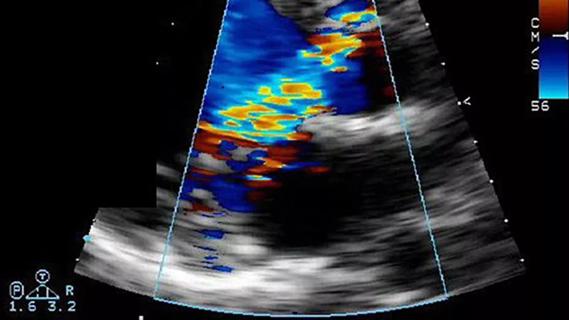
Residual AR related to severe preoperative AR increases risk of progression, need for reoperation

Findings support emphasis on markers of frailty related to, but not dependent on, age

Provides option for patients previously deemed anatomically unsuitable
 Search