Locations:





Useful for predicting CHD in select patients
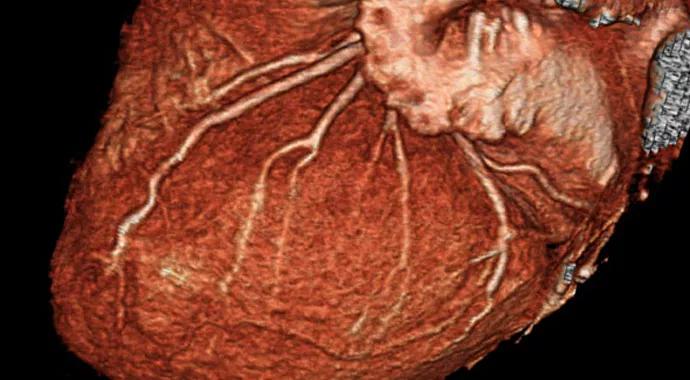
Image content: This image is available to view online.
View image online (https://assets.clevelandclinic.org/transform/41efc830-94fc-4ac4-972b-0763bf746b42/CT_Angiography-690x380_jpg)
CT_Angiography-690×380
By Milind Desai, MD
Advertisement
Cleveland Clinic is a non-profit academic medical center. Advertising on our site helps support our mission. We do not endorse non-Cleveland Clinic products or services. Policy
In a sizable proportion of patients, the first symptom of coronary heart disease (CHD) is a myocardial infarction (MI) or sudden cardiac death. Despite a wealth of evidence aimed at improving outcomes in symptomatic patients with multiple risk factors, a better proactive strategy is needed to identify at-risk asymptomatic patients. Risk prediction based on current guidelines appears to be insufficient in precisely predicting a future CHD-related event. In fact, one previous study demonstrated that out of 222 young patients with no prior history of diabetes mellitus or CHD who presented with an acute MI, 71 percent were considered low risk and 75 percent did not qualify for pharmacotherapy prior to the acute event.
Coronary CT angiography (CTA) has emerged as a very useful test for risk stratification, but only when used in the right patient for the appropriate indication. Improper patient selection can result in a nondiagnostic study or insufficient information to be of value to the prescribing physician.
The most important attributes of coronary CTA are its sensitivity in detecting CHD and its high negative predictive value in excluding CHD with a high degree of confidence.
Symptomatic patients (those with typical or atypical presentation of angina) at intermediate risk for CAD are the most appropriate patients for CTA.
Additionally, coronary CTA is also useful in the following clinical scenarios:
Advertisement
With its high negative predictive value and high sensitivity, CTA can be very useful for triaging patients who present with chest pain in the emergency department (ED). Based on data from multiple randomized controlled trials, a normal CTA generally means the patient can be sent home in a timely manner with confidence without having to worry about an adverse outcome. On the other hand, a patient with significant CAD can be quickly identified and admitted for further management.
Coronary CTA is not appropriate for patients considered high risk based on prior test results, prior revascularization or multiple risk factors. These patients are more suitable for a left heart catheterization.
Current studies suggest there is no incremental benefit of using coronary CTA when used as a screening tool in asymptomatic individuals, including diabetics.
The technology itself has limitations that restrict its utility. Images in obese patients, in those with heavily calcified arteries and in patients with high or irregular heart rates tend to be poor. In addition, stents < 3 mm are generally not considered suitable for coronary CTA. Results are generally suboptimal and may produce a nondiagnostic study.
As a relatively new technology, CTA continues to undergo rapid and dramatic evolution. In the last decade, both spatial and temporal resolution has improved, and a breath hold of only 1 to 2 seconds is now routinely required for acquisition of a coronary CTA. Guided by the principle of As Low As Reasonably Acceptable (ALARA), we have been able to lower the radiation dosages associated with a coronary CTA from 12-14 mSv to less than 2-3 mSv (and < 1 mSv in many cases).
Advertisement
Also, newer uses are rapidly emerging, the most important being ability to assess the functional significance of a given lesion using fractional flow reserve and a stress perfusion CT study. Further improvements in scanner technology, including dual energy scanning, could potentially allow us to perform atherosclerotic plaque characterization.
Dr. Desai is Director of Cardiovascular Imaging Research in Cleveland Clinic’s Robert and Suzanne Tomsich Department of Cardiovascular Medicine.
Advertisement
Advertisement

A sampling of outcome and volume data from our Heart & Vascular Institute
Concomitant AF ablation and LAA occlusion strongly endorsed during elective heart surgery

Large retrospective study supports its addition to BAV repair toolbox at expert centers
Young age, solid tumor, high uptake on PET and KRAS mutation signal risk, suggest need for lobectomy
Surprise findings argue for caution about testosterone use in men at risk for fracture
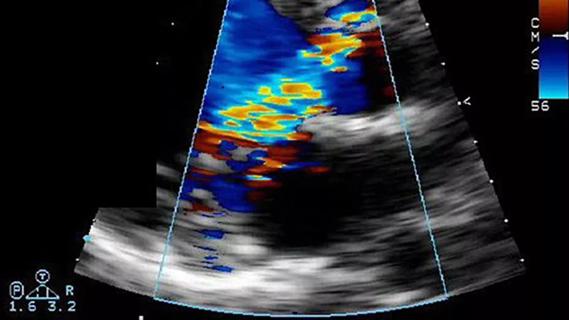
Residual AR related to severe preoperative AR increases risk of progression, need for reoperation

Findings support emphasis on markers of frailty related to, but not dependent on, age
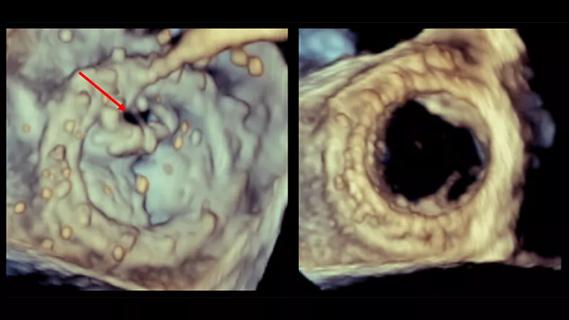
Provides option for patients previously deemed anatomically unsuitable
 Search