Locations:





Research provides no categorical evidence supporting prophylactic antibiotic use
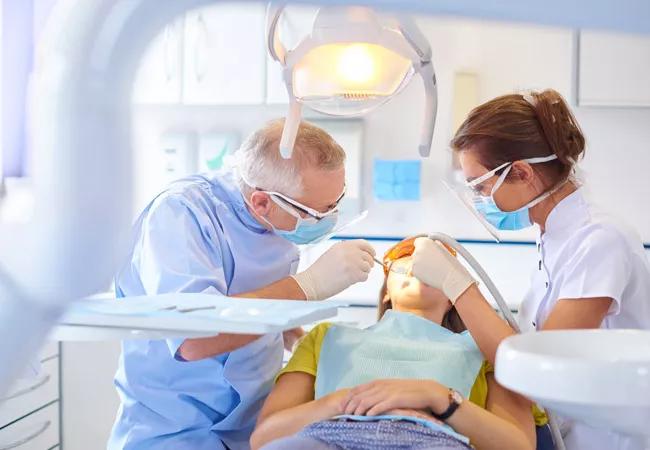
Image content: This image is available to view online.
View image online (https://assets.clevelandclinic.org/transform/21bfd038-559a-4a4d-8833-797b6d26a28d/19-ORT-1126-Dental-Proceedures-CQD_jpg)
19-ORT-1126-Dental-Proceedures-CQD
There is no categorical evidence to support the use of prophylactic antibiotics during dental procedures or delaying invasive procedures following primary total joint arthroplasty (TJA), new research finds. The study, presented at the 2019 Annual Meeting of the American Association of Orthopaedic Surgeons (AAOS) in Las Vegas, analyzed studies reporting on the correlation between periprosthetic joint infection (PJI) and antibiotic prophylaxis or the timing of the procedure.
Advertisement
Cleveland Clinic is a non-profit academic medical center. Advertising on our site helps support our mission. We do not endorse non-Cleveland Clinic products or services. Policy
Current guidelines from the American Association of Orthopaedic Surgeons (AAOS) and the American Dental Association (ADA) do not recommend prophylactic antibiotic use prior to dental procedures to prevent PJI in all cases. In severely immunocompromised patients, prophylactic antibiotics may be appropriate in dental procedures that involve manipulation of gingival tissue or the periapical region of teeth or perforation of the oral mucosa. Delaying dental procedures may be appropriate in patients with active diabetes and unknown Hemoglobin A1c or blood glucose levels, but only until appropriate test results can be obtained from the patient’s primary care provider.
These guidelines, however, are based on a body of research that fails to achieve consensus, according to this study. “Controversy remains, and not everyone follows the recommendations from the AAOS and ADA are sometimes contradictory,” states Nicolas Piuzzi, MD, one co-author of the study. “Dentists may think that antibiotics are not necessary, while orthopedists may conservatively recommend prophylaxis.”
In the average adult, the oral microbiome contains roughly 200 predominant bacterial species. Research suggests that the oral microbiome may play a role in human diseases, including diabetes mellitus, cardiovascular disease and bacteremia. In the past, some have wondered if invasive dental procedures might lead to infections in other locations, such as prosthetic joints. However, the role of dental procedures in PJI remains unclear.
Advertisement
This study assessed the quality and evidence level of nine articles related to PJI and dental procedures. The overall infection rate was 0.35% from a total of 279,476 patients. Of this, a mean of 0.6% were confirmed to be associated with a dental procedure. None of the studies suggested that postponing an invasive dental procedure would decrease the risk of PJI.
Of the studies included, the smallest sample size was 399 patients and the largest was 260,000 patients, with the majority sample size being in the 1,000-4,000 patient range. An infecting organism was documented in 56 percent of the studies (n = 5), commonly S. viridans, Peptostreptococcus and S. aureus. When antibiotics were utilized prior to the dental procedures (n=4), it was either a cephalosporin, penicillin or clindamycin.
“None of these studies suggest that postponing a dental procedure is warranted and there was no consensus on use, dosage or typing of prophylactic antibiotics,” notes co-author Carlos Higuera-Rueda, MD. “The level of confusion among physicians is no surprise given such a dearth of high-quality research.”
With questionable clinical benefit, there are concerns that prophylactic antibiotic use may contribute to the rising levels of antibiotic resistance. According to Dr. Piuzzi, “further research is necessary to determine the appropriateness of these clinical practices.”
Advertisement
Advertisement
Biologic approaches, growing implants and more
Study reports zero infections in nearly 300 patients
How to diagnose and treat crystalline arthropathy after knee replacement
Study finds that fracture and infection are rare
Center will coordinate, interpret and archive imaging data for all multicenter trials conducted by the foundation’s Osteoarthritis Clinical Trial Network

Reduced narcotic use is the latest on the list of robotic surgery advantages
Cleveland Clinic specialists offer annual refresher on upper extremity fundamentals
Cleveland Clinic orthopaedic surgeons share their best tips, most challenging cases and biggest misperceptions
 Search