Locations:





Recognizing the dynamic nature of risk promises better organ allocation
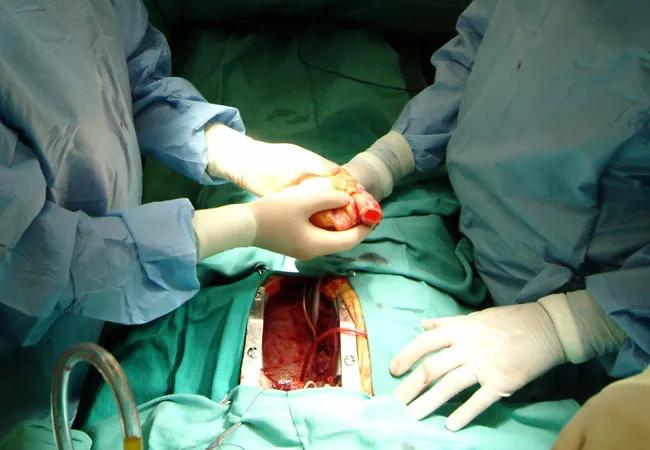
Image content: This image is available to view online.
View image online (https://assets.clevelandclinic.org/transform/167ad21b-9433-4ea5-8d29-7cbdd0c0b992/18-HRT-5857_heart-transplant-650x450_jpg)
The Featured Image for the post
Mortality risk estimates for patients on the heart transplant waitlist would be improved by a dynamic model that continuously updates lab values and other clinical measures as a patient’s condition changes over time.
Advertisement
Cleveland Clinic is a non-profit academic medical center. Advertising on our site helps support our mission. We do not endorse non-Cleveland Clinic products or services. Policy
So concludes a unique study of patients recently listed for heart transplantation at Cleveland Clinic. The study, published in the Journal of the American College of Cardiology (2018;72:650-659), sought to develop a decision aid to aggregate adverse events and metrics of end-organ function into a continuously updated estimate of waitlist mortality.
“Allocation of donor hearts in the U.S. is done on the basis of coarse tiers that are infrequently updated,” says lead author Eugene Blackstone, MD, of Cleveland Clinic’s Department of Thoracic and Cardiovascular Surgery. “The tiers have recently been refined, but they remain fairly coarse and static. We developed a model that frequently updates a patient’s risk of mortality as adverse events occur and as the patient’s end-organ function changes while on the transplant waitlist. Such a model could reduce mortality on the waitlist and promote better utilization of the limited supply of donor hearts.”
To test their model, Dr. Blackstone and Cleveland Clinic colleagues studied 414 patients who were listed for heart transplant at Cleveland Clinic from 2008 to 2013. They analyzed patients’ pre-listing characteristics as well as clinical events (such as infection, thrombosis, bleeding episodes or placement of a mechanical circulatory support device), laboratory study results and end-organ function measures throughout patients’ time on the waitlist. Using a newly developed method for analyzing time-related mortality, the model recomputed patients’ mortality risk with each new event or measurement change.
Advertisement
Among the 414 patients studied, survival rates were 85 percent at one year and 57 percent at four years. The researchers found that the pre-listing patient factors used in existing heart failure survival models were not predictive of survival when time-varying factors were taken into account while patients were on the waitlist.
The time-varying factors found to be most predictive of mortality across the waitlist period were:
“These findings suggest that a patient’s urgency status for transplantation should rely on objective evidence of deterioration as long as the patient is eligible for transplant,” Dr. Blackstone observes.
In their study report, Dr. Blackstone and colleagues point out that dynamic risk assessment is hardly a new concept, citing examples such as the introduction of APACHE scores in the early 1980s. They note, however, that while some prior risk tools are recalibrated daily, those tools are generally for short-term use. “Our goal was to develop a monitoring tool for use over an extended period — the entire time patients are on the transplant waitlist,” Dr. Blackstone explains.
He adds that his team’s model aimed to combine various elements of updatable risk prediction tools developed for other types of transplant — specifically, the longitudinal sequence of lab values reflecting end-organ function from the Model for End-Stage Liver Disease (MELD) score and the time-varying and event-based mortality risk model used for lung allocation.
Advertisement
Cleveland Clinic has not yet used the new model as a clinical tool, as the model is undergoing additional testing in a National Heart, Lung, and Blood Institute-funded study to further refine it for clinical use.
“Clinical integration of the various changes in patients’ status while on the waitlist is challenging, so refining information aggregation is key,” Dr. Blackstone explains. “But we believe a continuously updated mortality estimate, combined with clinical evaluation, may enable dynamic candidate prioritization that promises to lead to reduced mortality on the heart transplant waitlist.”
An accompanying editorial (J Am Coll Cardiol. 2018;72:660-661) by James Kirklin, MD, of the University of Alabama, broadly concurs. “Theoretically, this method could provide a new platform for allocating organs based on a continuous risk model,” Dr. Kirklin writes. He adds that “Blackstone et al. are on the cutting edge of data science…. [T]hey have provided a platform to enhance our ability to leverage large datasets with a goal of improving medical decision making.”
Advertisement
Advertisement
A sampling of outcome and volume data from our Heart & Vascular Institute
Concomitant AF ablation and LAA occlusion strongly endorsed during elective heart surgery
Large retrospective study supports its addition to BAV repair toolbox at expert centers
Young age, solid tumor, high uptake on PET and KRAS mutation signal risk, suggest need for lobectomy
Surprise findings argue for caution about testosterone use in men at risk for fracture
Residual AR related to severe preoperative AR increases risk of progression, need for reoperation

Findings support emphasis on markers of frailty related to, but not dependent on, age
Provides option for patients previously deemed anatomically unsuitable
 Search