Locations:





Tips from Cleveland Clinic Fairview Hospital’s CNO
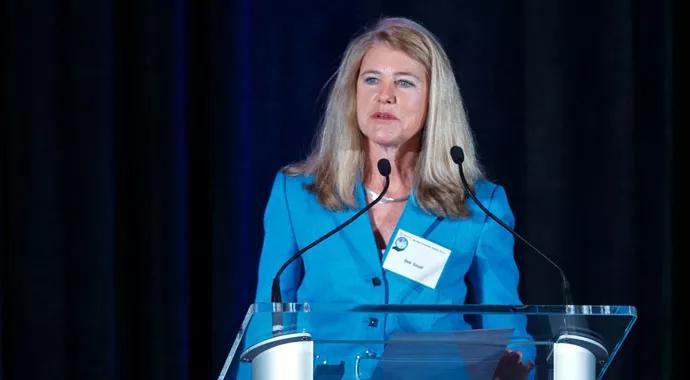
Image content: This image is available to view online.
View image online (https://assets.clevelandclinic.org/transform/1f28dbf4-e408-4f0f-9e6d-a10196464a3f/DSmall_690x380_jpg)
DSmall_690x380
By Deborah Small, DNP, MSN, BSN, RN, NE-BC
Advertisement
Cleveland Clinic is a non-profit academic medical center. Advertising on our site helps support our mission. We do not endorse non-Cleveland Clinic products or services. Policy
From its recently re-introduced Nurse Associate Extern program to its one-of-a-kind New Graduate Nurse Residency and generous tuition reimbursement offerings, Cleveland Clinic Nursing promotes lifelong learning and advanced education no matter where you are in your nursing career.
And new expectations for the role of the nurse coupled with today’s fast-paced nursing environment make advanced education imperative. The landmark 2010 Institute of Medicine report: The Future of Nursing: Leading Change, Advancing Health calls on nurses to have a greater role in America’s increasingly complex healthcare system. It offers various recommendations on the critical intersection between the health needs of diverse and changing patient populations, and the actions of the nursing workforce.
The report is centered on four main issues, with the second being: “Nurses should achieve higher levels of education and training through an improved education system that promotes seamless academic progression.”
However, while many nurses understand the great importance of advancing their professional degrees, it can be viewed as a daunting challenge to which to commit. I can personally attest to these feelings as I had them myself. As the chief nursing officer of Cleveland Clinic Fairview Hospital, I, like most nurses working full-time with families, came up with many excuses to delay enrollment in school – from my busy schedule to role and responsibility changes—or simply lack of time. I can recall the exact moment one of my colleagues said to me: “Just enroll – you will be surprised at the time you will find.”
Advertisement
My colleague was right. I recently earned my Doctor of Nursing Practice (DNP) degree from Cleveland, Ohio-based Case Western Reserve University. I admit the journey was, at times, long and laborious, but no doubt one of the greatest personal achievements of my career.
As I worked to complete my doctorate, I noted a selection of helpful tips to aid me with the process of going back to school and the great benefits I realized as I stepped back into the role of a nursing student. I felt these could be of value to other nurses considering furthering their education.
While thoughts, opinions and words of wisdom certainly vary from person-to-person, I found the following tips useful:
Education feeds your passion for nursing
Advertisement
Education makes lasting changes in the lives of those who seek it. It provides opportunity, flexibility and critical thinking skills to navigate the ever-changing healthcare setting. Education changes people’s stories. Going back to school gave me the opportunity to feed my passion for nursing. While in school, I was immersed in networking with new colleagues and challenged by great nursing professors to think differently, transform my leadership style, to be more politically savvy and to manage with meaning – all of which have allowed me to lead more effectively today.
Education is a catalyst for future healthcare change
Education is one of the most powerful catalysts we have to encourage change in the future of healthcare. For example, while pursuing my degree, it became obvious to me that as nurses we have spent many years of our careers qualifying the educational level and competency for entry into practice and professional autonomy. As early as the 1960s, we have been working to establish core competencies and skills in the academic arenas. Understanding this history and continuing to work with various action coalitions and boards is important to influencing practice changes for the future – and having a place at the table with regard to political changes.
Education offers professional insight on the past, while pointing to opportunities for the future
During my DNP journey, I was exposed to many political venues and opinions that have shaped the practice of nursing into what it is today. My coursework included review of articles and leadership stories that were instrumental in establishing the nursing profession. The program emphasized the need to be politically informed and to educate, communicate and collaborate in providing nurses an understanding about legislative process, health policy issues and an awareness of the influential voice of nursing. As a result of my studies, I worked with my colleagues to start a Cleveland Clinic Nursing Legislative and Practice Council to better understand the political arena and encourage Cleveland Clinic nurses to have a more active voice in healthcare politics.
Advertisement
Education unveils successes and failures in nursing practice
As I was working toward my degree, I found I could apply much of the knowledge I was gaining to my own organization. Specifically, I was able to garner added insight into practices that were not being sustained on nursing units and create nurse-driven protocols that were evidenced-based and nursing owned. For example, using research methodology inclusive of surveys and focus groups, I found that staff did not understand the evidence behind many of the initiatives we implemented, such as bedside handoffs and fall prevention, both of which are nurse-driven practices.
Results of a bedside-handoff survey revealed a handoff to sometimes be considered stressful and inconsistent for each provider. To address these results, we initiated two unit-specific pilots that included a scripted toolkit to improve communications and alleviate handoff-related stress. To date, audited compliance is now at 90 percent and nurse communication is at an all-time high with results in the 90th percentile.
Additionally, as a nurse leader, role modeling, encouraging and supporting nursing staff members to seek higher degrees and further their knowledge is imperative. It is this furthering of education that will open the path to innovation for the future of our profession.
Deborah Small is Vice President of Patient Care Services and Chief Nursing Officer of Cleveland Clinic Fairview Hospital.
Photo credit:© Andrew Jordon Photography LLC
Advertisement
Advertisement

Nurses play key role in comprehensive lifetime treatment program
Customized bots improve speed, efficiency by streamlining daily clinical, clerical tasks

Nurses play pivotal role in patients’ ability to recover in the comfort of their own homes
New protocol reduces costs, increases patient and caregiver satisfaction

Advocating for patient safety is imperative in fast-paced surgical settings

M-Power program improves the perinatal experience for people who have survived abuse

Advice for those pursuing a WOC nursing career

Veteran nurse shares his experience as a caregiver and community volunteer
 Search