Locations:





Video case study highlights Colonna arthroplasty procedure
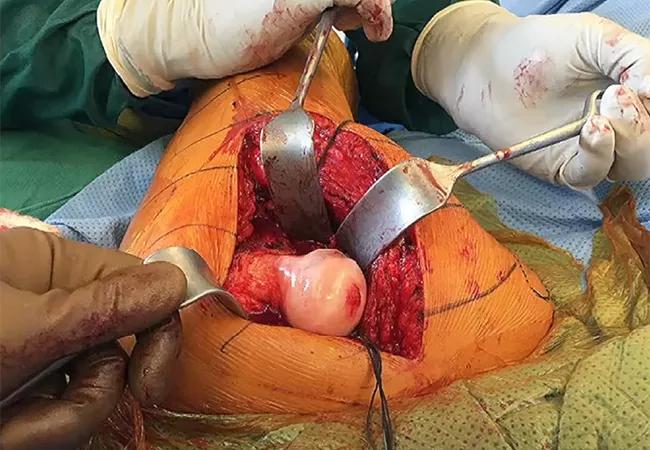
Image content: This image is available to view online.
View image online (https://assets.clevelandclinic.org/transform/a66ff910-7a15-4e43-92cb-e00baf039b1d/21-ORI-2203208-CQD-650x450-1_jpg)
21-ORI-2203208 CQD 650×450
Congenital hip dysplasia occurs in about 1 in every 1,000 babies. Common risk factors include being female and/or being a firstborn child.
Advertisement
Cleveland Clinic is a non-profit academic medical center. Advertising on our site helps support our mission. We do not endorse non-Cleveland Clinic products or services. Policy
A 27-year-old female with congenital hip dysplasia and chronic superior hip dislocation recently presented to Cleveland Clinic’s Hip Preservation Center. Atul Kamath, MD, director of the center and staff surgeon in the Orthopaedic and Rheumatologic Institute, said she was experiencing pain in her left hip. She presented with a significant leg length discrepancy and a limp. She had no prior history of hip surgery.
Following a complete work-up demonstrating a pseudoacetabulum, Dr. Kamath recommended a hip preservation procedure, rather than a hip replacement. Her young age and high activity level made her a good candidate for this approach.
He opted for a particular procedure called a Colonna arthroplasty, or a capsular arthroplasty of the hip, in which a high or chronically dislocated femoral head can be put into a new or created socket. He explains, “This procedure was executed by creating a new socket, then by taking a small autograft from the ipsilateral iliac crest to create a little shelf to augment or increase the volume of the socket.”
Continuing he notes, “The femoral head was reduced into this new socket and wrapped with capsule to afford re-creation of leg length, a new hip center, and to restore bone stock for any future procedures, including total hip arthroplasty down the road if this is ever needed for pain and progressive arthritis.”
The patient is doing well and now has more normalized gait mechanics.
To view three-dimensional preoperative images and intraoperative photos and learn more about the case, watch the video below. Visit Cleveland Clinic’s YouTube channel for more video case studies from Dr. Kamath and other Orthopaedic and Rheumatologic Institute surgeons.
Advertisement
Video content: This video is available to watch online.
View video online (https://www.youtube.com/embed/RnTc07-Nlhc?feature=oembed)
Chronic Femoral Head High Dislocation (Graphic)
Advertisement
Advertisement
Biologic approaches, growing implants and more
Study reports zero infections in nearly 300 patients
How to diagnose and treat crystalline arthropathy after knee replacement
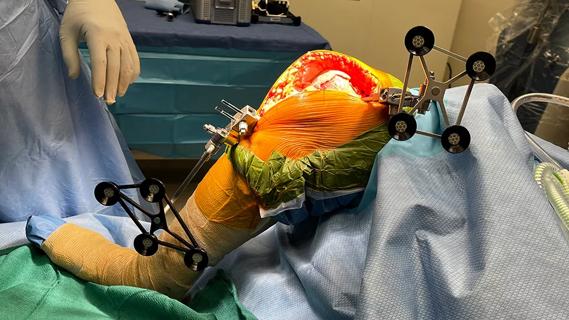
Study finds that fracture and infection are rare
Center will coordinate, interpret and archive imaging data for all multicenter trials conducted by the foundation’s Osteoarthritis Clinical Trial Network

Reduced narcotic use is the latest on the list of robotic surgery advantages
Cleveland Clinic specialists offer annual refresher on upper extremity fundamentals
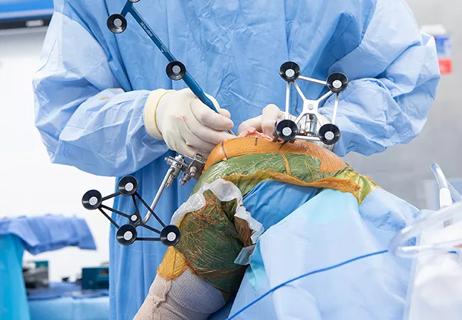
Cleveland Clinic orthopaedic surgeons share their best tips, most challenging cases and biggest misperceptions
 Search