Locations:





To increase success, endovascular specialists go against the flow
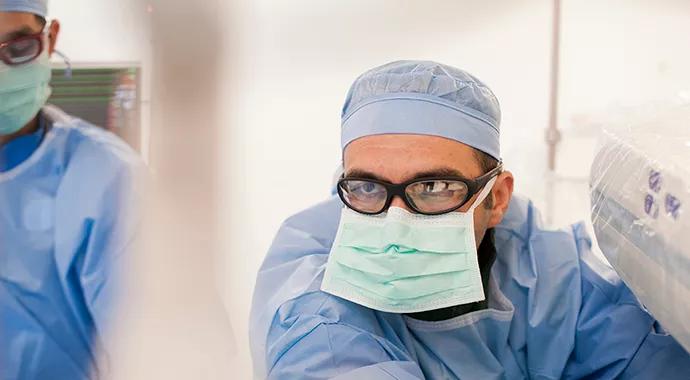
Image content: This image is available to view online.
View image online (https://assets.clevelandclinic.org/transform/7170d548-c51c-4f0b-8885-bf383f2270dc/060535_690x380_jpg)
Job # 060535 Dubois 10-15-12
In critical limb ischemia patients with chronic total occlusion lesions that cannot be crossed with the typical antegrade approach, retrograde access increases the chance of success. Angioplasty and stenting can then be performed in a conventional manner through a catheter inserted in the groin.
Advertisement
Cleveland Clinic is a non-profit academic medical center. Advertising on our site helps support our mission. We do not endorse non-Cleveland Clinic products or services. Policy
The procedure, known as combined antegrade-retrograde intervention, was pioneered in Europe. Heart & Vascular Institute cardiologist Mehdi Shishehbor, DO, MPH, PhD, is one of few endovascular specialists in the United States skilled in the procedure. His experience has enabled Cleveland Clinic to become a national center for training in this technique.
“Twenty to 30 percent of patients are not able to be treated from an antegrade approach. Using tibiopedal access increases the success rate to 93 percent,” he says.
The combined endovascular procedure complements a variety of advanced techniques and wound-healing products used at Cleveland Clinic to prevent or delay the need for amputation. As co-directors of the Wound Clinic in the Department of Vascular Medicine, Dr. Shishehbor and vascular podiatrist Michael Maier, DPM, specialize in treating high-risk patients with severe critical limb ischemia who are not surgical candidates.
“Most have been told by more than one physician that amputation is their only option. We do everything we can to avoid it and are often successful,” says Dr. Shishehbor.
Although below-the-knee amputation is common in this patient population, the procedure is associated with high morbidity and mortality. After amputation, patients with diabetes have a 50 percent chance of needing the same procedure on the opposite leg. The 5-year mortality rate for these patients is 70 percent.
“This reflects the severity of peripheral arterial disease. Morbidity and mortality rates are higher than with coronary artery disease,” says Dr. Shishehbor.
Advertisement
Combined antegrade-retrograde intervention helped save the leg of the longest-surviving LVAD patient at Cleveland Clinic. In 2013, the 64-year-old with ischemic cardiomyopathy, heart failure, hypertension, end-stage renal disease, diabetes, sleep apnea and a history of deep-vein thrombosis, who had received a permanent LVAD in 2008, developed an interdigital pressure ulcer. When CTA revealed occlusions in the anterior and posterior tibial arteries, Dr. Shishehbor successfully recanalized the leg using the antegrade-retrograde intervention.
Despite improved blood flow to the foot, the third digit progressively declined, requiring a partial 3rd ray amputation. The site failed to heal, and a transmetatarsal amputation was performed. The wound dehisced. Angiography revealed recurrent occlusive disease, and an intervention was repeated to restore perfusion.
At this point, plastic surgeons and infectious disease specialists on the wound care team were consulted. The amputation site was surgically revised, soft tissue and bone were debrided, and the patient was placed on an extended course of intravenous antibiotic therapy. With negative-pressure therapy and a full complement of advanced wound-healing products derived from porcine tissue and human cells, the wound body healed. At one-year follow-up, the patient was walking without pain.
As sophisticated as revascularization and wound care procedures have become, they do not preclude the need for ongoing surveillance of PAD and comprehensive management of risk factors.
Advertisement
“If we do a complex intervention, and the patient has poorly controlled diabetes or blood pressure, the vessels will reocclude in short order,” says Dr. Maier. “We keep close watch on our patients’ risk factors and intervene to manage problems early to reduce recurrence rates.”
Advertisement
Advertisement

A sampling of outcome and volume data from our Heart & Vascular Institute
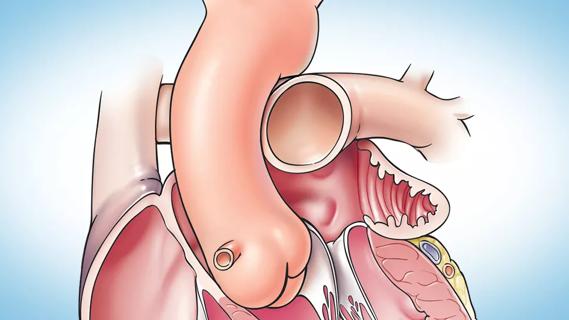
Concomitant AF ablation and LAA occlusion strongly endorsed during elective heart surgery
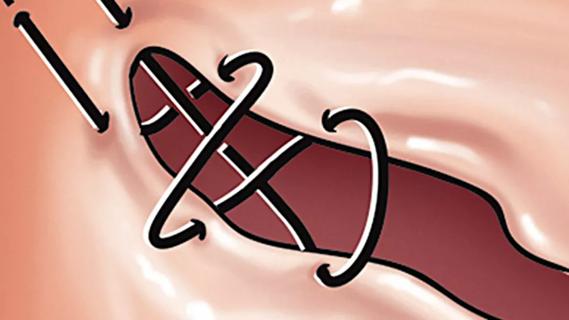
Large retrospective study supports its addition to BAV repair toolbox at expert centers
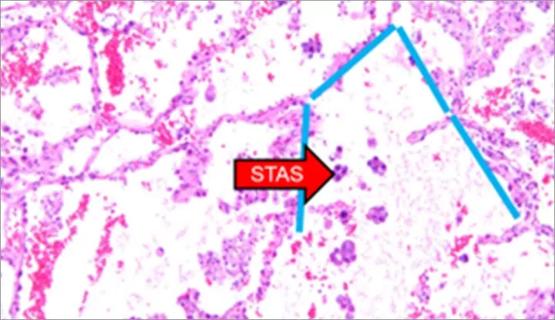
Young age, solid tumor, high uptake on PET and KRAS mutation signal risk, suggest need for lobectomy
Surprise findings argue for caution about testosterone use in men at risk for fracture
Residual AR related to severe preoperative AR increases risk of progression, need for reoperation

Findings support emphasis on markers of frailty related to, but not dependent on, age
Provides option for patients previously deemed anatomically unsuitable
 Search