Locations:





Less seems best, but we’re far from the final word
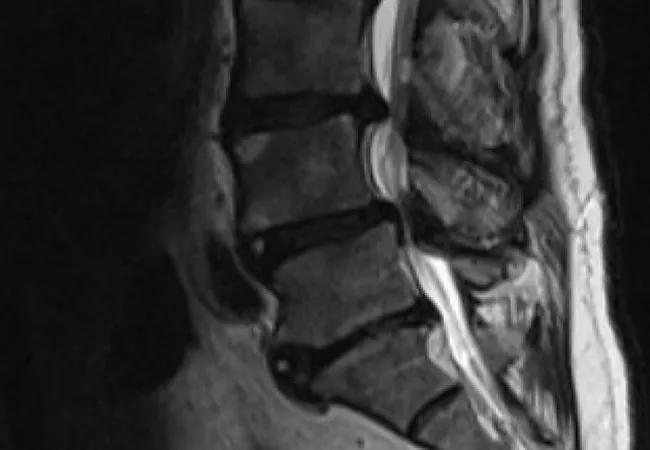
Image content: This image is available to view online.
View image online (https://assets.clevelandclinic.org/transform/7ffcd331-dbd9-4dbc-85a9-1d617ed21102/16-NEU-1958-Benzel-650x450_jpg)
16-NEU-1958-Benzel-650×450
Advertisement
Cleveland Clinic is a non-profit academic medical center. Advertising on our site helps support our mission. We do not endorse non-Cleveland Clinic products or services. Policy
As detailed in a prior post on this blog, back in April some colleagues and I published results from the SLIP study (Spinal Laminectomy versus Instrumented Pedicle Screw) in the New England Journal of Medicine (NEJM). The journal’s editors paired our paper with a report from a similar trial, the Swedish Spinal Stenosis Study (SSSS), and with an editorial commenting on the two studies and more generally on the value of adding instrumented fusion to laminectomy for lumbar spinal stenosis
But now, in view of the resulting exchange of letters and responses in the Aug. 11, 2016, issue of NEJM, there remains some indication that these publications may have generated more heat than light.
The indications for surgery for symptomatic lumbar spine degenerative pathologies (generally considered under the umbrella term “lumbar spondylosis”) typically fall into one or both of two categories: neurogenic symptoms and axial back pain.
The former is associated with stenosis, distortion or compression of neural elements. The latter is associated with pathological motion, usually at a single motion segment. Pathological motion can exacerbate stenosis and neural compression. It can also manifest, from an imaging perspective, as a degenerative spondylolisthesis — i.e., a slip (a translational displacement of one vertebral body in relation to an adjacent vertebral body in the sagittal plane). This slip can aggravate compression and irritation of neural elements.
So, when surgical amelioration of symptoms related to lumbar spondylosis is considered, a focus on both neural element decompression and spine stabilization is appropriate. The focus on the decision-making process associated with these pathologies in the recent NEJM papers and the ensuing letters has featured new information regarding management of lumbar spondylosis, while highlighting the deficits in our knowledge base regarding clinical decision-making.
Advertisement
Discussion has centered on the decision to fuse with instrumention (usually screws and rods) or not to fuse following a decompression procedure (usually a laminectomy with foramenotomies). This decision is not inconsequential, as there are potential significant drawbacks to fusion. These include failure of instrumentation and complications associated with a more extensive operation. Cost is also an issue. Spinal implants are expensive; their use roughly doubles the cost of the operation.
From my perspective, the ultimate take-home message from the flurry of communications around and including the NEJM articles is simple: When at all possible, less is best — i.e., simply perform a decompression operation (laminectomy with foramenotomies) only.
If preoperative imaging (excessive motion or slip) or clinical symptoms (significant mechanical low back pain — i.e., deep and agonizing pain exacerbated with loading of the spine and improved or eliminated with unloading) are suggestive of “instability,” an instrumented fusion is in order. If not, a simple laminectomy and foramenotomy (decompression) procedure is in order. In my opinion, the latter should be much more common than the former.
We are far from the final word on this subject. As we stumble along the path of knowledge acquisition in the modern medical era, the adage “the more we know, the less we appear to know” seems truer than ever.
Dr. Benzel (benzele@ccf.org) is a neurosurgeon in Cleveland Clinic’s Center for Spine Health
Advertisement
Advertisement

New study advances understanding of patient-defined goals

Testing options and therapies are expanding for this poorly understood sleep disorder

Real-world claims data and tissue culture studies set the stage for randomized clinical testing
Digital subtraction angiography remains central to assessment of ‘benign’ PMSAH

Cleveland Clinic neuromuscular specialist shares insights on AI in his field and beyond
Findings challenge dogma that microglia are exclusively destructive regardless of location in brain

Neurology is especially well positioned for opportunities to enhance clinical care and medical training
New review distills insights from studies over the past decade
 Search