Locations:





IBM’s Watson may give doctors more time with patients
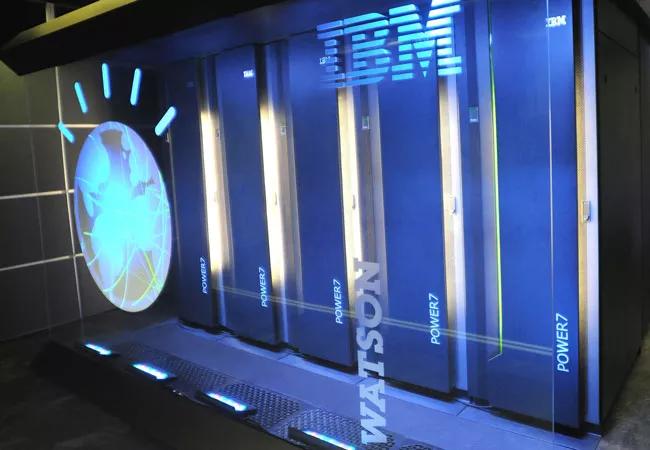
Image content: This image is available to view online.
View image online (https://assets.clevelandclinic.org/transform/1b837319-74f4-47af-83c8-a3e605c44f8c/IBM-Watson_650x450_jpg)
IBM-Watson_650x450
Advertisement
Cleveland Clinic is a non-profit academic medical center. Advertising on our site helps support our mission. We do not endorse non-Cleveland Clinic products or services. Policy
With 43,000 medical journals, 79,000 clinical trials, and more than 25 million citations for biomedical literature on PubMed, the sheer volume of available medical information daunts even the most seasoned physician.
As a physician, it’s impossible to assimilate this volume of knowledge while also managing the complex cases – including diagnoses, blood tests, histories, DNA tests, algorithms, treatment plans and x-rays, CAT scans and other images – of hundreds of patients. And more is on the way; some predict the amount of medical data doctors can use to impact diagnoses and treatment will double every 73 days by 2020.
Abundant medical research is a good problem to have, and a solution is on the way. IBM’s Watson will help us wade through this mass of data efficiently and meaningfully. The supercomputer is still in medical school at the Cleveland Clinic Lerner College of Medicine. Upon graduation, Watson will use its cognitive computing to not just gather data, but understand, learn and find meaning in it, delivering suggested diagnoses and treatments.
Some have begun to refer to it as Watson, MD. I prefer to think of it Watson, PA, or physician’s assistant, because it will inform rather than make patient care decisions. Today’s doctors are smarter and better trained than ever. Technology will never replace the doctor, but it can make us better.
By allowing Watson to crunch and cross-reference data and patient information, human doctors will have more time to spend with patients – talking to them, listening to them, understanding them. It may sound odd, but technology like Watson will make healthcare less robotic and more human.
Advertisement
Dr. Cosgrove is CEO and President of Cleveland Clinic.
Photo Credit ©IBM
Advertisement
Advertisement
Cleveland Clinic partners with Palantir to create logistical command center

A Q&A with organizational development researcher Gina Thoebes

Cleveland Clinic transformation leader led development of benchmarking tool with NAHQ

Raed Dweik, MD, on change management and the importance of communication

Small business owners expand their networks and gain new insights

Leadership pearls from Margaret McKenzie, MD, hospital vice president

Advice from four CNOs on how to embrace innovation and collaboration

Cleveland Clinic will offer rapid, pinpoint airborne transport of medications and other medical items
 Search