Locations:





 Search
Implications for the study of the urologic microbiome
Image content: This image is available to view online.
View image online (https://assets.clevelandclinic.org/transform/bea312f5-dd1e-4cd2-955b-9a914fc4ca14/650x450-Kidney-Stones-GettyImages-500665940_New-Header-Image_17-URL-678-_jpg)
650×450-Kidney-Stones-GettyImages-500665940_New Header Image_17-URL-678-
Selecting the best tools for the job represents a critical step in the planning and design of any study, and analysis of the urological microbiome’s role in kidney stone formation should be no exception to this rule.
Advertisement
Cleveland Clinic is a non-profit academic medical center. Advertising on our site helps support our mission. We do not endorse non-Cleveland Clinic products or services. Policy
With this in mind, Aaron Miller, PhD, Project Scientist with Lerner Research Institute, and Anna Zampini, MD, MBA, MS, fourth-year resident at Cleveland Clinic’s Glickman Urological & Kidney Institute, in collaboration with Manoj Monga, MD, Director, Stevan B. Streem Center for Endourology and Stone Disease, set out to conduct a comparative analysis of Illumina Inc.’s MiSeq™ and HiSeq™ sequencing platforms. (MiSeq has lower output and longer reads, while HiSeq offers higher output with shorter reads.)
Results of the analysis shows that HiSeq offers a nearly 13-fold improvement in taxonomic resolution, while MiSeq offers improved targeting of rare taxa and generally costs less to conduct.
“As we continue to examine and explore the urinary microbiome, we must keep in mind the benefits and limitations of various sequencing platforms,” says Dr. Zampini. “Appropriate selection of sequencing platforms is critical to our understanding of taxonomic diversity in the microbiome and nephrolithiasis.”
The study was presented at the American Urological Association’s 2017 meeting in Boston.
Asking, “Which platform is better?” is asking the wrong question, according to Dr. Zampini. The better question is, “Which platform is right for my study?”
Research questions seeking to describe species diversity within the urinary microbiome can be effectively and efficiently explored with MiSeq. HiSeq, on the other hand, is superior when seeking to describe individual microbial function.
“Our understanding of the urinary microbiome and nephrolithiasis has expanded dramatically with the use of sequencing technologies, such as 16s ribosomal RNA sequencing and high-throughput metagenomic profiling,” Dr. Zampini says. “However, various sequencing platforms may exhibit biases that affect our interpretation of the data.”
Advertisement
Dr. Zampini’s study focused on the Oxalobacteraceae family of bacteria, as excreted in the stool of Neotoma albigula, a wild mammalian woodrat that harbors and maintains an oxalate-degrading microbial community and serves as a rodent model for oxalate-degrading microbiota.
The rats were fed low- and high-oxalate diets, ranging from 0.2-12 percent oxalate. Stool samples were collected and frozen, and then DNA was extracted for sequencing at Argonne National Laboratory in Chicago.
Results showed dramatic variability in the strengths and limitations of both platforms.
MiSeq reported only 10 Oxalobacteraceae operational taxonomic units, while HiSeq showed 128.
Furthermore, alpha diversity metrics differed across the MiSeq and HiSeq platforms. However, these metrics were different across time only for MiSeq and not HiSeq. Beta diversity metrics demonstrated a significant difference across platforms but not across time for either MiSeq or HiSeq.
“Our interpretation of the results is that MiSeq significantly under-samples rare taxa—at least among the Oxalobacteraceae family,” says Dr. Zampini. “This will not be a limitation in every study, but it is something we should consider when deciding which platform to use.”
Approximately three-fourths of all kidney stones are composed of calcium oxalate crystals, and up to 80 percent of urinary oxalate comes from diet.
Some people can regularly eat foods high in oxalate—including spinach, bran flakes, rhubarb, beets, potato chips, French fries, and nuts and nut butters—and never develop stones. Others can limit oxalate intake and still struggle with recurrent stone formation.
Advertisement
The source of these inconsistencies may be at least partially explained by the bacteria living in our intestines and urinary tract.
Several studies have connected the microbiome in calcium oxalate stone formation, including Oxalobacter formigenes, Lactobacillus, Bifidobacterium and Enterococcus, according to Dr. Zampini.
“As we continue studying the role of bacteria and the microbiome in the formation of kidney stones, an improved understanding of these relationships will depend at least in part on our ability to select the right tools for sequencing,” Dr. Zampini concludes.
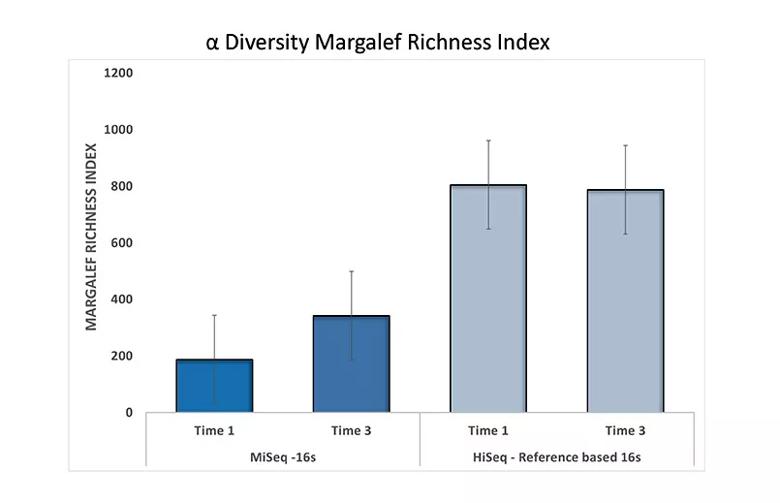
Image content: This image is available to view online.
View image online (https://assets.clevelandclinic.org/transform/a0ae8e40-70b7-4144-940c-cbc58b342b66/805x-Inset-17-URL-678image_jpg)
Alpha diversity by Margalef Index varies across time for MiSeq, and across platforms for MiSeq compared to HiSeq.
Advertisement
Advertisement

Clinicians should individualize dosing practices based on patient risk factors and preferences
Pioneering and refining the approach in pyeloplasty, nephrectomy and more
Fully-automated process uses preop CT, baseline GFR to estimate post-nephrectomy renal function

Could mean earlier treatment, but also could have negative effects

Unlike earlier pills, new drugs do not cause liver toxicity

Male factors play a role in about half of all infertility cases, yet men often are not evaluated
Surgeons choreograph nearly simultaneous procedures, sharing one robot between two patients

Identifying barriers in the renal genetic assessment of Black patients