Locations:





Cleveland Clinic’s approach to improve care transitions and patient safety
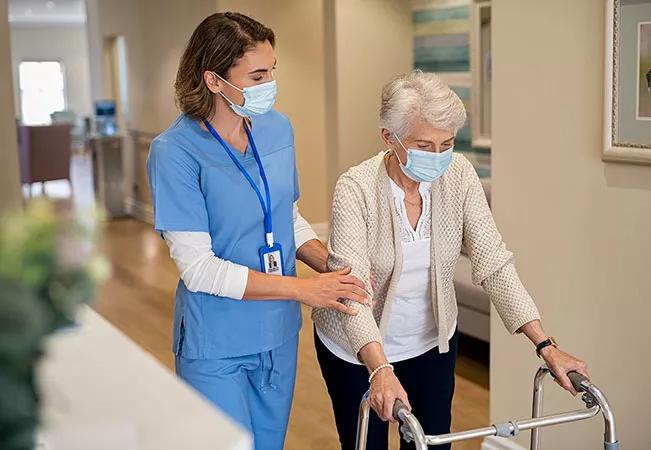
Image content: This image is available to view online.
View image online (https://assets.clevelandclinic.org/transform/5f68923a-0d45-4ea3-86ec-331d41ffb977/23-NEU-3600027-CQD-Hero-650x450-1_jpg)
23-NEU-3600027-CQD-Hero-650×450
A novel transition-of-care program at Cleveland Clinic has significantly reduced the percentage of ischemic stroke patients readmitted to an acute care hospital after being discharged to a rehabilitation hospital. The program is based on close collaboration between the acute stroke care team and rehabilitation hospitals, including monthly in-depth case review meetings.
Advertisement
Cleveland Clinic is a non-profit academic medical center. Advertising on our site helps support our mission. We do not endorse non-Cleveland Clinic products or services. Policy
The program’s impact was studied among 624 post-stroke patients discharged from acute care to three local rehab hospitals from 2018 to 2021 — 360 before (58%) and 264 after (42%) the launch of the program in January 2020.
The rate of all-cause readmission within 30 days after discharge declined from 22% pre-intervention to 11% during the intervention period. After adjustment for patients’ demographic and clinical profiles and discharge hospital stroke certification, this resulted in an adjusted odds ratio for readmission of 0.56 (95% CI, 0.34-0.92; P < 0.001). The mortality rate did not change in the wake of the program launch, but it was very low (1%) during both pre- and postintervention periods.
“Preventing readmission is important to patients as well as hospitals and post-acute care facilities,” says the study’s principal investigator, Shumei Man, MD, PhD, who presented the new program and its results at the International Stroke Conference in February 2023.
“Without good transition of care between the acute care facilities and post-acute care facilities, patients are at greater risk of having adverse events,” says Dr. Man. “These include being readmitted to the hospital and having severe complications (such as blood clots, infection, recurrent stroke, cardiovascular complications), less optimal functional recovery and even increased risk of death. Patients and their families may experience a great deal of uncertainty, anxiety, and lower satisfaction and trust about healthcare system.”
Advertisement
Readmissions to acute care hospitals and mortality rates are measures that stakeholders use to evaluate quality of care and are directly linked with reimbursement, notes Dr. Man, who serves as Medical Director of the Stroke Center at Cleveland Clinic Fairview Hospital.
The new post-stroke discharge program is based on basic tenets of good patient care: knowledge sharing, collaboration and communication. “It is about great teamwork,” says Dr. Man, who cites the leadership of stroke neurologist Zeshaun Khawaja, MD, MBA, of Cleveland Clinic’s Cerebrovascular Center, and the leadership at Cleveland Clinic rehabilitation hospitals.
Members of the rehab facility staff review each readmission case and share it with members of the stroke team. Cases are then discussed at multidisciplinary monthly meetings. Staff from each team provide input about the cause of readmission and what could or should have been done to prevent adverse events. The goal is to identify opportunities to improve patient safety, establish best practice protocols, share stroke care knowledge and guidelines, and reduce unnecessary transfers back to an acute hospital.
“We share our knowledge about stroke care,” Dr. Man explains, “such as insights from guidelines about deep vein thrombosis prophylaxis to prevent blood clots after stroke, which is a preventable cause of readmission.”
Dr. Man is looking at expanding this program to other post-acute care facilities, especially skilled nursing facilities, which accept an even larger percentage of post-stroke patients and have higher readmission and mortality rates than rehab facilities.
Advertisement
“These patients are the most vulnerable,” she says. “When a skilled nursing facility is independent with no close collaborations with acute care hospitals, the adverse event rate is usually higher. With collaboration, readmission rates are driven much lower.
“Unfortunately,” she adds, “patients who are readmitted to the hospital after stroke have a higher mortality risk, in addition to a higher financial burden.”
Dr. Man says larger hospital systems should feel comfortable initiating a program like Cleveland Clinic’s with rehab facilities to which they send a majority of their patients, and then perhaps expanding it to others over time. Smaller hospitals may believe they lack the personnel to develop a formal collaboration with a rehab hospital, she adds, but the benefits are well worth the effort.
“The monthly meetings do not require a big time investment,” she notes. “We ask the rehab providers to review each case ahead of time so that we can have certain points of discussion ahead of the meeting and the meeting is more productive.”
Potential operational barriers to establishing such a program may include legal issues surrounding the sharing of patient information and institutional review board approval to collect data. External funding may be needed to operate the program optimally, Dr. Man concludes.
Advertisement
Advertisement

New study advances understanding of patient-defined goals

Testing options and therapies are expanding for this poorly understood sleep disorder
Real-world claims data and tissue culture studies set the stage for randomized clinical testing
Digital subtraction angiography remains central to assessment of ‘benign’ PMSAH

Cleveland Clinic neuromuscular specialist shares insights on AI in his field and beyond

Findings challenge dogma that microglia are exclusively destructive regardless of location in brain

Neurology is especially well positioned for opportunities to enhance clinical care and medical training
New review distills insights from studies over the past decade
 Search