Locations:





May eliminate appropriate candidates
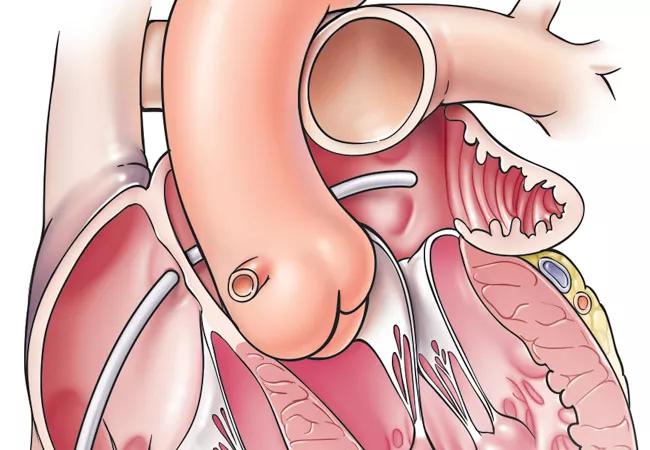
Image content: This image is available to view online.
View image online (https://assets.clevelandclinic.org/transform/22d8cdad-a415-4fba-83ae-bf7fd927894c/16-HRT-001-Watchman-CQD-650x450_jpg)
CMS’ Rule on WATCHMAN: Too Restrictive, but Not All Bad
The recent proposal from the Centers for Medicare & Medicaid Services (CMS) to severely limit reimbursement for left atrial appendage closure with the WATCHMAN™ device needs to be rethought despite having some valid recommendations, says cardiologist Oussama Wazni, MD.
Advertisement
Cleveland Clinic is a non-profit academic medical center. Advertising on our site helps support our mission. We do not endorse non-Cleveland Clinic products or services. Policy
“They are doing the right thing to ensure the device is not abused or misused, but their proposal is too restrictive,” notes Dr. Wazni, Co-Director of the Ventricular Arrhythmia Center and Director of Outpatient Electrophysiology at Cleveland Clinic.
Dr. Wazni and his Cleveland Clinic colleague, Walid Saliba, MD, have been instrumental in conducting clinical trials that led to the FDA’s March 2015 approval of the device, which is designed to prevent stroke in patients with nonvalvular atrial fibrillation. Their thoughts, concerns and recommendations were expressed in a response recently delivered to CMS by the Heart Rhythm Society during the public comment period on the CMS proposal . The Society for Cardiovascular Angiography and Interventions (SCAI) and American College of Cardiology (ACC) also responded.
CMS has proposed that patients meet three requirements in order to qualify for reimbursement for WATCHMAN: (1) a high CHADS2 or CHA2DS2-VASc score, (2) a high HAS-BLED score and (3) a contraindication to warfarin. Dr. Wazni notes this will eliminate an important segment of the population who could benefit from the device.
“Take a patient with a high CHA2DS2-VASc score who had an intracranial bleed on warfarin,” he says. “This patient has a long-term contraindication to warfarin but a low HAS-BLED score of 1. We’d like to see CHA2DS2-VASc score as the primary driving factor, and either a high HAS-BLED score or a contraindication to anticoagulants as the second condition.”
Dr. Wazni feels that CMS’ request that WATCHMAN patients be tracked through a registry is appropriate, since how the device compares with warfarin therapy over the long term is unknown. “At the end of five years, we can calculate the risk of stroke and compare it with historical information on warfarin,” he says.
Advertisement
He adds, however, that the need to operate two registries — one for patients on WATCHMAN and one for patients on anticoagulation — puts an onerous burden on hospitals and health systems. “Registries are expensive to start and maintain,” he says.
Cleveland Clinic cardiologists have implanted a large volume of WATCHMAN devices in high-risk patients and are following them closely. They hope CMS takes the thoughts of the experts in the Heart Rhythm Society, SCAI and ACC into careful consideration.
Advertisement
Advertisement

A sampling of outcome and volume data from our Heart & Vascular Institute
Concomitant AF ablation and LAA occlusion strongly endorsed during elective heart surgery

Large retrospective study supports its addition to BAV repair toolbox at expert centers
Young age, solid tumor, high uptake on PET and KRAS mutation signal risk, suggest need for lobectomy

Surprise findings argue for caution about testosterone use in men at risk for fracture
Residual AR related to severe preoperative AR increases risk of progression, need for reoperation

Findings support emphasis on markers of frailty related to, but not dependent on, age
Provides option for patients previously deemed anatomically unsuitable
 Search