Locations:





Join us for one of these March 9 dinner symposia in Orlando
Image content: This image is available to view online.
View image online (https://assets.clevelandclinic.org/transform/3405bf48-7947-4830-9681-b17f50cb387f/16-HRT-1201-HVI-CME-CQD-650x450_jpg)
Heart CME
Does your practice struggle with how best to identify patients with thoracic aortic aneurysms? Is your organization bedeviled by how to truly synchronize heart failure care among compartmentalized subspecialties? If the answer to either question is yes, and if you’re going to ACC.18 in March, Cleveland Clinic has a complimentary CME dinner symposium for you.
Advertisement
Cleveland Clinic is a non-profit academic medical center. Advertising on our site helps support our mission. We do not endorse non-Cleveland Clinic products or services. Policy
Cleveland Clinic experts will be hosting two independent certified sessions at the American College of Cardiology’s scientific session this year in Orlando, Florida (ACC.18), both on Friday, March 9, from 7 to 9:30 p.m.:
The “Managing Valvular and Thoracic Aortic Disease” symposium is designed to fully reflect the importance of early recognition and prompt treatment for various thoracic aortic diseases. “These conditions are usually asymptomatic and not easily detectable until an acute and often catastrophic complication occurs,” says course co-director Lars Svensson, MD, PhD, Chair of Cleveland Clinic’s Miller Family Heart & Vascular Institute.
The symposium’s content is intended to facilitate earlier detection of thoracic aortic aneurysms and associated aortic valve diseases — and also to review the latest in their medical and surgical management.
A team of three expert cardiologists and three veteran cardiothoracic surgeons, all from Cleveland Clinic, will cover the following:
Advertisement
“An additional portion will explore what’s involved in building an aortic program to offer patients a lifelong approach to treating aortic disease,” notes course co-director Eric Roselli, MD, Director of Cleveland Clinic’s Aorta Center.
For full program and registration, visit ccfcme.org/aorticacc.
The “Managing Complex Challenges in Heart Failure” symposium will begin with a case presentation to explore the many tools available to manage similarly complex cases, from the latest drug therapies and the role of imaging to an abundance of device therapy options. Among the latter, discussion will be devoted to permanent His bundle pacing, implantable cardioverter-defibrillator/chronic resynchronization therapy (CRT), remote monitoring, ablation and mechanical circulatory support/transplant. Nuances such as CRT nonresponse caused by mitral regurgitation will be explored along the way.
Presentations will come from an expert faculty of cardiology subspecialists from Cleveland Clinic and Valley Health System, a Ridgewood, New Jersey-based member of the Cleveland Clinic Cardiovascular Specialty Network, which is co-sponsoring the CME activity. A Cleveland Clinic cardiac surgeon will join them to discuss mechanical circulatory support and transplant issues.
“During the course of their treatment, heart failure patients may receive care from specialists in heart failure, imaging, electrophysiology and cardiac surgery,” says course co-director Niraj Varma, MD, PhD, of Cleveland Clinic’s Section of Electrophysiology and Pacing. “Coordinating these traditionally compartmentalized subspecialties can be a challenge. This symposium will illustrate how a synchronized program can be built in tertiary care centers to optimize outcomes.”
Advertisement
For full program and registration, visit ccfcme.org/ephfacc.
These activities have been approved for AMA PRA Category 1 credit™.
The above educational activities are not part of ACC.18, but their content was reviewed and approved by the ACC.18 Program Committee.
Advertisement
Advertisement
A sampling of outcome and volume data from our Heart & Vascular Institute
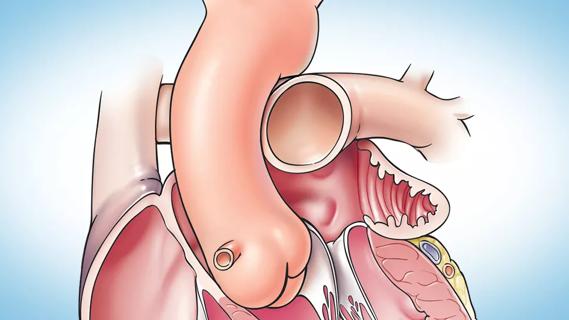
Concomitant AF ablation and LAA occlusion strongly endorsed during elective heart surgery
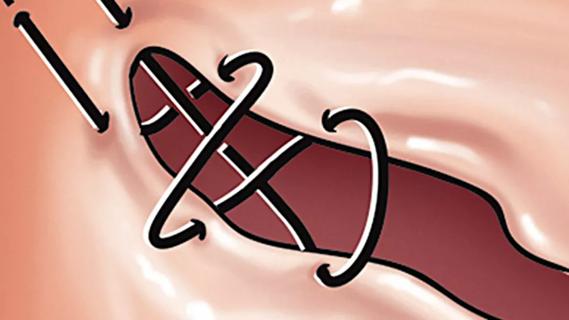
Large retrospective study supports its addition to BAV repair toolbox at expert centers
Young age, solid tumor, high uptake on PET and KRAS mutation signal risk, suggest need for lobectomy
Surprise findings argue for caution about testosterone use in men at risk for fracture
Residual AR related to severe preoperative AR increases risk of progression, need for reoperation

Findings support emphasis on markers of frailty related to, but not dependent on, age
Provides option for patients previously deemed anatomically unsuitable
 Search