Locations:





Minority Stroke Program addresses racial disparities pinpointed in a recent study

Image content: This image is available to view online.
View image online (https://assets.clevelandclinic.org/transform/9b6130f7-8d7d-4957-8c06-d812420d7090/22-NEU-2763209-CQD-Hero-650x450-1_jpg)
22-NEU-2763209-CQD-Hero-650×450
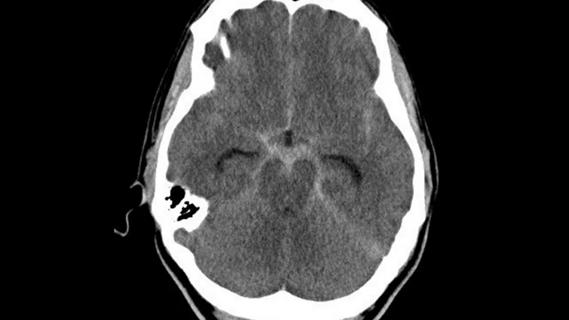
Three years ago, Cleveland Clinic launched its Minority Stroke Program to enhance efforts to prevent and treat stroke in racial and ethnic minorities. Now a new study presented at the International Stroke Conference 2022 validates the continuing need for such a program.
Advertisement
Cleveland Clinic is a non-profit academic medical center. Advertising on our site helps support our mission. We do not endorse non-Cleveland Clinic products or services. Policy
The researchers, including neurologists from Cleveland Clinic’s Cerebrovascular Center, used annual age-adjusted mortality rates from a Centers for Disease Control and Prevention database to quantify and trend excess cerebrovascular deaths in the U.S. that could be attributed to Black/white and rural/urban disparity. While lives lost to Black/white disparity decreased from 1999 to 2013, they have stagnated since then. The researchers concluded that Black/white disparity remains the leading inequity in cerebrovascular mortality, responsible for three times more deaths than rural/urban disparity was in 2019.
“The study is important because it highlights the fact that we have reached a plateau and we need to do much more to address stroke disparities,” says Gwendolyn Lynch, MD, a vascular neurologist and neurointensivist in Cleveland Clinic’s Cerebrovascular Center who leads the Minority Stroke Program.
Since its inception in 2019, the program has grown to include seven physicians who are trained to address the higher rates of stroke in minority populations and the associated risk factors. During appointments, physicians review the patient’s past medical history, recent laboratory and diagnostic studies, and social history, as well as provide stroke education and follow-up resources.
The Minority Stroke Program has also expanded from Cleveland Clinic’s main campus to regional locations, most notably the Stephanie Tubbs Jones Health Center in East Cleveland, a community where 90% of residents are Black.
Advertisement
In addition, the program has made strides in two focus areas to combat stroke disparities: community education and medical education.
“We have reached many different audiences with education about stroke awareness and prevention through our Community Outreach Program,” says Dr. Lynch. During the past two years, physicians and neurology residents have held virtual forums for schools, community centers, skilled nursing facilities and other groups.
The Minority Stroke Program also partners with the Cleveland chapter of the American Heart Association (AHA) and the American Stroke Association, a division of AHA. Several neurology residents currently serve on a local AHA steering committee that plans virtual programming and events for American Stroke Month in May.
The scope of medical education offered by the program has also evolved, beginning with program physicians, then care providers throughout Cleveland Clinic and, in 2021, to a national audience.
The Minority Stroke Program sponsored Health Disparities 2021: How to Help Close Racial and Ethnic Gaps in Care Delivery. Approximately 130 attendees participated in the two-day virtual conference, which included lectures, case study presentations, panel discussions and patient perspectives related to disparities in stroke care and other specialties.
In the future, Dr. Lynch hopes that providers in the Minority Stroke Program can lead research initiatives to better understand stroke and how to reduce care disparities. One area of particular interest is stroke genetics. “The aim is to identify potential genetic markers associated with stroke risk and, if those markers exist, discover how to use that information to lower the risk not just for minorities, but for everyone,” she says.
Advertisement
Dr. Lynch offers advice to other healthcare professionals who would like to replicate the Minority Stroke Program in their care settings:
Cleveland Clinic’s Minority Stroke Program is proud of its successes over the past few years, including continuing to offer community education during the COVID-19 pandemic and growing its medical education.
“We hope these small successes lead to large successes, and we look forward to seeing progress in the coming years,” Dr. Lynch concludes. “We aim to increase stroke awareness, optimize treatment and decrease disparities. This can be done.”
Advertisement
Advertisement

New study advances understanding of patient-defined goals

Testing options and therapies are expanding for this poorly understood sleep disorder

Real-world claims data and tissue culture studies set the stage for randomized clinical testing
Digital subtraction angiography remains central to assessment of ‘benign’ PMSAH

Cleveland Clinic neuromuscular specialist shares insights on AI in his field and beyond

Findings challenge dogma that microglia are exclusively destructive regardless of location in brain

Neurology is especially well positioned for opportunities to enhance clinical care and medical training

New review distills insights from studies over the past decade
 Search