Locations:





Honored for multiple discoveries in atherosclerosis, including role of the gut microbiome
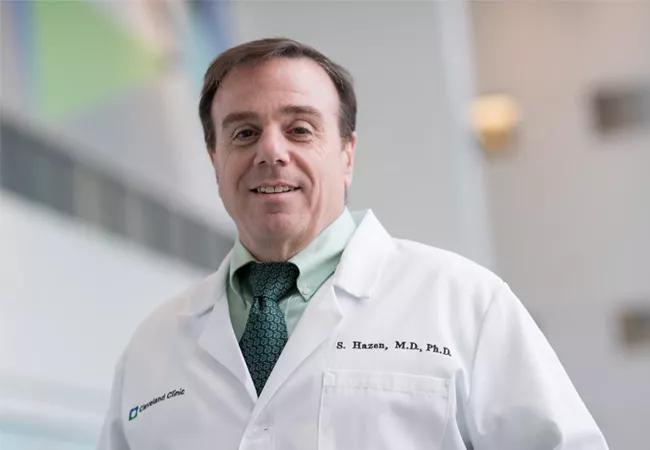
Image content: This image is available to view online.
View image online (https://assets.clevelandclinic.org/transform/f9a3e5b8-736c-4749-8854-df9fad663436/17-HRT-4740-Hazen-CQD_jpg)
Cleveland Clinic’s Stanley Hazen, MD, PhD, Named a 2017 AHA Distinguished Scientist
Cleveland Clinic physician and researcher Stanley L. Hazen, MD, PhD, has been named a 2017 Distinguished Scientist by the American Heart Association (AHA), the highest award the AHA bestows for scientific discoveries.
Advertisement
Cleveland Clinic is a non-profit academic medical center. Advertising on our site helps support our mission. We do not endorse non-Cleveland Clinic products or services. Policy
The designation “honors American Heart Association professional members who have made extraordinary contributions to cardiovascular and stroke research,” according to the AHA. The seven 2017 Distinguished Scientists were honored during the opening session of the AHA Scientific Sessions 2017 on Nov. 12.
Dr. Hazen is Chair of the Department of Cellular and Molecular Medicine in Cleveland Clinic’s Lerner Research Institute and Section Head of Preventive Cardiology and Rehabilitation in the Miller Family Heart & Vascular Institute. He has spent his entire professional career at Cleveland Clinic and is the first Cleveland Clinic physician to receive the AHA Distinguished Scientist designation, which the association has been awarding since 2003.
In announcing the recognition, the AHA cited Dr. Hazen’s “several pioneering discoveries in atherosclerosis and inflammatory disease research that have impacted clinical practice.” Those discoveries resulted from decades of work in multiple research areas. The announcement specifically referenced Dr. Hazen’s following achievements:
Advertisement
“His studies laid the foundation for the development of diagnostic tests for CVD risk assessment that are in use worldwide, and have helped to spawn pharmaceutical development of myeloperoxidase inhibitors that are in clinical trials,” the AHA statement continued.
“I am honored and humbled to receive this recognition,” Dr. Hazen says. “I want to acknowledge and thank my colleagues and many lab members who have helped and supported me in making these discoveries and advances over the years.”
“Dr. Hazen’s research has fundamentally changed the way we think about the role of diet and the microbiome in the pathogenesis of heart disease,” says Serpil Erzurum, MD, Chair of Cleveland Clinic’s Lerner Research Institute. “He is highly deserving of this distinguished award. We have already seen how his findings can change care. We look forward to watching his research continue to advance, and to see how his work will impact human health and patient care.”
“Dr. Hazen is one of the most accomplished physician-scientists in America,” notes Steven Nissen, MD, Cleveland Clinic’s Chair of Cardiovascular Medicine. “His landmark research on the role of gut bacteria in cardiovascular disease has led the way forward into an entirely new field of scientific discovery. This award is richly deserved.”
“The groundbreaking research led by Dr. Hazen has uncovered one of the keys to understanding how our diets affect cardiovascular disease risk based on blood sample analysis,” adds Cleveland Clinic Heart & Vascular Institute Chair Lars Svensson, MD, PhD. “This is the type of original research that affects all people and may shape what they eat.”
Advertisement
Advertisement
A sampling of outcome and volume data from our Heart & Vascular Institute
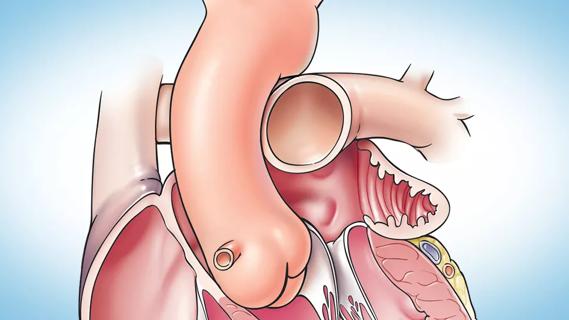
Concomitant AF ablation and LAA occlusion strongly endorsed during elective heart surgery
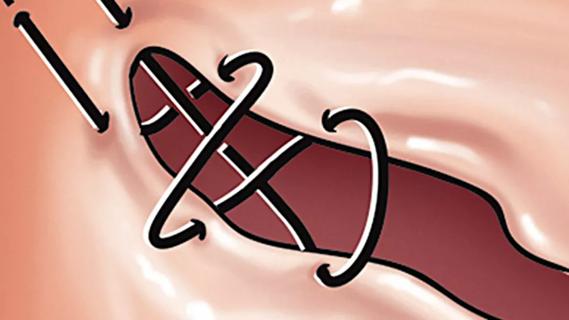
Large retrospective study supports its addition to BAV repair toolbox at expert centers
Young age, solid tumor, high uptake on PET and KRAS mutation signal risk, suggest need for lobectomy
Surprise findings argue for caution about testosterone use in men at risk for fracture
Residual AR related to severe preoperative AR increases risk of progression, need for reoperation

Findings support emphasis on markers of frailty related to, but not dependent on, age
Provides option for patients previously deemed anatomically unsuitable
 Search