Locations:





From humanizing to coordinating care, nurses are key
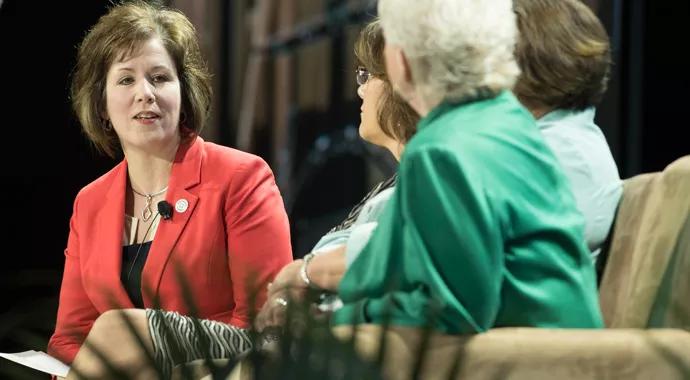
Image content: This image is available to view online.
View image online (https://assets.clevelandclinic.org/transform/068c46c4-0fdd-430b-8093-4add317ae1af/patient-exp_690x380_jpg)
patient-exp_690x380
In an invigorating and inspiring fashion, Cleveland Clinic’s sixth annual Patient Experience: Empathy + Innovation Summit recently brought together global healthcare leaders, executives, nurses and other stakeholders to discuss and debate the ever-important topic of patient experience.
Advertisement
Cleveland Clinic is a non-profit academic medical center. Advertising on our site helps support our mission. We do not endorse non-Cleveland Clinic products or services. Policy
The four-day summit featured speakers, panel discussions and workshops about the global patient experience movement and allowed attendees the opportunity to identify shared challenges, engage in discussion and inspire innovative solutions. The overarching theme was: “Empathy amplified. Hear it. Speak it. Feel it.” This pointed to the question: How can caregivers use empathy as a way to build better relationships with patients to improve experiences and outcomes?
As can be expected, nursing had a large presence throughout the summit. Nurses are the caregiver group at any health system or health organization with continual patient interaction.
As nurses, we live, eat and breathe patient care. The interactions we have with our patients, their families, our nursing colleagues, our physician colleagues and other members of our care delivery teams, can significantly impact a patient’s care experience.
When speaking to the interaction of caregivers with patients, one of the summit’s featured nurse experts, Christy Dempsey, MSN, MBA, RN, CNOR, CENP, who is chief nursing officer for Press Ganey, said “it takes 56 seconds to make a connection with a patient.”
Dempsey spoke during the summit’s opening day on Sunday, May 17, with hundreds of nurses gathered for a five-hour nursing-specific track that covered a plethora of topics related to the central idea of activating and engaging nurses in transforming and sustaining the patient experience. Discussions and presentations took a deeper dive into how nurses could make their practice more cohesive and integrated within the patient visit.
Advertisement
Additionally, a distinguished nurse leader panel was a summit highlight on the morning of the third day. Dempsey also participated in the panel and was joined by Cherie Guster, MSN, RN, chief nursing officer at Akron General Medical Center, and Elizabeth Murphy, RN, vice president and chief nursing officer at Mercy Health.
Throughout the summit, there were several notable points discussed in the realm of nursing-related patient experience strategies, tactics, ideas and considerations. Below are three that I wanted to share.
As I mentioned earlier about how little time it truly takes to make a connection with a patient, it’s imperative that nurses make human connections with the people they treat. As an example, chalkboards were stationed throughout the summit site encouraging attendees to fill in denoted blanks telling others what they would want to hear, speak and feel as patients. One of the most common responses after the first day was “to be treated like people.”
Patients want their nurses to address them by name – not by their illness or injury. They desire open lines of communication and honesty. They want to feel empathy and compassion and know that they are respected and safe.
Better relationships between staff and patients, as well as between staff and staff, is key to improving the patient experience. During the nurse leader panel, one of our panel experts stated: “The worst thing that can happen for chronic patients is to fall through the cracks. These patients need to know that the people behind the scenes are doing a better job of keeping the dots connected.”
Advertisement
Advanced technology helps nurses keep patient charts and records well organized and up-to-date, but it’s the combination of technology with communication – using technology as a facilitator for relationships – that has the greatest impact on the patient experience. Effective and ongoing communication must occur within the caregiver team, with the patient and with the patient’s family. For many organizations, success in building better relationships requires a culture shift, but it’s necessary as patients expect transparency and customized, personalized care.
It is a proven fact that with a comprehensive care coordination plan in place, patient satisfaction and experience is improved. Care should be planned, delivered and coordinated seven days a week, in all facets of an organization – and with other healthcare organizations as appropriate – using evidence-based protocols that focus on long-term outcomes.
Brenda Mullan, MSN, RN, CDP, associate chief nursing officer for ambulatory nursing at Cleveland Clinic stated in her presentation, “In an accountability culture, the focus is to engage all patients and provide care that is meaningful to them, promote health, prevent disease and manage transitions across the continuum.” Care coordination is essential to meeting the needs of diverse, complex, and at-risk patient populations, and fully connected care through care coordination must be part of a clear vision that focuses on improved quality, patient engagement and overall holistic care.
Advertisement
Advertisement
Nurses play key role in comprehensive lifetime treatment program
Customized bots improve speed, efficiency by streamlining daily clinical, clerical tasks
Nurses play pivotal role in patients’ ability to recover in the comfort of their own homes
New protocol reduces costs, increases patient and caregiver satisfaction
Advocating for patient safety is imperative in fast-paced surgical settings
M-Power program improves the perinatal experience for people who have survived abuse
Advice for those pursuing a WOC nursing career
Veteran nurse shares his experience as a caregiver and community volunteer
 Search