Locations:





Fellows will see a breadth of congenital heart cases in pediatric and adult populations
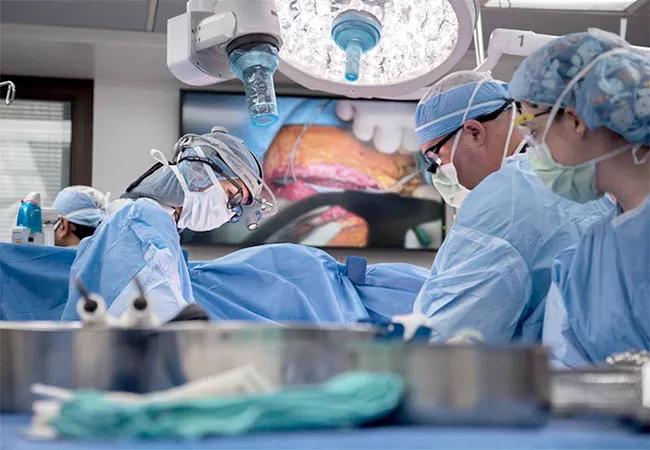
Image content: This image is available to view online.
View image online (https://assets.clevelandclinic.org/transform/1d63b963-4b03-4b09-abbd-69edba468f34/20-HRT-023-congenital-cardiac-surgery-650x450-1_jpg)
20-HRT-023-congenital-cardiac-surgery-650×450
Cleveland Clinic has been accredited by the Accreditation Council for Graduate Medical Education (ACGME) to launch a two-year fellowship in congenital cardiac surgery. The designation makes it only the 12th program to offer an ACGME-accredited fellowship in this surgical subspecialty.
Advertisement
Cleveland Clinic is a non-profit academic medical center. Advertising on our site helps support our mission. We do not endorse non-Cleveland Clinic products or services. Policy
“Education is one of the three pillars of excellence at Cleveland Clinic, along with clinical care and research,” says Hani Najm, MD, Chair of Pediatric and Congenital Heart Surgery at Cleveland Clinic, who was instrumental in establishing the fellowship. “We can offer fellows not only exposure to the congenital heart surgeries we do but also training in how to become a great congenital heart surgeon.”
Tara Karamlou, MD, MSc, a congenital heart surgeon in Cleveland Clinic’s Miller Family Heart, Vascular & Thoracic Institute, will serve as program director of the fellowship. “We have something really special here at Cleveland Clinic, and we are excited to share it with would-be congenital heart surgeons,” she says. “We see a high volume of cases with a breadth of pathology ranging from neonatal surgery to adult congenital heart disease.”
Cleveland Clinic has begun accepting applications and will enter the formal fellowship match process this spring, with the first fellow starting in June 2021. Candidates must be advanced fellows who have completed an ACGME-accredited adult cardiothoracic residency. Cleveland Clinic’s fellowship program, like most others at present, offers one year to fulfill the accreditation along with a second nonaccredited year.
The majority of the fellow’s time will be spent in the operating room (OR) fulfilling ACGME’s requirement to complete 75 index cases a year. Most days will begin with preoperative rounds in the cardiac ICU, where the fellow will assume the lead role in preparing patients for surgery. Then the fellow will head to the OR for approximately seven hours.
Advertisement
“The fellow will be exposed to a spectrum of patients who need congenital heart surgery, from newborns through older adults,” says Dr. Najm. “That is the strength of our program. Many other programs are housed in a children’s hospital, where fellows may get to visit the adult side for a couple months. Here, they can see both pediatric and adult patients on an everyday basis.”
He notes that the fellow may scrub in for a surgery to repair coarctation of the aorta in an infant in the morning and then assist with valve replacement surgery on a 70-year-old in the afternoon.
The program will expose trainees to diverse pathologies as well. As the nation’s top-ranked hospital for cardiology and heart surgery by U.S. News & World Report for 25 years running, Cleveland Clinic sees the most complex cases. “We have innovated a number of surgical techniques, and the fellow will learn how to do them firsthand,” says Dr. Najm. And because Cleveland Clinic’s congenital heart surgery program operates from multiple sites across Northeast Ohio, there are abundant opportunities for exposure to more common procedures as well, such as septal defect repair.
The new training program will be “a very busy fellowship,” says Dr. Karamlou. In addition to surgical responsibilities, the fellow will meet didactic requirements. Dr. Karamlou will lead a one-hour didactic session every Thursday, and the fellow will take part in formal teaching rounds on Wednesdays with Cleveland Clinic’s Center for Pediatric and Congenital Heart Disease and the Adult Congenital Heart Disease Center.
Advertisement
The fellow also will be part of the go-to team for emergencies, running extracorporeal life support codes and placing babies on the extracorporeal circuit. In addition, he or she will have the opportunity to contribute to leading-edge research under the tutelage of Eugene Blackstone, MD, Head of Clinical Investigations in the Heart, Vascular & Thoracic Institute. Dr. Blackstone, along with pioneer heart surgeon John Kirklin, MD, established in 1985 an ongoing study of rare congenital heart disease through the Congenital Heart Surgeons’ Society. “This study, which follows inception cohorts of babies from birth throughout their lives and all treatments in between, includes more than 80 congenital heart programs across North America, including Cleveland Clinic,” says Dr. Blackstone.
“Cleveland Clinic has a nice marriage between operative experience and the scientific side,” notes Dr. Karamlou. “This is a wonderful place for fellows to enrich themselves in the research forum.”
The fellowship’s ultimate goal is to prepare surgeons to practice independently. “In addition to offering thorough training in the technicalities of the operations, the program is designed to elevate the fellow’s thinking process,” says Dr. Najm. “We aim to teach how to analyze the given congenital anomalies and choose the best operation for an individual patient.”
“There is a palpable energy here that is missing in other places,” adds Dr. Karamlou. “Everybody is an expert in their field. Cleveland Clinic offers the best of the best, and it challenges you every day to be the best clinician, surgeon and human being you can be.”
Advertisement
Advertisement
A sampling of outcome and volume data from our Heart & Vascular Institute
Concomitant AF ablation and LAA occlusion strongly endorsed during elective heart surgery
Large retrospective study supports its addition to BAV repair toolbox at expert centers
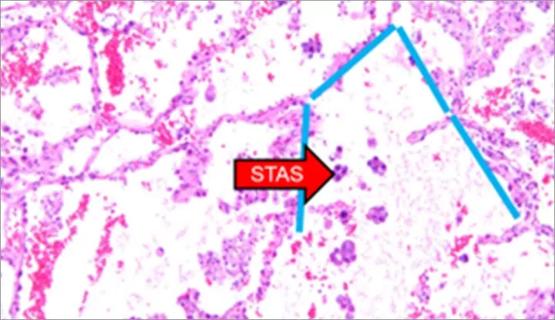
Young age, solid tumor, high uptake on PET and KRAS mutation signal risk, suggest need for lobectomy
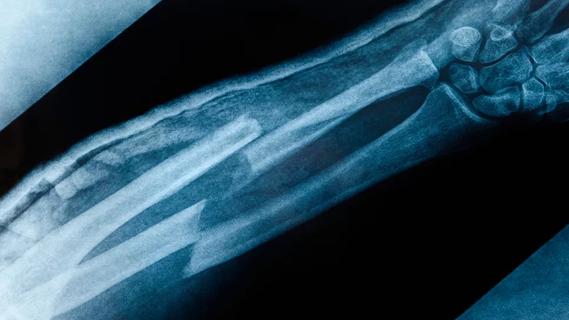
Surprise findings argue for caution about testosterone use in men at risk for fracture
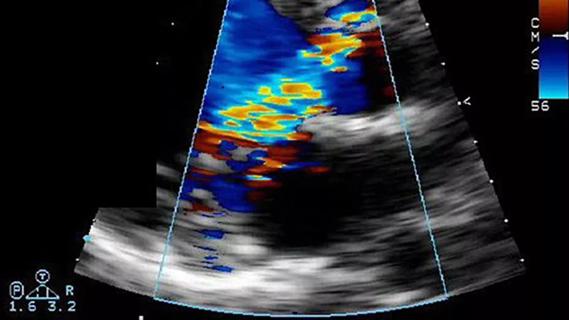
Residual AR related to severe preoperative AR increases risk of progression, need for reoperation
Findings support emphasis on markers of frailty related to, but not dependent on, age
Provides option for patients previously deemed anatomically unsuitable
 Search