Locations:





Recognition reflects prioritization of long-term patient outcomes
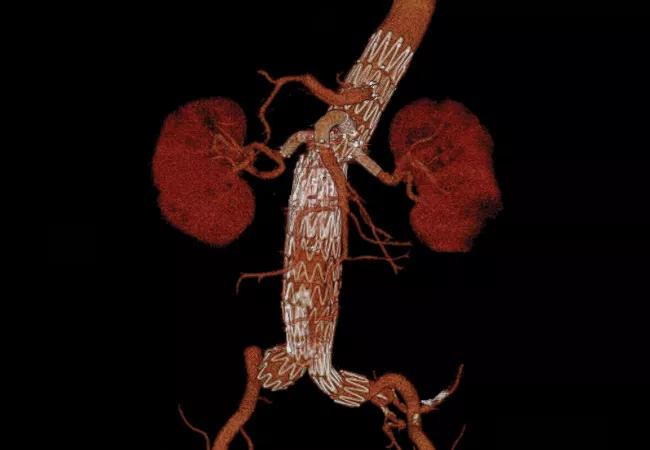
Image content: This image is available to view online.
View image online (https://assets.clevelandclinic.org/transform/48c6999c-9623-4237-94a4-b739b47b6351/20-HVI-1896881-vascular-surgery-650x450-1_jpg)
20-HVI-1896881 vascular-surgery-650×450
This spring Cleveland Clinic received the Society for Vascular Surgery’s Vascular Quality Initiative (SVS VQI) three-star recognition, the highest number of stars awarded, for its active participation in the SVS VQI Registry Participation Program. The program recognizes the quality of data collected, although not specific outcomes, to incentivize better care.
Advertisement
Cleveland Clinic is a non-profit academic medical center. Advertising on our site helps support our mission. We do not endorse non-Cleveland Clinic products or services. Policy
More broadly, the SVS VQI promotes patient safety and vascular care quality by providing web-based collection, aggregation and analysis of clinical data submitted in registry format for all patients undergoing specific vascular treatments. The VQI operates 14 vascular registries.
The participation awards program was created to encourage and recognize active participation in the registries program. Cleveland Clinic has received the three-star award for the past two years. This year it was among fewer than 10% of 469 eligible centers to receive the recognition.
Participating centers are rated on actions in four domains that promise to lead to improvements in patient care:
“We are honored by this recognition because of the priority the SVS VQI puts on long-term patient outcomes,” says Jon Quatromoni, MD, staff in Cleveland Clinic’s Department of Vascular Surgery. “Our surgical specialty is increasingly looking beyond traditional metrics such as 30-day outcomes and putting a premium on long-term follow-up. Cleveland Clinic is proud to be working with organizations like the SVS VQI not only to participate in patient follow-up over multiple years but also to discuss further refining outcome metrics in terms of appropriateness of care.”
Advertisement
“Vascular surgery needs to be about maintaining a lifelong relationship with patients, not just the immediate operation,” adds Sean Lyden, MD, Cleveland Clinic’s Chair of Vascular Surgery. “Our surgeons are involved with their patients’ imaging, interventional care and medical care, all of which is essential to long-term follow-up, especially since vascular surgery patients often need additional procedures. This approach is aligned with the VQI’s emphasis on long-term follow-up, as demonstrated by its registry participation program.”
VQI registries contain demographic, clinical, procedural and outcomes data from more than 670,000 vascular procedures performed. Each record includes information from the patient’s initial hospitalization and at one-year follow-up. Participating centers and providers receive biannual dashboards and regular performance reports designed to help them use their data to support quality improvement initiatives.
For the latest rating period, Cleveland Clinic’s quality improvement initiatives included projects related to the following:
Dr. Quatromoni stresses that the latter two projects are particularly noteworthy. “Creation of the pathways was undertaken to ensure standardization of our approach to carotid and AAA repairs as we expand our vascular surgery practice across more and more facilities in our health system in Northeast Ohio,” he says.
Advertisement
Dr. Lyden notes that the project on appropriateness-of-care criteria is emblematic of why Cleveland Clinic values the overarching ethic behind the SVS VQI. “Our institution is highly focused on quality in general,” he says. “So we welcome opportunities to work with organizations like the VQI to discuss appropriateness of care in terms of optimal patient selection — even when an operation is properly indicated — as well as the best timing for a procedure and when to perform follow-up imaging. We are working to be a driving force to move these types of quality metrics forward.”
“The technical aspects of performing interventions to treat aneurysms or clear blockages are often not the biggest challenge,” adds Dr. Quatromoni. “Other specialists can increasingly do those procedures. What our specialty can bring to the table is knowing when to do them, in which patients, and for which specific reasons, and then knowing how best to follow up over the long term to maintain the repair. That’s what we do best as vascular surgeons, and it’s what the VQI strives to cultivate.”
Advertisement
Advertisement
A sampling of outcome and volume data from our Heart & Vascular Institute
Concomitant AF ablation and LAA occlusion strongly endorsed during elective heart surgery

Large retrospective study supports its addition to BAV repair toolbox at expert centers
Young age, solid tumor, high uptake on PET and KRAS mutation signal risk, suggest need for lobectomy
Surprise findings argue for caution about testosterone use in men at risk for fracture
Residual AR related to severe preoperative AR increases risk of progression, need for reoperation

Findings support emphasis on markers of frailty related to, but not dependent on, age
Provides option for patients previously deemed anatomically unsuitable
 Search