Locations:





 Search
Evidenced-based practices help address complex and overlapping diagnoses
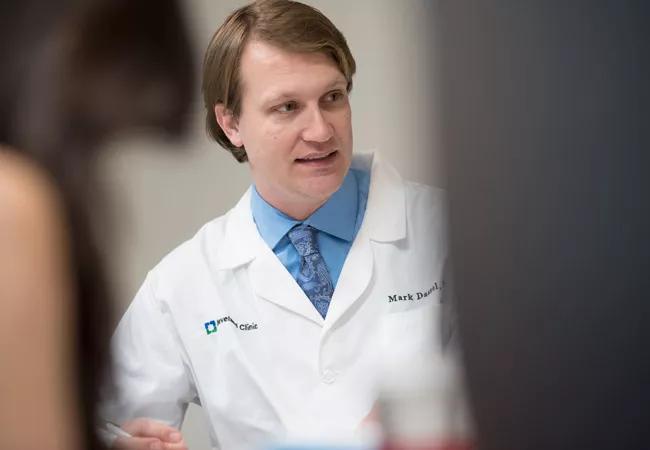
Image content: This image is available to view online.
View image online (https://assets.clevelandclinic.org/transform/9c5c5140-2090-4eaf-90b3-b52f23f8fa6e/DrDassel_650x450_jpg)
DrDassel_650x450
Cleveland Clinic’s Ob/Gyn & Women’s Health Institute Chronic Pelvic Pain Program, established in 2014, continues to make strides in treating women with chronic pelvic pain, an area which faces a deficit in care nationwide.
Advertisement
Cleveland Clinic is a non-profit academic medical center. Advertising on our site helps support our mission. We do not endorse non-Cleveland Clinic products or services. Policy
“The program has established evidenced-based practices to address this broad, complex and often overlapping set of diagnoses,” says ob/gyn Mark Dassel, MD, the program’s Surgical Director, who joined the institute’s staff in 2017. “We believe a patient-centered approach, well-defined research goals and experts from a diverse set of disciplines are needed to address all aspects of chronic pelvic pain.” M. Jean Uy-Kroh, MD, the program’s former Director and now at Cleveland Clinic Abu Dhabi, and Jessica Strasburg, MD, Medical Director, developed the program.
Since there remain many uncertainties regarding best practices in treatment for chronic pelvic pain conditions, the program’s research database helps guide best practices in chronic pelvic pain management. Less than two years into caring for patients, several research projects are underway. These include the evaluation of pelvic floor physical therapy outcomes in endometriosis, comparative patient outcomes in chronic pelvic pain dedicated clinics, and evaluation of optimal intervals for myofascial trigger point injections.
The program operates as a “care home,” meaning patients are not simply moved on to the next specialist, but have a consistent team dedicated to reaching patient-identified quality-of-life goals, Dr. Dassel explains. Centering on the patient experience, the team reviews each patient’s chart prior to arrival so that additional specialists can be consulted, sometimes on the same day.
A multidisciplinary team of specialists, including gynecologists, urologists, gastroenterologists, interventional radiologists, anesthesiologists, psychiatrists and pelvic floor physical therapists, meets frequently to discuss disease-specific treatments as well as individual patient cases, Dr. Dassel continues.
Advertisement
The team plans to develop educational modules for trainees and disease-specific clinical pathways, and to continue advancing evidence-based, multidisciplinary, patient-centered care for women with endometriosis.
Advertisement
Advertisement

Counseling and careful surgical considerations are key

Deprivation is linked to impaired glucose intolerance and racial disparities

Perioperative prophylaxis and class III obesity

Artesunate ointment is safe well and tolerated patients with vulvar intraepithelial neoplasia
Endoscopic balloon dilation during pregnancy helps optimize outcomes

Researchers examine waste and implore colleagues to take action

Mode of delivery does not affect patient satisfaction