Locations:





Insights emerge on influence of severity, access route

Image content: This image is available to view online.
View image online (https://assets.clevelandclinic.org/transform/3490fd74-36fd-40fa-a05f-8f8a82e22b79/16-HRT-002-TAVR-CQD-650x450_jpg)
Chronic Lung Disease Elevates TAVR Risk, Registry Study Finds
The severity of chronic lung disease (CLD) may affect outcomes after transcatheter aortic valve replacement (TAVR), a multicenter research team has determined in a new study in Annals of Thoracic Surgery.
Advertisement
Cleveland Clinic is a non-profit academic medical center. Advertising on our site helps support our mission. We do not endorse non-Cleveland Clinic products or services. Policy
After reviewing outcomes of 11,656 Medicare patients in the Transcatheter Valve Therapy (TVT) Registry, the team found that moderate and severe CLD increased the risk of death, but not stroke, up to one year following TAVR. Pulmonary hypertension and home oxygen dependency further increased the early risk of the procedure.
This finding adds to the growing body of knowledge regarding the safety and efficacy of TAVR in patients with CLD, a common comorbidity in patients with aortic valve stenosis.
“It has been uncertain in the past whether, and to what degree, differing severities of CLD are associated with early and midterm survival after TAVR,” says Cleveland Clinic cardiothoracic surgeon Rakesh Suri, MD, DPhil (pictured above in the OR), who served as the study’s principal author. “These results reaffirm the presence of an elevated early pulmonary-related risk in patients with moderate and severe lung disease undergoing TAVR, which means we have an opportunity to do better.”
The study showed that both moderate and severe CLD increased mortality risk at one year while, as expected, neither significantly increased stroke risk.
Recent data from the PARTNER trial found that high-risk patients with CLD may benefit from TAVR to a degree similar to that of those without this condition, despite having a higher likelihood of death at one year. Predictors of poor outcome in patients with CLD included short six-minute walk test results, oxygen dependence, high pulmonary artery pressure, renal disease and low body mass. These researchers suggested using the six-minute walk test to assess appropriateness for TAVR, since frail, immobile patients are likely to benefit less from the procedure.
Advertisement
“We can state in general that the presence of severe pulmonary hypertension, oxygen dependency and frailty together mandates a frank discussion about the possibility that TAVR may not extend life or improve symptoms significantly,” says Dr. Suri. “However, this observation cannot be generalized to all patients with chronic pulmonary disease.”
CLD has been reported to coexist in 21 to 43 percent of patients enrolled in TAVR registries to date. In the current study, 14.3 percent of patients had moderate CLD and 13.4 percent had severe CLD, for a total of 27.7 percent. Society of Thoracic Surgeons (STS) Adult Cardiac Surgery Database definitions of CLD severity were used to ensure homogeneity.
The mean age of patients in the registry study led by Dr. Suri was 84 years. Patients with moderate or severe CLD were younger and more likely to have NYHA class III or IV heart failure, a history of smoking and oxygen dependency compared with those with mild or no CLD. Patients with severe CLD had a significantly higher STS median predicted risk of mortality.
As expected, the high frequency of significant peripheral vascular disease precluded a transfemoral approach in many patients. As a result, 10.4 percent of patients with severe CLD were treated using a transaortic approach and 32.7 percent with a transapical approach. The type of alternate access made little difference to outcomes in this population, contrary to prior assumptions.
“Both the transapical and transaortic access routes were associated with similar one-year survival and stroke rates,” notes Dr. Suri. “Although patients with severe CLD can be expected to have a more difficult early recovery after TAVR, it does not appear that the type of nontransfemoral access route is influential in this regard.”
Advertisement
Studies to identify the optimal strategies for mitigating risk associated with CLD in TAVR candidates are needed. Dr. Suri says that until such studies are done, a balloon aortic valvuloplasty may be useful in helping determine the relationship between symptoms and aortic stenosis when coexisting conditions such as pulmonary disease confound the clinical picture.
“If temporary clinical improvement is noted following balloon aortic valvuloplasty,” he observes, “most would agree it is reasonable to proceed with TAVR in the nonfrail patient with severe senile calcific aortic valve stenosis.”
Advertisement
Advertisement
A sampling of outcome and volume data from our Heart & Vascular Institute
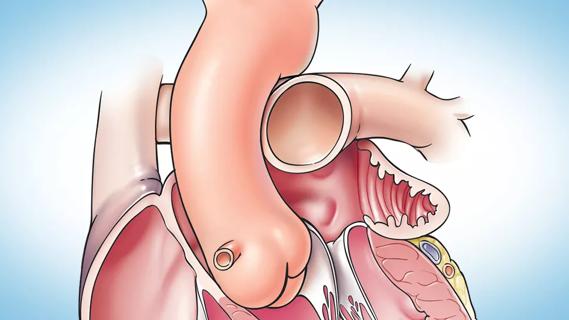
Concomitant AF ablation and LAA occlusion strongly endorsed during elective heart surgery
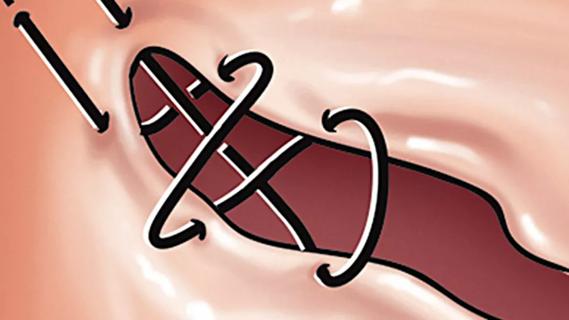
Large retrospective study supports its addition to BAV repair toolbox at expert centers
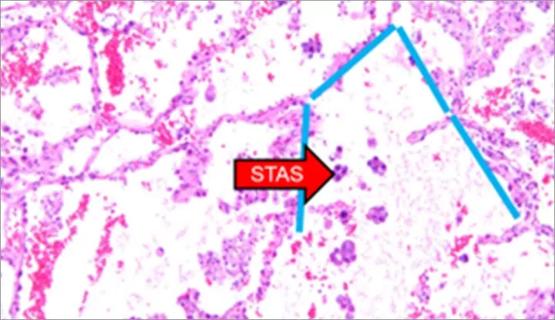
Young age, solid tumor, high uptake on PET and KRAS mutation signal risk, suggest need for lobectomy
Surprise findings argue for caution about testosterone use in men at risk for fracture
Residual AR related to severe preoperative AR increases risk of progression, need for reoperation
Findings support emphasis on markers of frailty related to, but not dependent on, age
Provides option for patients previously deemed anatomically unsuitable
 Search