Locations:





Trials reveal more options for CABG and PCI

Image content: This image is available to view online.
View image online (https://assets.clevelandclinic.org/transform/ce276315-c45c-4aac-bc9b-d12f0cb91cb3/CC_surgery_generic_690x380_jpg)
CC_surgery_generic_690x380
In the landmark clinical trials SYNTAX and FREEDOM, coronary artery bypass grafting (CABG) resulted in substantially lower rates of myocardial infarction, revascularization and 4- or 5-year mortality, as compared with percutaneous coronary intervention (PCI). In the eyes of most cardiac surgeons, these findings solidified CABG as the revascularization strategy of choice for patients with multivessel coronary artery disease, left-main disease and/or diabetes.
Advertisement
Cleveland Clinic is a non-profit academic medical center. Advertising on our site helps support our mission. We do not endorse non-Cleveland Clinic products or services. Policy
But advances in stent technology, as well as medical knowledge derived from more recent clinical trials, suggest that the choice may not be so cut-and-dried.
“Cardiologists have continued to look at ways to improve outcomes, and they feel the game is not over. As a result of their ongoing efforts, we must now take into consideration the likelihood of achieving complete revascularization and the potential offered by the latest generation of stents,” says Joseph Sabik, MD, chairman of the Department of Thoracic and Cardiovascular Surgery in the Cleveland Clinic’s Heart and Vascular Institute.
While SYNTAX and FREEDOM utilized drug-eluting stents as comparators to CABG, the latest generation of stents appears produce longer-lasting revascularization, potentially providing a more equal challenger to CABG.
As shown in the SPIRIT II and SPIRIT IV trials, the everolimus-eluting XIENCE V stent resulted in significantly lower rates of target vessel MI and ischemia-driven lesion revascularization in patients requiring multi-lesion stenting, compared with the paclitaxel-eluting TAXUS EXPRESS stent.
Incomplete revascularization is common with PCI, and most studies suggest it is associated with a worse prognosis. Yet quantification of the extent and complexity of residual atherosclerosis after PCI was not performed until a score for assessing residual stenosis was developed in an afterstudy of the SYNTAX trial.
When the scoring system was applied in the ACUITY trial to patients with moderate and high-risk ACS before and after undergoing PCI, complete revascularization was found in only 40.4 percent. Advanced age, insulin-dependent diabetes, hypertension, smoking, elevated biomarkers or ST-segment elevation, and lower ejection fraction were more common in patients with incomplete revascularization. Moreover, 30-day and 1-year rates of ischemic events were significantly higher in these patients, compared with those who had been completely revascularized and were highest in those with high rates of residual stenosis.
Advertisement
Does this mean that achieving complete revascularization with stents would produce a result comparable to CABG? “We don’t know. It’s still a hypothesis,” says Dr. Sabik.
It is clear, however, that complete revascularization plays a key role in outcomes. Therefore, the likelihood of achieving complete revascularization should be considered when selecting a candidate for PCI.
“If you can’t completely revascularize a patient with multivessel disease or diabetes using PCI, surgery is a better choice,” says Dr. Sabik.
Yet despite the multitude of well-run studies, the optimal choice for an individual is not always obvious. Cleveland Clinic agrees that the best outcomes are achieved by using a team approach.
“Even when a patient is referred to me for surgery, a cardiologist reviews the case, and we discuss it,” says Dr. Sabik. “By involving both specialties in the decision, we can look at the evidence and make the best choice.”
Advertisement
Advertisement

A sampling of outcome and volume data from our Heart & Vascular Institute
Concomitant AF ablation and LAA occlusion strongly endorsed during elective heart surgery
Large retrospective study supports its addition to BAV repair toolbox at expert centers
Young age, solid tumor, high uptake on PET and KRAS mutation signal risk, suggest need for lobectomy
Surprise findings argue for caution about testosterone use in men at risk for fracture
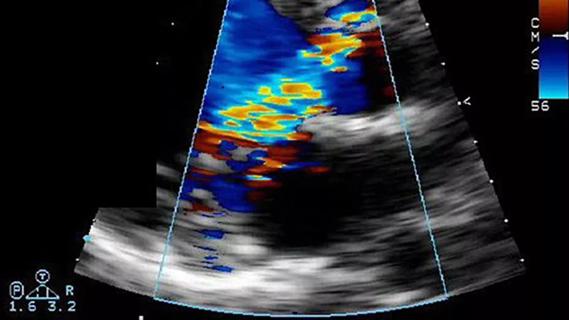
Residual AR related to severe preoperative AR increases risk of progression, need for reoperation

Findings support emphasis on markers of frailty related to, but not dependent on, age
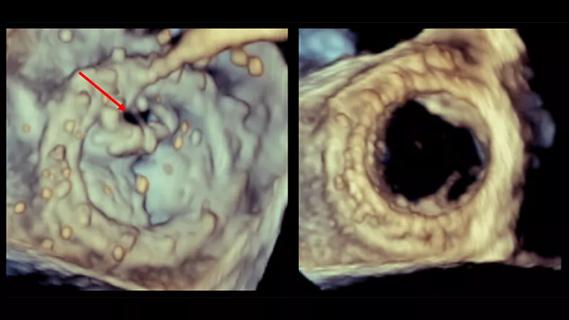
Provides option for patients previously deemed anatomically unsuitable
 Search